


Tag
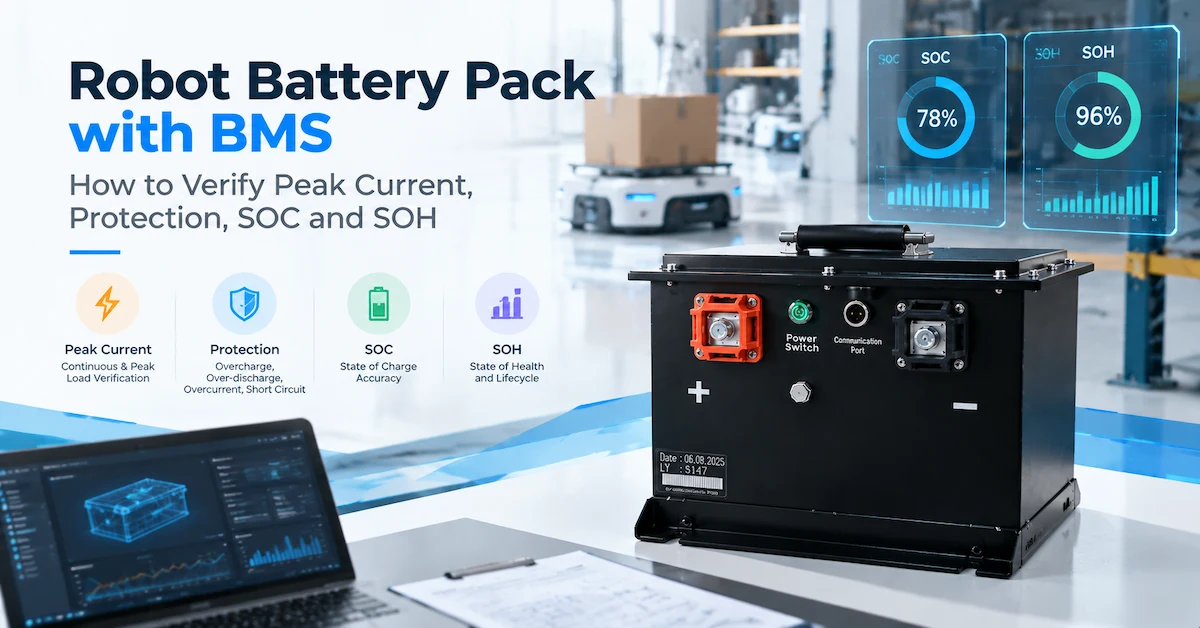
Robot Battery Pack with BMS: How to Verify Peak Current, Protection, SOC and SOH
A robot battery pack with BMS must do more than store energy: it must protect the cells, report usable status and cooperate with the robot controller and charger. This engineering guide shows OEM teams how to evaluate peak current, protection logic, SOC, SOH, communication, validation evidence and production readiness before approving samples.
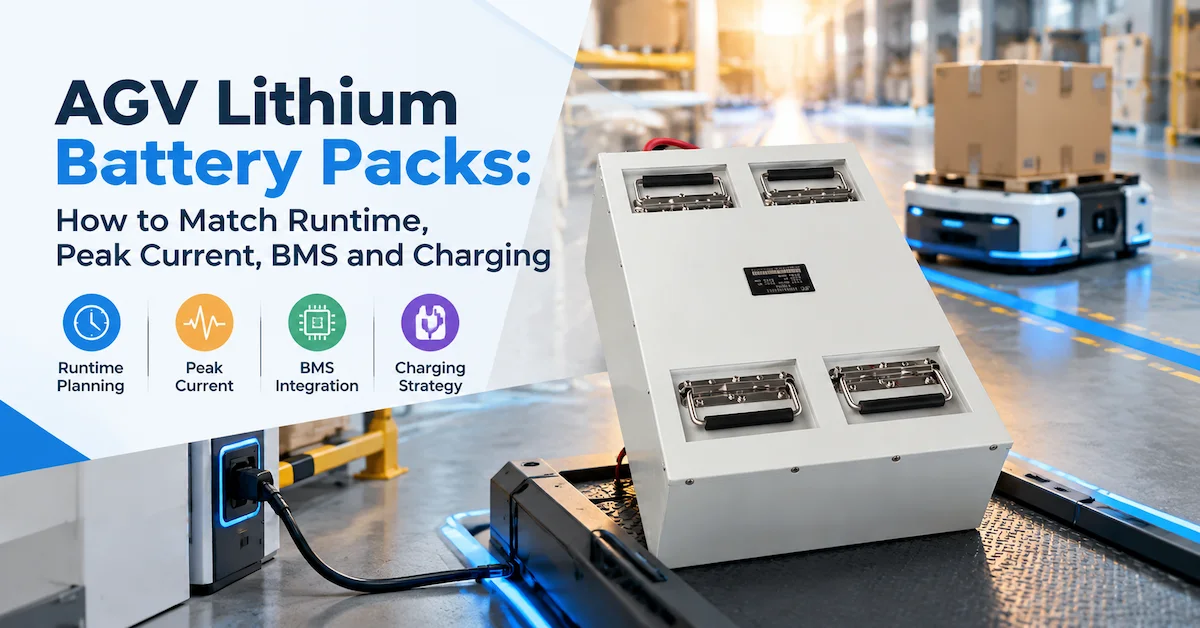
AGV Lithium Battery Packs: How to Match Runtime, Peak Current, BMS and Charging
AGV lithium battery packs should be selected from the vehicle's duty cycle, not from voltage and Ah alone. This guide shows AGV OEMs, warehouse integrators and buyers how to calculate runtime, separate continuous and peak current, validate BMS communication, coordinate charging, check mechanical fit, and prepare a production-ready RFQ.
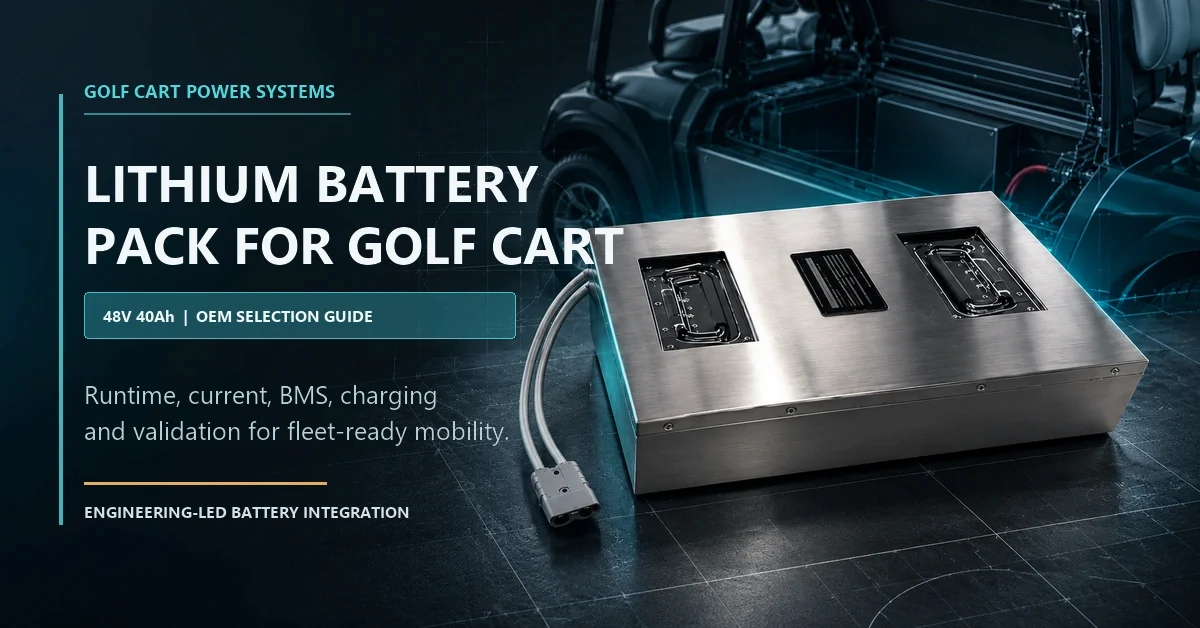
Lithium Battery Pack for Golf Cart: A Practical OEM Selection and Validation Guide
This guide explains how golf cart OEMs, fleet operators, distributors, and replacement-battery buyers should evaluate a lithium battery pack for golf cart applications. It covers voltage, runtime, current demand, charger and controller compatibility, mechanical fit, BMS communication, vibration, validation, supply risk, and the information needed for an accurate quotation.
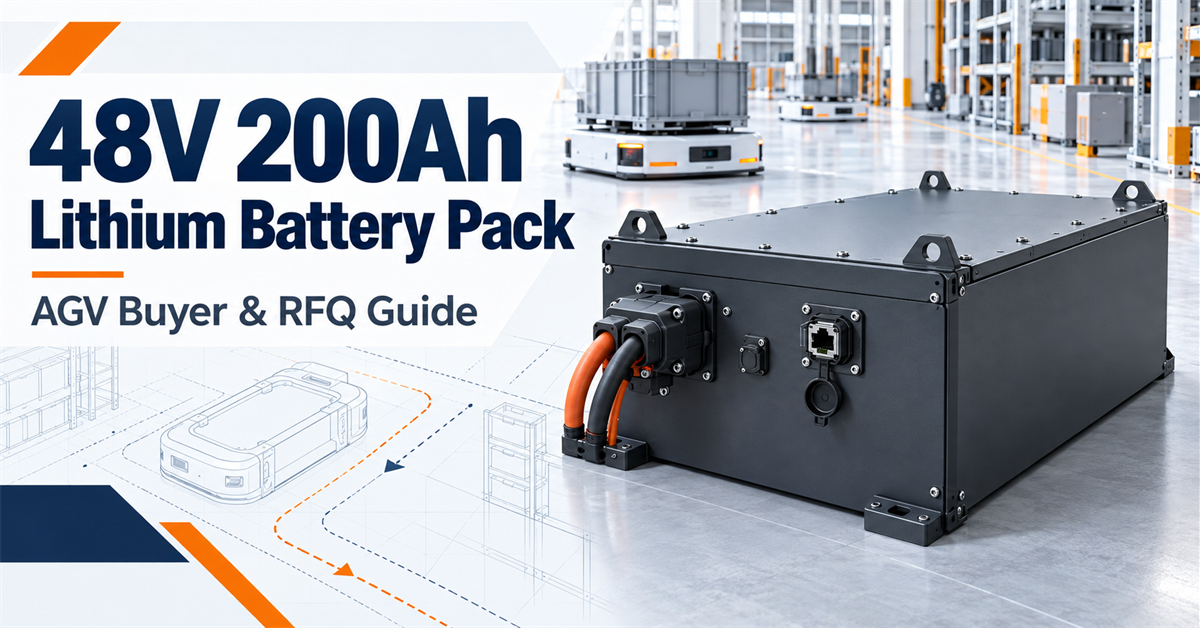
48V 200Ah Lithium Battery Pack for AGV Systems: Buyer and RFQ Guide
This guide helps AGV manufacturers and procurement teams evaluate a 48V 200Ah lithium battery pack by checking public product data, usable energy, current limits, BMS communication, charger coordination, mechanical integration, testing, packaging, lead time, and RFQ requirements. It explains what must be confirmed before a sample or quotation is approved.
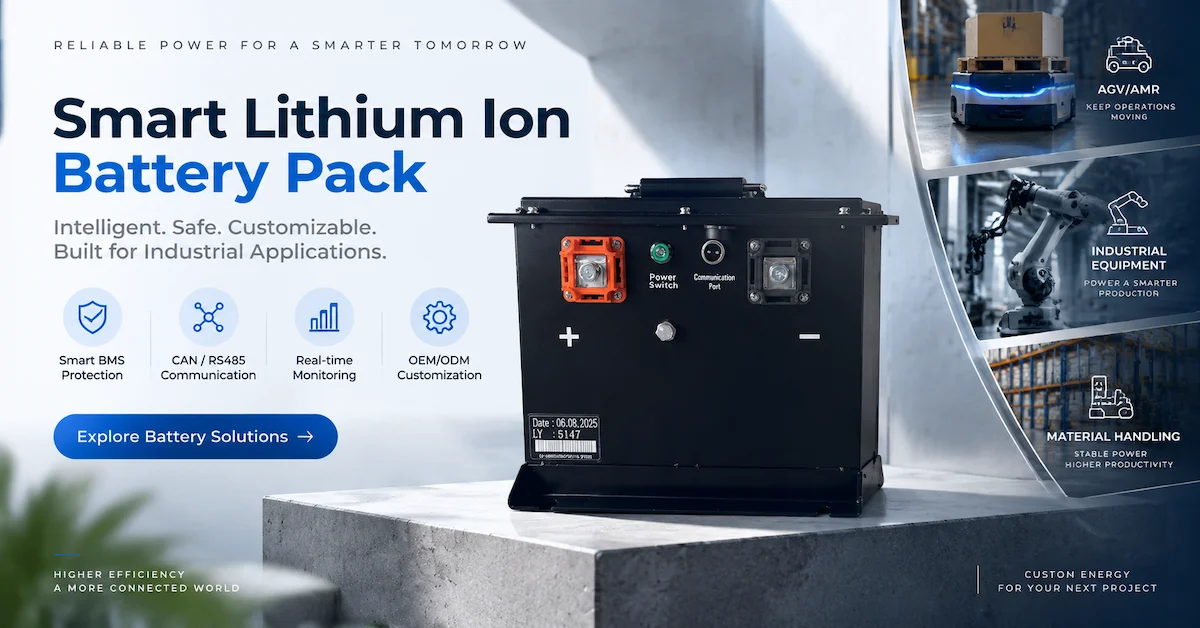
Smart Lithium Ion Battery Pack for OEM Equipment: How to Define BMS Data, Alarms, and Communication
A smart lithium ion battery pack should be specified as a system interface, not just a source of energy. This guide explains how OEM engineers and buyers should define BMS data, alarms, communication, validation, and service requirements before sampling and production.
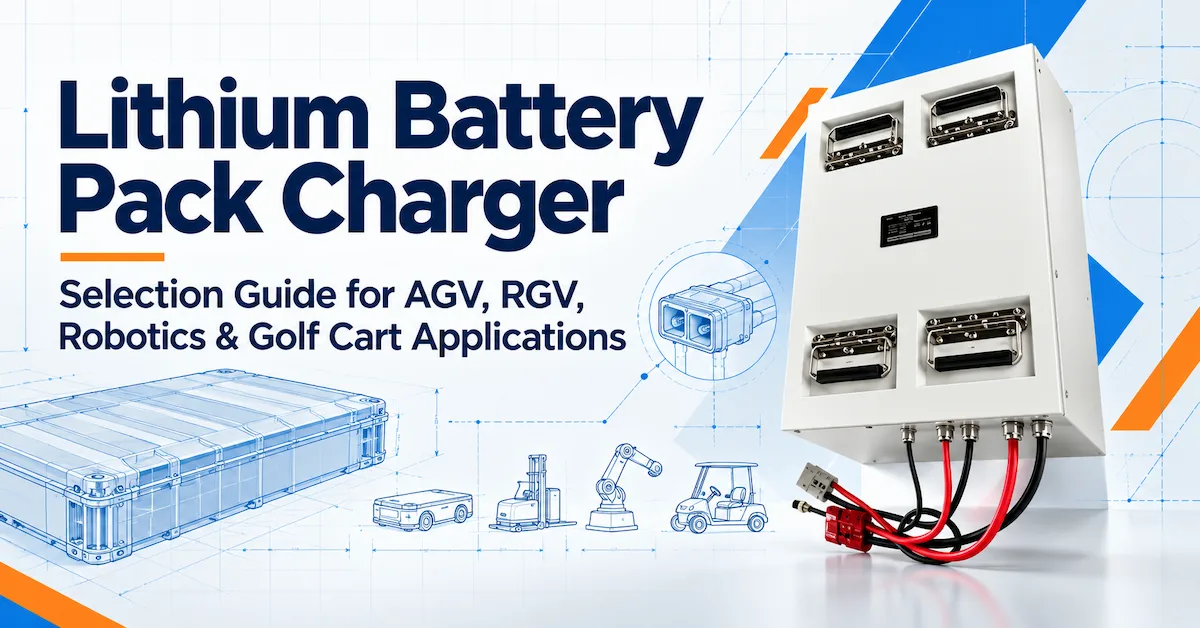
Lithium Battery Pack Charger Selection for AGV, RGV, Robot, and Golf Cart Systems
Choosing a lithium battery pack charger requires more than matching a charger label with a battery’s nominal voltage. This guide explains how OEM engineers, procurement teams, and equipment manufacturers should match charge voltage, current, chemistry, BMS communication, connectors, thermal conditions, and validation requirements for industrial and mobile equipment.
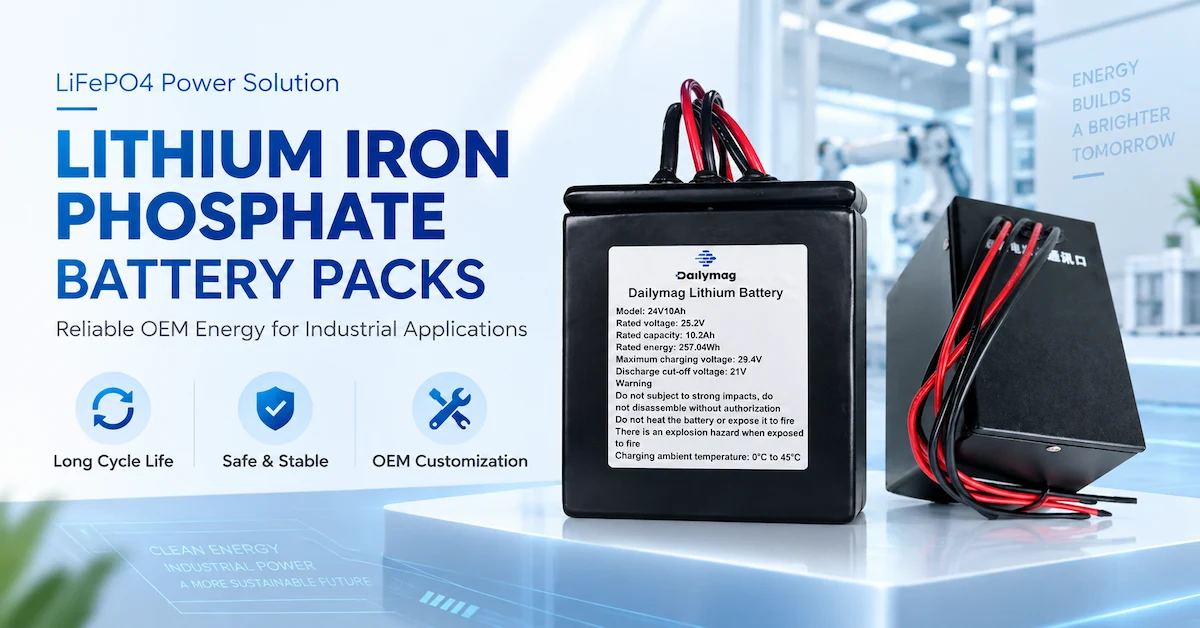
LiFePO4 Lithium Iron Phosphate Battery Packs for OEM Applications: A Complete Guide to Selection, Integration, and Production
LiFePO4 lithium iron phosphate battery packs are widely considered for industrial equipment, automation systems, backup power, and OEM applications that require stable performance, safety, and long service life. This guide explains how engineers and purchasing teams should evaluate LiFePO4 battery solutions through chemistry selection, energy requirements, BMS integration, charging compatibility, customization, validation, and supplier capability.
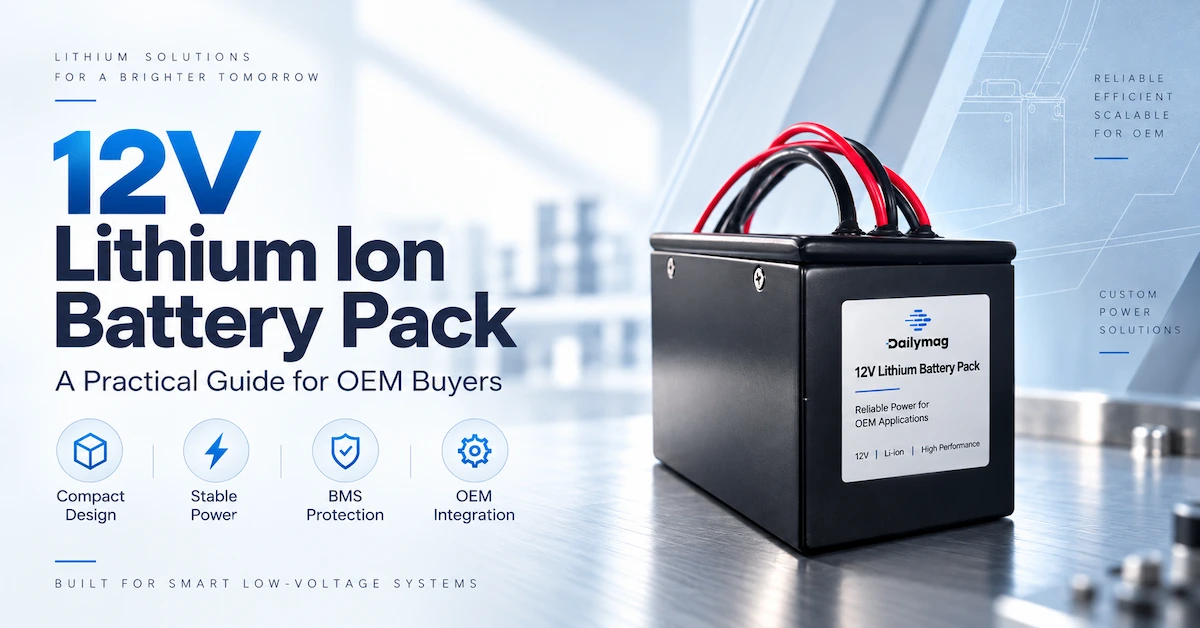
12V Lithium Ion Battery Pack for OEM Equipment: Choosing Chemistry, Runtime, BMS, and Charger Compatibility
A 12V lithium ion battery pack can be a practical power source for portable electronics, monitoring terminals, communications equipment, compact automation modules, backup devices, and other low-voltage OEM systems. This guide explains how engineers and procurement teams should compare chemistry, operating voltage, runtime, current, BMS behavior, charger compatibility, mechanical integration, validation, and long-term supply before requesting a quotation.