


Tag
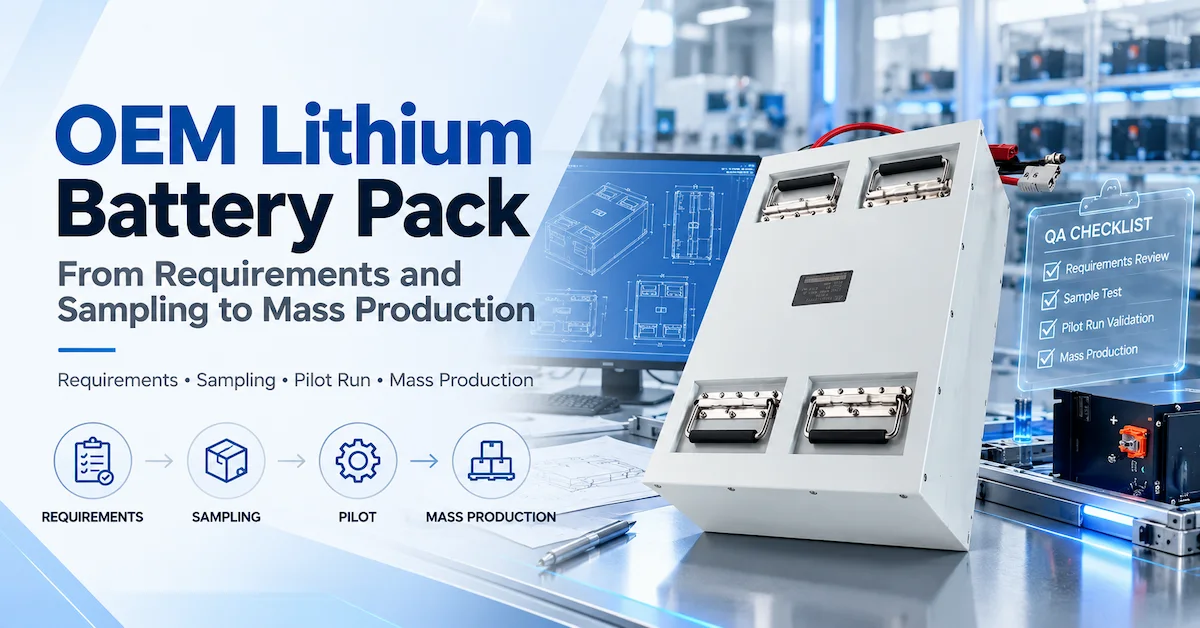
OEM Lithium Battery Pack: From Requirements and Sampling to Mass Production
This practical delivery roadmap explains how OEM teams move an OEM lithium battery pack from equipment requirements to quotation, prototype sampling, validation, pilot production, and repeat supply. It identifies the documents, test evidence, commercial decisions, and approval gates that prevent a working sample from becoming an unstable mass-production program.
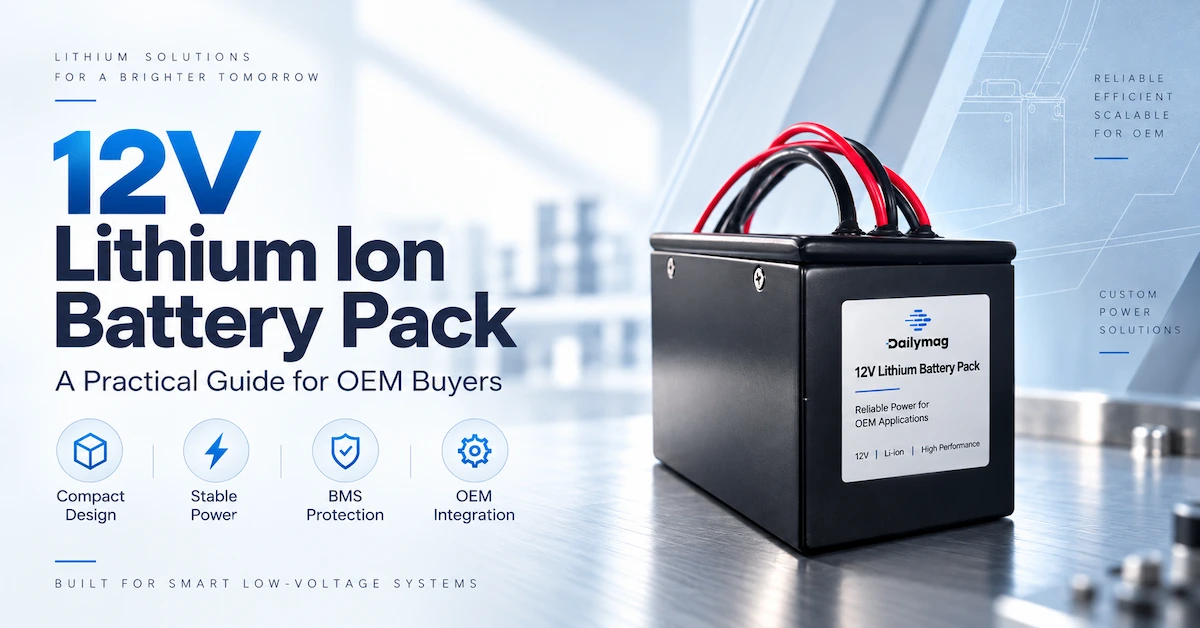
12V Lithium Ion Battery Pack for OEM Equipment: Choosing Chemistry, Runtime, BMS, and Charger Compatibility
A 12V lithium ion battery pack can be a practical power source for portable electronics, monitoring terminals, communications equipment, compact automation modules, backup devices, and other low-voltage OEM systems. This guide explains how engineers and procurement teams should compare chemistry, operating voltage, runtime, current, BMS behavior, charger compatibility, mechanical integration, validation, and long-term supply before requesting a quotation.
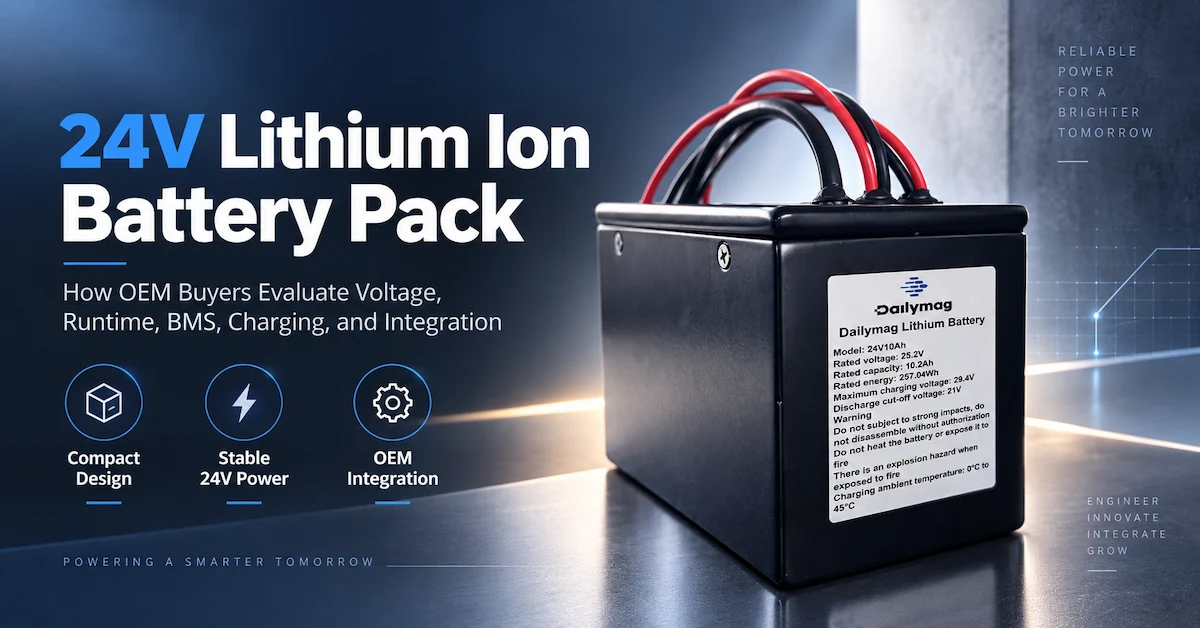
24V Lithium Ion Battery Pack for Industrial OEMs: How to Size Load, Runtime, BMS, Charging, and Integration
A 24V lithium ion battery pack should be selected around the equipment’s actual voltage window, duty cycle, continuous and peak current, charger, BMS, communication, installation space, and production requirements—not the 24V label alone. This guide helps RGV, automation, mobile equipment, and industrial OEM buyers define specifications, evaluate a 24V battery solution, validate samples, and reduce sourcing risks before volume production.
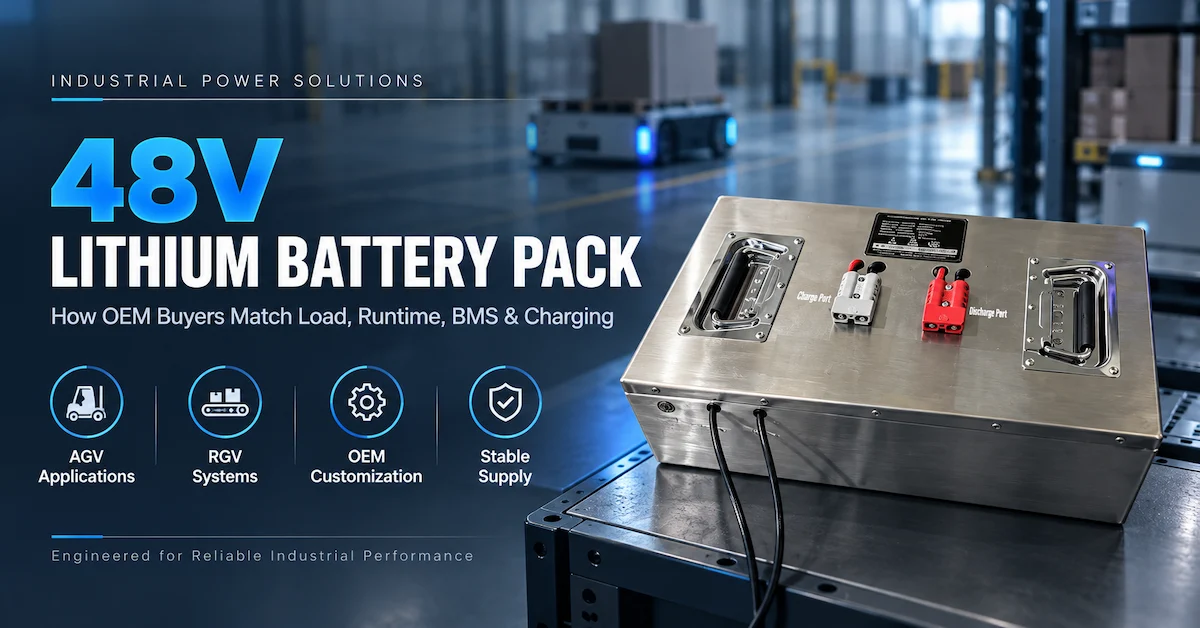
48V Lithium Battery Pack for Industrial Equipment: How OEM Buyers Match Load, Runtime, BMS, and Charging
A 48V lithium battery pack should be selected around the equipment's real voltage window, runtime, continuous and peak current, charger, BMS, communication, and installation requirements—not the 48V label alone. This guide helps OEM engineers and sourcing teams compare 48V battery options for AGVs, RGVs, industrial vehicles, and automated equipment while reducing compatibility and scale-up risks.
Custom Lithium Battery Packs for Industrial OEMs: From System Requirements to Reliable Production
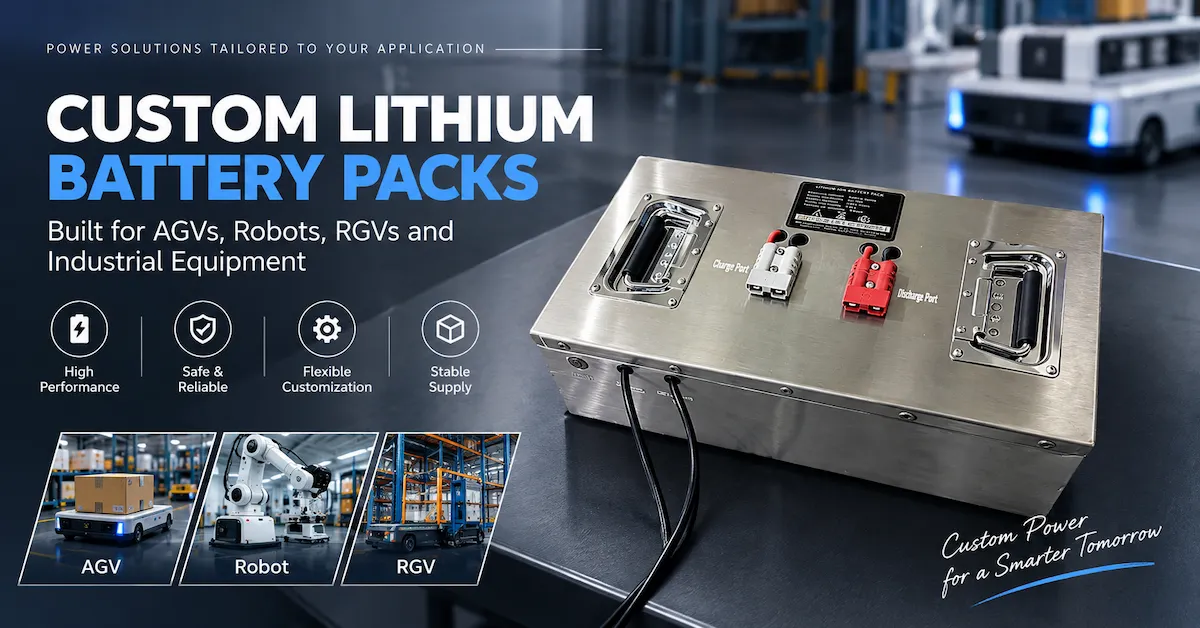
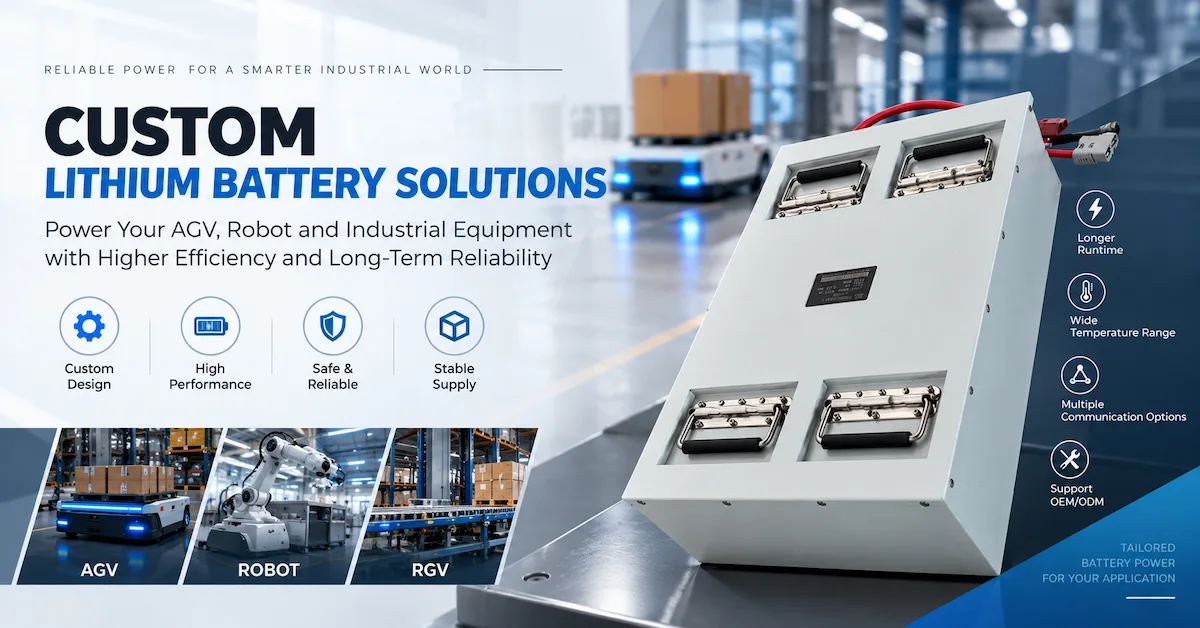
Custom lithium battery packs should be engineered around the equipment's voltage window, runtime, load profile, BMS, communication, mechanical interfaces, charging strategy, and operating environment. This guide helps OEM engineers and procurement teams decide when customization is necessary, define the right requirements, validate prototypes, and reduce scale-up risks before repeat production.
Lithium Ion Battery Supplier Custom Solution: How OEM Buyers Define, Validate, and Scale Industrial Battery Projects
A lithium ion battery supplier custom solution should solve equipment-level requirements rather than simply match voltage and capacity. This guide shows OEM buyers how to define electrical, BMS, communication, mechanical, validation, and production requirements for AGVs, robots, RGVs, automation equipment, and other industrial applications.
Li Ion Battery Pack for OEM Applications: How Manufacturers Build Reliable Custom Power Solutions
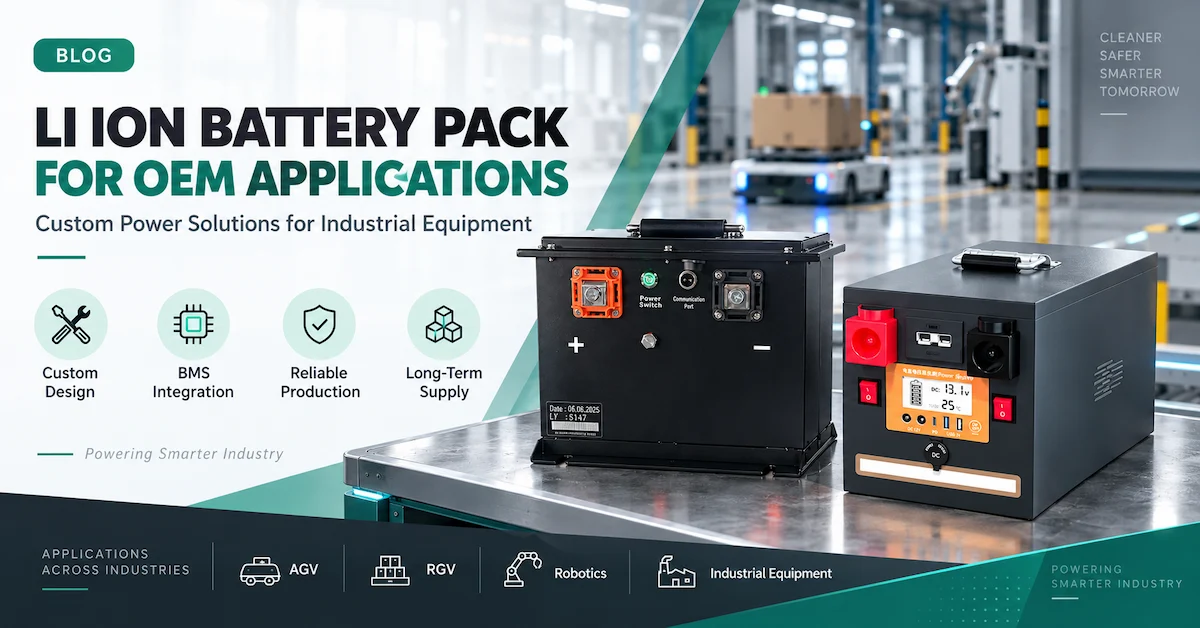
A li ion battery pack for OEM applications requires careful matching between battery design and the final equipment system. This guide explains how OEM buyers evaluate battery requirements, customization options, BMS integration, validation processes, production control, and long-term supply reliability for industrial applications.
Li Ion Battery Pack for Industrial Equipment: How OEM Buyers Select the Right Power Solution
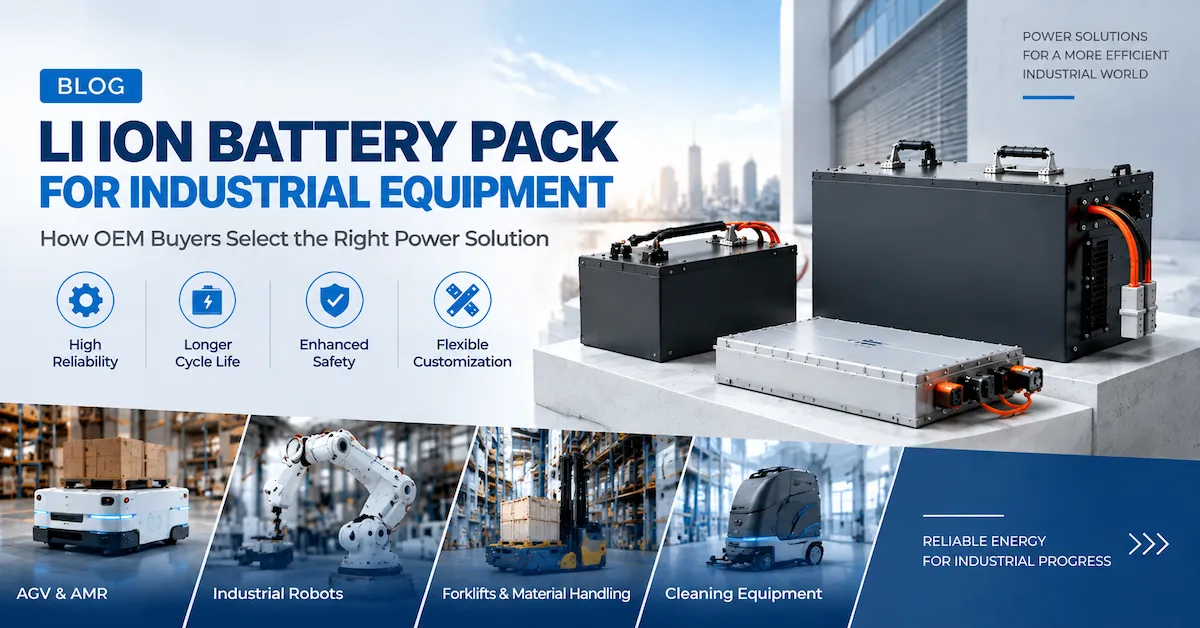
Choosing a li ion battery pack for industrial equipment requires more than matching voltage and capacity. This guide explains how AGV, RGV, robot, and industrial equipment manufacturers evaluate battery specifications, application requirements, BMS integration, customization, validation, and long-term supply before selecting a battery solution.