Why Li Ion Battery Pack for Industrial Equipment Requires Application-Based Selection
A li ion battery pack for industrial equipment is not simply a replacement power source. For industrial applications, the battery must work together with the complete equipment system, including controllers, chargers, mechanical structures, communication interfaces, and operating environments.
Industrial equipment usually has different power requirements compared with consumer electronics. AGVs may operate continuously in automated warehouses, robots may require compact and stable power sources, and RGV systems may need reliable energy supply during repeated transportation cycles.
Because of these differences, selecting a battery only according to voltage or capacity can create compatibility risks.
A suitable industrial battery solution should consider:
- Equipment operating conditions
- Energy requirements
- Continuous and peak current demand
- Installation limitations
- Charging method
- Communication requirements
- Environmental conditions
- Long-term supply needs
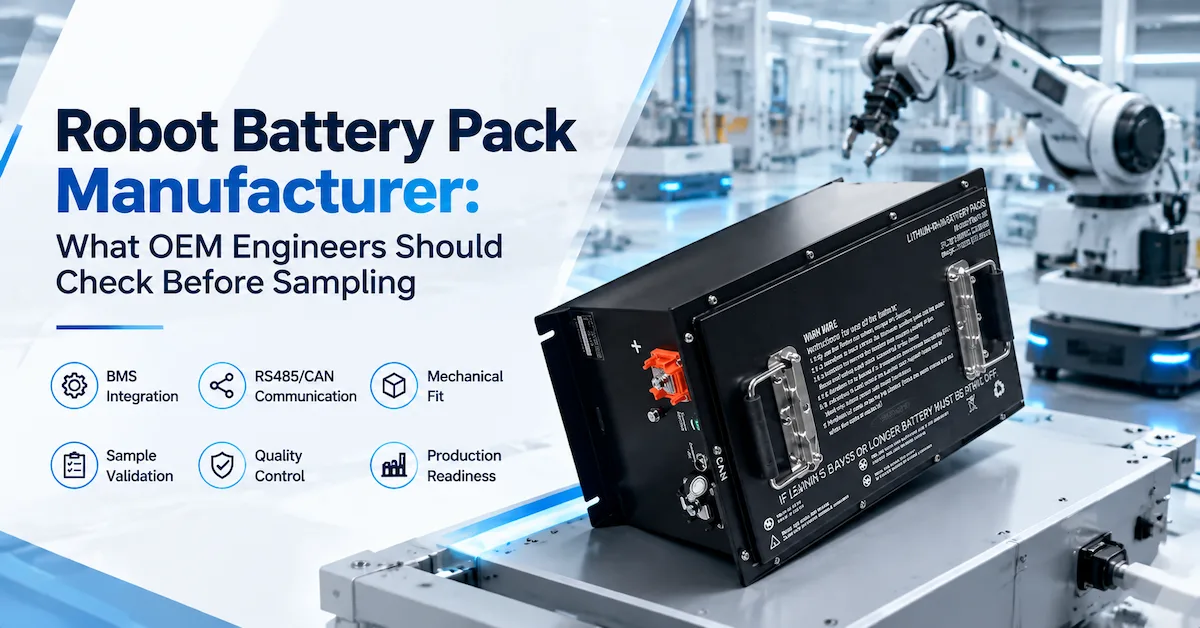
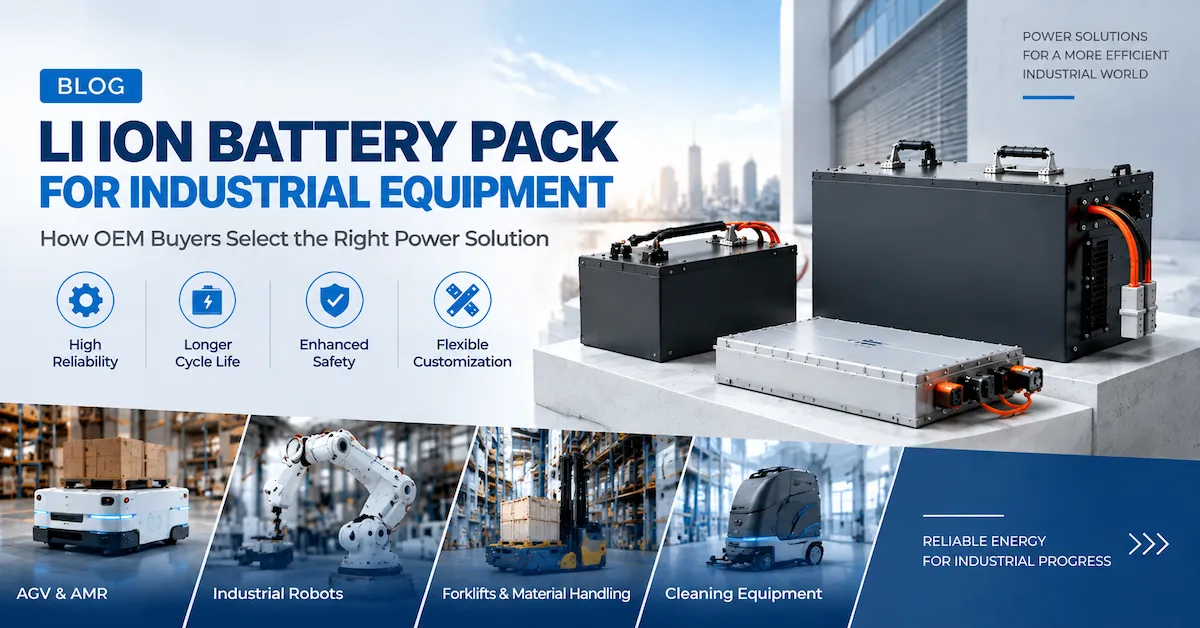
Dailymag provides lithium battery solutions for different industrial applications through its battery product portfolio, including AGV lithium batteries, RGV lithium batteries, and robot lithium batteries.
Which Industrial Equipment Applications Use Lithium Battery Packs?
Industrial lithium battery packs are commonly used in equipment that requires reliable, rechargeable, and application-specific power solutions.
AGV and Automated Transportation Equipment
AGV systems require batteries that support:
- Repeated operating cycles
- Stable power output
- Charging schedules
- Equipment communication
- Fleet operation consistency
For warehouse automation and manufacturing systems, battery reliability directly affects equipment availability.
RGV and Material Handling Systems
RGV applications often require consideration of:
- Continuous movement
- Installation space
- Charging strategy
- Mechanical integration
A battery solution should match the actual operating cycle rather than only the nominal energy requirement.
Industrial Robots and Mobile Robots
Robotic equipment may require:
- Compact battery structure
- Stable output
- Communication capability
- Weight control
- Customized installation
The battery design should support the robot system instead of forcing equipment redesign.
How Should Buyers Define Requirements Before Selecting an Industrial Battery Pack?
Before purchasing a li ion battery pack for industrial equipment, buyers should prepare complete application information.
A professional requirement document should include:
| Requirement Area | Information to Confirm |
|---|---|
| Equipment type | AGV, RGV, robot or other industrial machine |
| Voltage | Required voltage range |
| Capacity | Runtime and energy requirement |
| Current | Continuous and peak current |
| Charging | Charger and charging method |
| Dimensions | Installation space |
| Weight | Equipment limitation |
| Connector | Cable and connection requirements |
| Communication | CAN, RS485 or other interfaces |
| Environment | Temperature and working conditions |
| Quantity | Prototype and production demand |
A clear specification helps suppliers evaluate whether an existing product can meet the requirement or whether a customized solution is needed.
Buyers requiring application-specific development can review Dailymag's custom battery services.
Why Voltage and Capacity Are Not Enough for Industrial Battery Selection
Voltage and capacity are important battery parameters, but they do not fully define whether a battery is suitable for industrial equipment.
Two battery packs with similar voltage and capacity may perform differently because of:
- Different current capability
- Different BMS settings
- Different charging requirements
- Different mechanical designs
- Different communication functions
Current Requirements
Industrial equipment may experience short periods of high power demand.
Examples include:
- AGV acceleration
- Robot movement
- Equipment startup
- Lifting operations
The battery solution should consider both normal operation and peak demand.
Operating Cycle
The same battery capacity can provide different results depending on usage.
Important factors include:
- Working hours
- Number of cycles
- Charging frequency
- Load changes
- Idle time
A correct battery selection starts from the machine's operating pattern.
How Does BMS Integration Affect Industrial Equipment Batteries?
The battery management system is a key part of industrial lithium battery solutions.
A BMS can support:
- Battery protection
- Voltage monitoring
- Current monitoring
- Temperature monitoring
- Charging management
- Equipment communication
For industrial equipment, BMS compatibility should be evaluated together with the equipment controller.
Buyers should confirm:
- Communication protocol
- Required battery information
- Fault reporting method
- Data communication requirements
- Parameter configuration
A battery with suitable electrical specifications may still require additional integration work if communication requirements are not clearly defined.
What Customization Options Are Available for Industrial Lithium Battery Packs?
Industrial equipment often requires customized battery solutions because standard products may not fit all applications.
Common customization areas include:
Mechanical Customization
Examples:
- Battery dimensions
- Mounting structure
- Enclosure design
- Cable position
Electrical Customization
Examples:
- Voltage configuration
- Capacity requirements
- Current capability
- Connector selection
Communication Customization
Examples:
- CAN communication
- RS485 communication
- Battery status information
Application Customization
Examples:
- AGV systems
- Robot platforms
- Industrial equipment
Dailymag supports customized lithium battery solutions through its custom battery services, where buyers can discuss application requirements and project conditions.
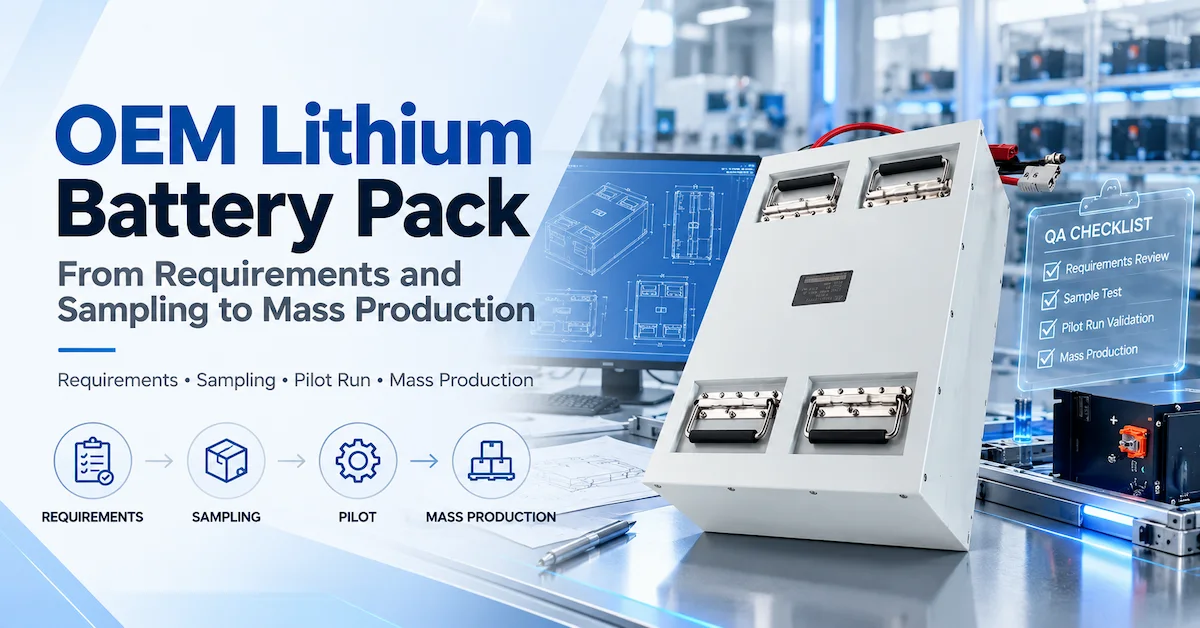
How Should Buyers Validate Industrial Battery Pack Samples?
Sample validation is an important step before mass production.
A battery sample should be tested according to the actual equipment requirements.
Validation may include:
| Test Area | Purpose |
|---|---|
| Installation | Confirm mechanical compatibility |
| Charging | Verify charger interaction |
| Runtime | Evaluate operating duration |
| Load testing | Check performance under demand |
| Communication | Confirm BMS integration |
| Equipment operation | Verify system compatibility |
A successful sample test provides evidence that the proposed battery solution matches the application.
How Do Manufacturers Ensure Industrial Battery Production Consistency?
For OEM projects, production consistency is as important as initial performance.
A reliable production process should control:
Component Management
Important components may include:
- Battery cells
- BMS
- Connectors
- Cables
- Protection components
- Enclosure parts
Manufacturing Process
Control areas include:
- Assembly procedures
- Wiring process
- Inspection points
- Product identification
- Production records
Change Management
During long-term cooperation, changes may occur because of component availability or product improvement.
Important changes should be reviewed before entering production.
Examples:
- Connector changes
- BMS updates
- Cable modifications
- Structural changes
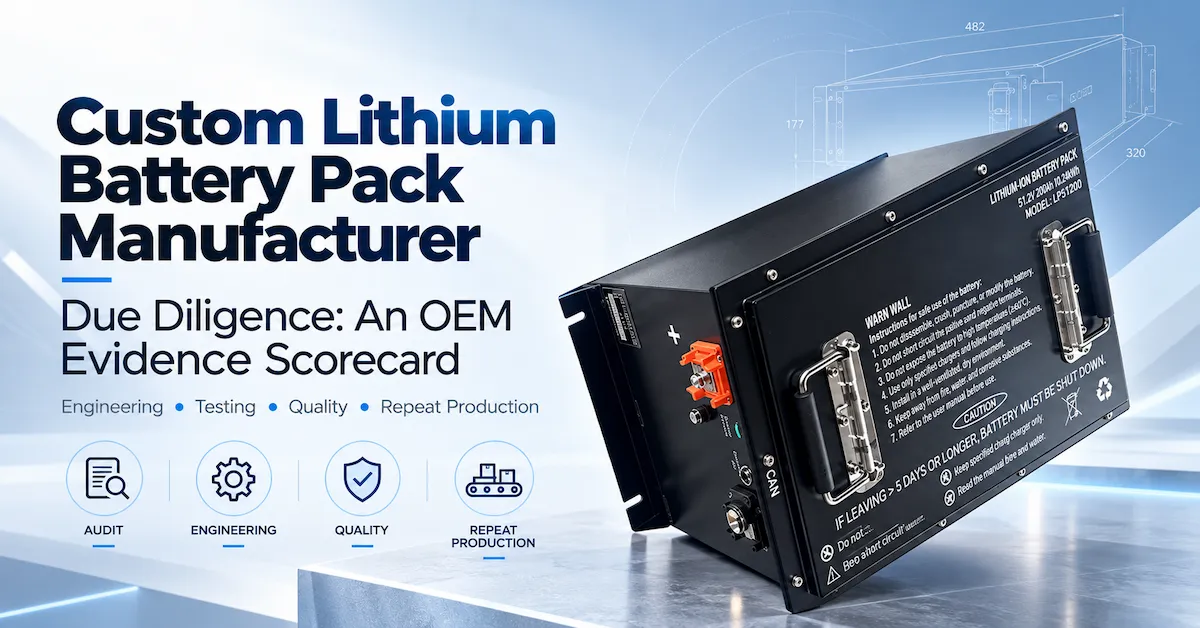
How to Compare Industrial Lithium Battery Suppliers?
Choosing an industrial battery supplier requires evaluating more than product price.
Buyers should compare:
| Evaluation Area | Questions |
|---|---|
| Engineering | Can the supplier support application analysis? |
| Customization | Can requirements be adapted? |
| Manufacturing | Are production processes controlled? |
| Quality | Are testing standards defined? |
| Communication | Can technical issues be resolved efficiently? |
| Supply | Can repeat orders be supported? |
A suitable supplier should support the complete battery lifecycle from development to production.
Compare Dailymag Industrial Battery Applications
Dailymag provides battery solutions for different industrial equipment scenarios.
| Application | Main Evaluation Focus |
|---|---|
| AGV Battery | Runtime, charging, automation operation |
| RGV Battery | Continuous movement and installation |
| Robot Battery | Compact design and communication |
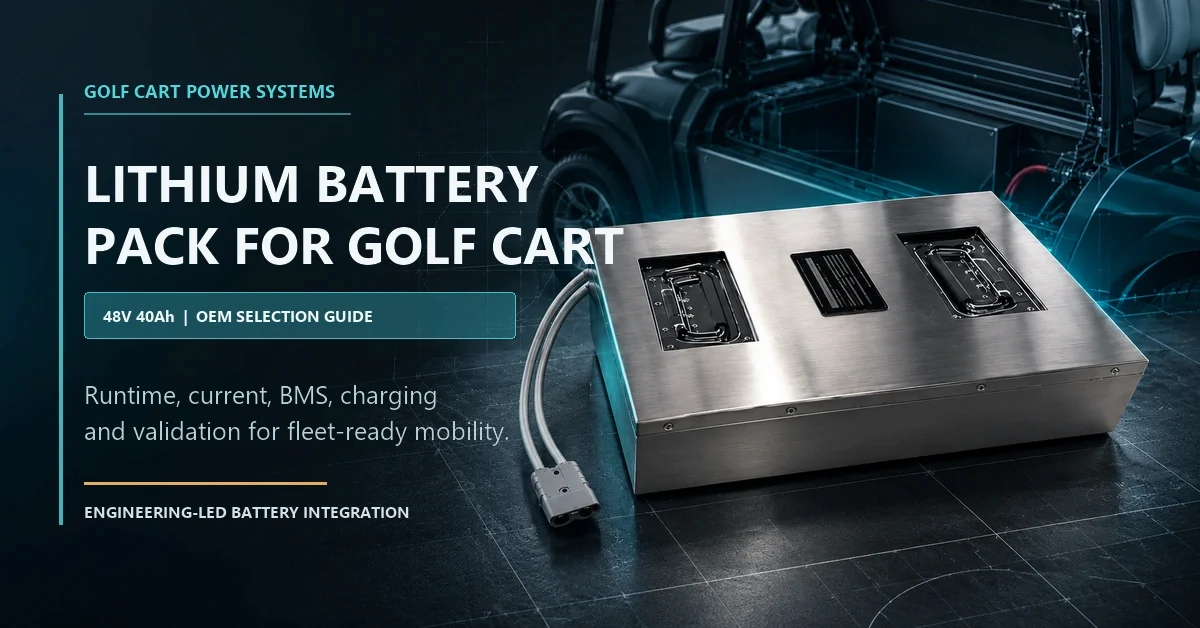
| Golf Cart Battery | Vehicle compatibility and charging |
Buyers can review the Dailymag products to identify suitable application directions.
How Does Industrial Battery Cost Depend on Project Requirements?
The cost of an industrial lithium battery pack depends on more than battery capacity.
Factors may include:
- Battery design requirements
- Custom components
- Prototype development
- Testing requirements
- Production quantity
- Documentation needs
A lower initial price does not always represent lower total project cost.
Industrial buyers should evaluate the complete solution, including technical support, validation, quality management, and future supply stability.
What Information Should Buyers Provide for an Industrial Battery Project?
A complete inquiry should include:
- Equipment application
- Voltage requirement
- Runtime target
- Current demand
- Charger information
- Installation requirements
- Communication requirements
- Operating environment
- Sample quantity
- Production forecast
- Delivery expectations
Providing detailed information helps suppliers develop a more accurate battery solution.
Buyers can review Dailymag's industrial battery solutions and submit project details through Contact Us.
Frequently Asked Questions
What is a li ion battery pack for industrial equipment?
It is a rechargeable lithium battery pack designed for professional equipment applications such as AGVs, RGVs, robots, and industrial machines.
Why are lithium batteries used in industrial equipment?
Lithium batteries provide rechargeable energy storage solutions suitable for applications requiring stable power, repeated cycles, and customized integration.
How do I choose the right industrial battery pack?
Evaluate voltage, capacity, current requirements, charging conditions, dimensions, communication needs, and operating environment.
Can industrial lithium battery packs be customized?
Yes, customization may include dimensions, connectors, electrical specifications, BMS requirements, and communication functions depending on project needs.
Why is BMS important for industrial batteries?
BMS manages battery protection, monitoring, charging, and communication functions required by many industrial systems.
Should buyers test battery samples?
Yes. Sample testing helps verify compatibility with the actual equipment before production.
What industries use industrial lithium battery packs?
Applications include automation equipment, AGVs, RGVs, robots, industrial vehicles, and specialized machines.
How can suppliers ensure battery consistency?
Through controlled specifications, production procedures, testing processes, traceability, and change management.
What affects industrial battery project cost?
Customization requirements, testing, components, production quantity, and technical support can influence total project cost.
How can I start an industrial battery project with Dailymag?
Review the Dailymag battery products, prepare your equipment requirements, and contact Dailymag through Contact Us.
Conclusion
Selecting a li ion battery pack for industrial equipment requires a complete evaluation of application requirements, electrical specifications, BMS integration, customization needs, validation processes, production consistency, and long-term supply capability.
The right industrial battery solution should not only provide energy but also integrate reliably with the equipment system and support future production requirements. Dailymag provides industrial lithium battery solutions through its product portfolio and custom battery services. Buyers developing AGV, RGV, robot, or industrial equipment projects can contact Dailymag through Contact Us with application details, technical requirements, and production plans.