

What Should Buyers Know About the SPYPOINT LIT-10 Lithium Battery Pack?
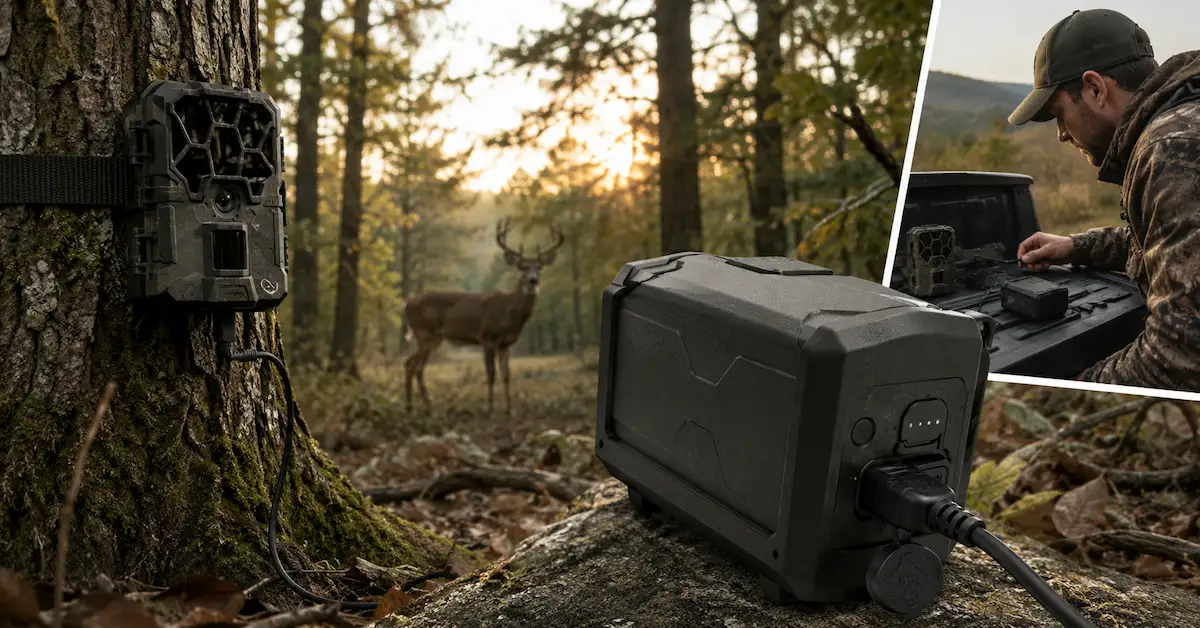
The SPYPOINT LIT-10 lithium battery pack is a rechargeable power pack designed for specific SPYPOINT cellular trail-camera platforms. According to SPYPOINT's current product information, the official LIT-10 is rated at 3.7 V and 10,200 mAh, includes a charging cable, and is primarily listed for the LINK-MICRO family and CELL-LINK.
For a hunter buying one replacement pack, that specification may be enough. For distributors, camera-accessory suppliers, repair businesses and OEM battery buyers, however, sourcing requires a much broader evaluation.
The buyer needs to understand:
- Exact camera compatibility
- Nominal voltage and usable energy
- Battery compartment geometry
- Terminal configuration
- Charging method
- App and camera battery settings
- Outdoor temperature requirements
- Expected field runtime
- Safety and transportation documentation
- Branding and intellectual-property boundaries
- Replacement validation before volume purchasing
A battery that looks similar to the LIT-10 is not automatically electrically or mechanically compatible. This is why professional sourcing should begin with the target camera and original battery specifications rather than with capacity alone.
Official SPYPOINT LIT-10 Specifications at a Glance
SPYPOINT publishes the following core specifications for the LIT-10 rechargeable lithium battery pack. Its LINK-MICRO-S-LTE documentation also provides charging and environmental information for the pack.
| Specification | Official LIT-10 information |
|---|---|
| Nominal voltage | 3.7 V |
| Rated capacity | 10,200 mAh |
| Approx. nominal energy | About 37.7 Wh calculated from 3.7 V × 10.2 Ah |
| Charging connection | Micro-USB |
| Recommended charger | 5 V wall charger with supplied cable |
| Approx. charging time | About 12 hours |
| Charge indicator | Red during charging, green when fully charged |
| Operating temperature | -30°C to 50°C (-22°F to 122°F) |
| Storage temperature | -40°C to 60°C (-40°F to 140°F) |
| Primary listed applications | LINK-MICRO series and CELL-LINK |
The approximately 37.7 Wh figure is a calculated nominal-energy value rather than a separately published SPYPOINT specification. Battery runtime in the field should not be predicted from Wh alone because cellular transmission frequency, detection activity, temperature, signal conditions and camera configuration can all affect power consumption.
Which Cameras Are Compatible With the LIT-10?
Compatibility is one of the most important parts of this keyword because buyers frequently search for a battery after identifying their camera rather than after identifying the electrical specification.
SPYPOINT's current LIT-10 product page lists compatibility with:
- LINK-MICRO
- LINK-MICRO-LTE
- LINK-MICRO-S-LTE
- CELL-LINK
SPYPOINT's general battery-support information likewise groups the LIT-10 with the LINK-MICRO Series and CELL-LINK.
What About the SPYPOINT LM2?
There is an important detail buyers should notice.
The current primary product specification does not list LM2 in its short compatibility line, but SPYPOINT customer service has answered that the LIT-10 is compatible with LM2 cameras.
Because manufacturer product pages, support databases and newer camera revisions can evolve at different times, professional buyers should confirm the exact model and hardware revision before ordering large quantities.
For procurement, the better question is not:
“Does it fit SPYPOINT cameras?”
It is:
“Is this battery validated for the exact camera model, hardware revision and firmware environment used by my customers?”
Why Trail-Camera Battery Selection Is Different From General Electronics
A trail-camera battery operates under conditions that are very different from those of a phone, laptop or indoor electronic device.
A trail camera may remain unattended outdoors for weeks while repeatedly switching between standby, detection, image capture and cellular transmission. A battery therefore has to support both low long-duration background consumption and short periods of higher system activity.
The actual field requirement depends on factors such as:
- Number of motion detections
- Photo transmission frequency
- Cellular signal strength
- Day versus night imaging
- Temperature
- Camera configuration
- Time between site visits
- Use of solar or external power
- Seasonal deployment length
For this reason, distributors evaluating a trail camera lithium battery should not compare batteries by mAh alone.
LIT-10 vs AA Batteries: Which Power Source Makes More Sense?
Certain compatible SPYPOINT devices offer more than one power-source option.
SPYPOINT states that CELL-LINK and LINK-MICRO-LTE can operate with either eight AA batteries or the LIT-10 pack. SPYPOINT also states that the LINK-MICRO-S-LTE uses the LIT-10 as its compatible battery source.
SPYPOINT's LINK-MICRO-S-LTE documentation says the LIT-10 provides more than double the charge duration of AA batteries in that application.
| Buying consideration | LIT-10 rechargeable pack | AA batteries |
| Reusability | Rechargeable | Usually replaced after discharge |
| Camera servicing | May reduce replacement visits | Requires carrying replacement cells |
| Initial purchase | Higher than one set of basic AA cells | Lower initial entry cost |
| Recurring consumables | Reduced | Repeated purchase required |
| Charging infrastructure | Required | Not required for disposable AA |
| Compatibility | Camera-model dependent | Camera-model dependent |
| Fleet management | Recharge/rotation process needed | Stock and replacement process needed |
For a single camera, convenience may dominate the decision. For a fleet of trail cameras, the economics become more operational: labor, travel distance, battery replacement frequency and charging management can matter as much as the battery's purchase price.
How Should the SPYPOINT LIT-10 Be Charged?
SPYPOINT's LINK-MICRO-S-LTE instructions specify removing the LIT-10 battery pack and charging it with the supplied micro-USB cable and a 5 V wall charger. The manual gives an approximate charging time of 12 hours, with a red charging light changing to green once the battery is full.
The same manual advises charging at or near room temperature and avoiding charging under extreme temperature conditions.
A Practical Charging Workflow
For users managing several cameras:
- Label each battery by camera or fleet number.
- Remove the battery from the camera.
- Inspect the housing, terminals and charging connector.
- Use the specified charging method.
- Confirm the charge-status indicator.
- Record batteries that charge unusually slowly or become excessively warm.
- Rotate fully charged packs into field inventory.
- Store spare packs appropriately before the next deployment.
For commercial users, a simple battery-rotation process can make the rechargeable system more predictable than charging batteries only when a field camera has already stopped operating.
Can the LIT-10 Be Charged Inside the Camera?
This depends on the camera and power configuration, which is why the manufacturer's instructions should be followed carefully.
For the LINK-MICRO-S-LTE, SPYPOINT describes a built-in solar system that can maintain the LIT-10's state of charge under suitable conditions, while recommending the supplied micro-USB cable and wall power for quick and complete recharging.
For other solar accessories, the behavior can be different. SPYPOINT specifically states that some external lithium-battery solar-panel configurations can power the camera while leaving a LIT-10 inside as backup, but do not charge the LIT-10 battery itself.
This is an important purchasing lesson:
A solar panel that powers a camera is not automatically a charger for the removable lithium battery pack.
Buyers should verify the actual power path rather than assuming solar compatibility from connector fit alone.
Why the Battery Setting in the SPYPOINT App Matters
Battery compatibility is not purely mechanical.
SPYPOINT's support instructions for certain LIT-10 installations tell users to change the battery setting inside the SPYPOINT app to LIT-10 and complete the required synchronization procedure. The camera's battery status can then report the LIT-10 selection and remaining battery percentage.
This highlights an important issue for third-party or OEM battery development:
A replacement battery may have to work not only with the physical compartment and voltage requirements but also with the camera's battery-management logic and user-interface expectations.
For replacement-battery developers, validation should therefore include:
- Physical installation
- Camera startup
- Detection
- Image capture
- Cellular transmission
- Battery percentage display
- Low-battery behavior
- Repeated recharge cycles
- App synchronization
Outdoor Temperature Is a Real Design Requirement
SPYPOINT specifies an operating temperature range of -30°C to 50°C (-22°F to 122°F) and a storage range of -40°C to 60°C (-40°F to 140°F) for the LIT-10 in its LINK-MICRO-S-LTE documentation.
Those numbers are useful because trail cameras may be deployed in:
- Winter hunting areas
- Forests
- Agricultural land
- Wildlife-monitoring sites
- Remote property
- Mountain environments
- Hot exposed fields
However, an OEM supplier should not simply copy these limits onto a compatible product.
If developing an independent replacement battery, the required temperature range must be supported by the selected cells, protection design, housing and finished-pack validation.
Questions Buyers Should Ask About Outdoor Performance
Ask the battery supplier:
- What is the validated discharge temperature range?
- At what temperature can the battery safely be charged?
- How much usable capacity is retained in cold conditions?
- How is the pack protected against overheating?
- Has the finished pack been tested, or only the individual cells?
- What storage conditions are recommended?
- How should a battery be handled after long-term field exposure?
Specific answers are much more valuable than generic claims such as “works in extreme weather.”
Original LIT-10 vs Compatible Replacement Battery
For distributors and private-label businesses, product identity must remain clear.
A genuine SPYPOINT LIT-10 lithium battery pack is a SPYPOINT product. An independently produced battery intended to work in the same application should be marketed as a compatible replacement, not represented as an original SPYPOINT battery.
| Aspect | Genuine SPYPOINT LIT-10 | Independent compatible battery |
| Brand owner | SPYPOINT | Independent manufacturer/brand |
| Product identity | LIT-10 | Compatible replacement |
| Official specifications | Defined by SPYPOINT | Defined by replacement manufacturer |
| Compatibility | Manufacturer-specified | Must be independently validated |
| Label/packaging | SPYPOINT | Own brand/private label |
| Warranty | SPYPOINT terms | Supplier's own terms |
| Engineering responsibility | Original manufacturer | Replacement manufacturer |
A serious OEM program should avoid copying brand logos, labels, packaging or other elements in a way that makes buyers believe an independent battery is genuine.
The commercial goal should be:
functional compatibility + transparent branding + validated performance
rather than visual imitation.
What Must Be Matched in a Compatible LIT-10 Battery Project?
If a distributor or equipment company wants to develop a compatible replacement, the specification should be much more detailed than “3.7 V 10,200 mAh.”
Electrical Requirements
Start with:
- Nominal voltage
- Capacity
- Watt-hours
- Maximum continuous output
- Peak current
- Low-voltage cutoff
- Charging input
- Protection behavior
Mechanical Requirements
Document:
- Pack length
- Width
- Height
- Housing shape
- Retaining features
- Terminal position
- Connector orientation
- USB charging-port position
Even when electrical specifications are correct, a dimensional or contact-position error can make a battery unusable.
Protection Requirements
A rechargeable lithium battery pack normally requires a protection strategy appropriate to its cell configuration and application.
Engineering evaluation may include:
- Overcharge protection
- Over-discharge protection
- Overcurrent protection
- Short-circuit protection
- Temperature monitoring
- Cell balancing where applicable
The exact architecture should be determined from the actual battery design rather than inferred from the original product's external specifications.
A Better RFQ Checklist for LIT-10-Compatible Battery Sourcing
A buyer contacting a battery manufacturer should provide enough information to allow meaningful engineering review.
| RFQ item | What to provide |
| Reference product | SPYPOINT LIT-10 or target equivalent |
| Camera model | Exact model and revision |
| Nominal voltage | 3.7 V reference requirement |
| Capacity target | Original or requested alternative |
| Mechanical sample | Original battery where legally and practically available |
| Dimensions | Full drawing or measured dimensions |
| Terminal layout | Photos/drawing/polarity |
| Charging | Connector and charging requirements |
| Operating environment | Temperature, weather, deployment conditions |
| Runtime target | Days/weeks or target image transmissions |
| Branding | Replacement brand/private label |
| Quantity | Sample, first order, annual forecast |
| Market | U.S., Canada, Europe or other destination |
| Packaging | Retail, wholesale or project packaging |
| Validation | Camera models to be tested |
The more specific the RFQ, the easier it becomes to compare suppliers on engineering capability rather than simply unit price.
What Should Be Tested Before Mass Production?
A sample that turns the camera on once is not enough.
A practical replacement-validation plan should include several layers.
1. Incoming Battery Inspection
Check:
- Housing quality
- Connector condition
- Terminal alignment
- Weight consistency
- Label accuracy
- Packaging
2. Electrical Testing
Verify:
- Open-circuit voltage
- Capacity
- charging behavior
- output under load
- cutoff behavior
- protection functions
3. Device Compatibility Testing
Test the battery in the actual camera models.
Confirm:
- Startup
- detection
- image capture
- night operation
- cellular upload
- app status
- low-battery reporting
- recovery after charging
4. Environmental Validation
Where the target customer base operates outdoors, temperature testing should reflect the agreed specification rather than normal-room-temperature use only.
5. Field Trial
A small pilot fleet can reveal problems that bench testing may not reproduce, especially when cellular signal conditions, frequent triggers and outdoor temperature changes affect power demand.
How Battery Cost Should Be Evaluated
The lowest battery quotation is not necessarily the lowest-cost sourcing decision.
For trail-camera fleets or commercial distribution, consider:
Total battery cost = purchase price + charging cost + field visits + returns + warranty claims + inventory + shipping + failure risk
A rechargeable battery that reduces disposable-cell purchases may offer operational benefits, but poor compatibility can quickly erase those savings.
Buyers should therefore compare suppliers on:
- Capacity consistency
- Mechanical fit
- Charging stability
- Field reliability
- Documentation
- Batch traceability
- Packaging quality
- Lead time
- After-sales response
- Replacement handling
For B2B purchasing, predictable performance is usually more valuable than a small difference in unit price.
Shipping and Compliance for Rechargeable Lithium Battery Packs
Lithium-ion battery transportation introduces requirements that should be considered before importing replacement packs.
The U.S. Department of Transportation's PHMSA states that lithium cells and batteries offered for transportation must have passed applicable design tests in UN Manual of Tests and Criteria, subsection 38.3, and that the relevant test-summary documentation must be made available when required.
This does not mean that any certificate found online automatically applies to a newly developed replacement battery.
For an OEM project, buyers should confirm the documents against:
- Finished battery design
- Cell configuration
- Manufacturer
- Model designation
- Watt-hour rating
- Transport method
- Destination market
You can review the official PHMSA lithium battery transportation guidance when planning U.S. shipments.
When Does Custom Development Make Commercial Sense?
Buying an original LIT-10 is usually the simplest option for individual users who only need one or two batteries.
A custom or private-label replacement project becomes more relevant when the buyer has:
- Significant recurring volume
- A replacement-battery distribution business
- Multiple retail channels
- Private-label requirements
- An established customer base using compatible cameras
- Long-term supply planning needs
- A requirement for customized packaging
- A need to integrate a similar battery format into another device
But custom development only makes sense if there is enough volume to justify engineering, tooling, validation, compliance and inventory costs.
For low quantities, genuine retail batteries may remain the more efficient solution.
How Dailymag Can Support a Custom Rechargeable Battery Project
Dailymag Energy's website positions the company around customized lithium-ion battery-pack solutions and states that its battery products serve areas including handheld intelligent terminals, industrial robots, low-temperature equipment and power-grid monitoring applications.
For an independent trail-camera or portable-device battery project, the relevant value is not claiming to manufacture the genuine SPYPOINT LIT-10. Instead, it is evaluating whether a technically appropriate custom or compatible rechargeable lithium battery pack can be developed around the buyer's equipment requirements.
Dailymag's published service scope includes product design, sampling, R&D, production quality management, customized packaging, transportation and after-sales support. Its website states typical lead times of approximately 15–30 business days for standard customization and 45–60 business days for more complex projects involving additional R&D and testing, subject to project requirements.
Buyers can explore Dailymag's lithium battery products, review its OEM battery services, learn more about Dailymag Energy, or contact the engineering team with a reference battery, device information and target quantity.
FAQ
What is the voltage of the SPYPOINT LIT-10 lithium battery pack?
The official SPYPOINT LIT-10 is rated at 3.7 V with a listed capacity of 10,200 mAh.
How many watt-hours does the LIT-10 have?
Using the published nominal voltage and capacity, 3.7 V × 10.2 Ah gives approximately 37.7 Wh of nominal energy. Actual usable energy and field runtime depend on the camera and operating conditions.
How long does a LIT-10 battery take to charge?
SPYPOINT's instructions state approximately 12 hours when charging with the specified micro-USB cable and a 5 V wall charger.
Which SPYPOINT cameras use the LIT-10?
SPYPOINT's main product page lists LINK-MICRO, LINK-MICRO-LTE, LINK-MICRO-S-LTE and CELL-LINK. SPYPOINT support responses also state compatibility with LM2, so buyers should verify the exact camera model before purchasing in volume.
Can the LIT-10 replace AA batteries?
Some compatible cameras allow either AA batteries or a LIT-10. For example, SPYPOINT states that CELL-LINK and LINK-MICRO-LTE can use either source, while power options differ by camera model.
Can I charge the LIT-10 with a solar panel?
It depends on the specific camera and solar configuration. SPYPOINT documents solar maintenance charging in the LINK-MICRO-S-LTE system, while other external solar accessories may power the camera without charging the removable LIT-10 itself.
What temperature can the LIT-10 operate in?
SPYPOINT lists an operating range of -30°C to 50°C (-22°F to 122°F) and a storage range of -40°C to 60°C (-40°F to 140°F) in its LINK-MICRO-S-LTE documentation.
Can a third-party supplier manufacture a LIT-10 replacement?
A battery manufacturer may evaluate development of a compatible rechargeable battery for equipment using a similar format, but the project requires electrical, mechanical, charging and device-level validation. It should be marketed transparently as an independent compatible product rather than as a genuine SPYPOINT battery.
What information should I send for an OEM quotation?
Provide the original battery reference, exact camera model, battery sample or dimensions, terminals, voltage, target capacity, charging method, operating temperature, target market, expected quantity, branding requirements and required validation tests.
Does a replacement lithium battery need UN38.3 documentation?
For lithium batteries offered for transportation, applicable UN 38.3 requirements and test-summary obligations must be addressed. Buyers should confirm that documentation matches the actual finished battery design rather than assuming that a cell-level or unrelated battery report covers the product.
Conclusion
The SPYPOINT LIT-10 lithium battery pack is more than a generic 3.7 V rechargeable battery. Its 10,200 mAh capacity, camera-specific physical interface, charging method, outdoor operating requirements and integration with SPYPOINT camera settings make compatibility the central buying issue.
For an individual camera owner, purchasing the genuine accessory is usually straightforward. For distributors, replacement-battery businesses and OEM buyers, the sourcing decision is more complex. A successful compatible battery project should validate electrical specifications, mechanical fit, charging, camera startup, image transmission, battery reporting, temperature performance, quality consistency and transport documentation before mass production.
If your project involves a private-label trail-camera battery or a custom rechargeable lithium-ion battery for another professional device, review Dailymag's custom battery services or contact Dailymag Energy with your reference battery, target equipment, required quantity and operating conditions for technical evaluation.