Why Lithium Battery Pack Bulk Order Requires More Than Bulk Pricing
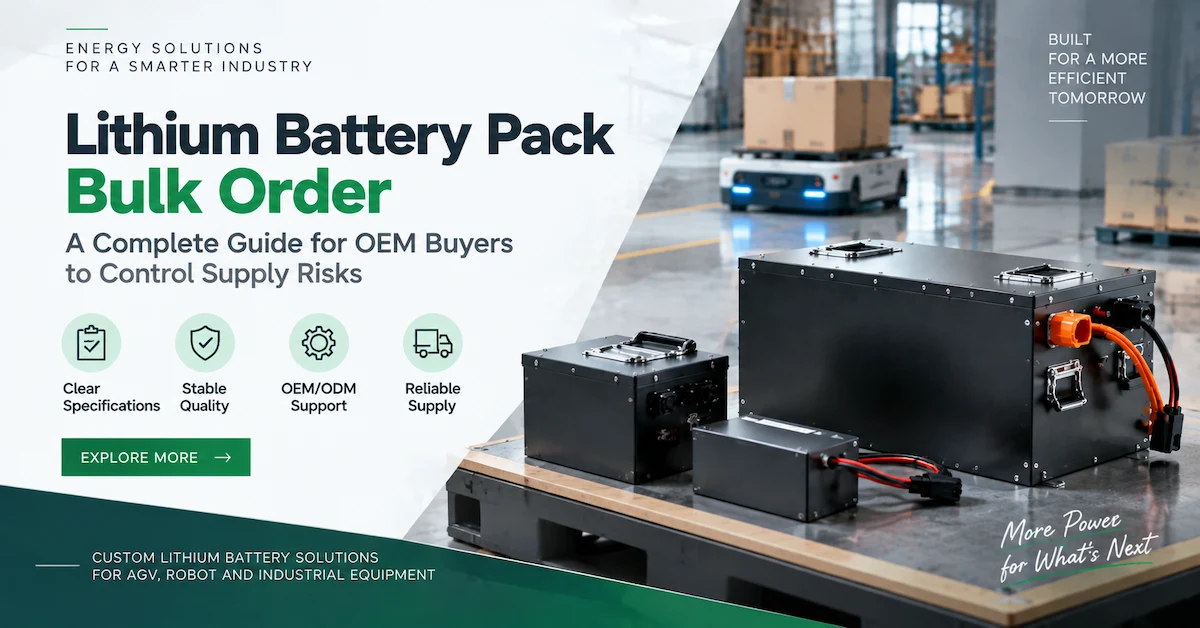
A lithium battery pack bulk order is not simply a larger quantity purchase after a successful sample test. For industrial OEM buyers, every battery delivered in a bulk shipment needs to match the approved technical requirements, equipment compatibility, and production standards.
Industrial battery applications such as AGV, RGV, robotics, and electric vehicles usually involve more than basic energy storage. The battery needs to work together with the equipment controller, charger, communication system, mechanical structure, and operating environment.
A battery that looks suitable according to voltage and capacity may still create problems if:
- The current output does not match equipment demand
- The charging method is incompatible
- The connector configuration changes
- The BMS communication does not match the controller
- The mechanical dimensions cannot fit the equipment
- Different production batches are inconsistent
For this reason, buyers should evaluate a supplier based on the complete process from specification definition to repeat production.
Dailymag provides lithium battery solutions for different industrial applications, including RGV lithium batteries, AGV lithium batteries, robot lithium batteries, and golf-cart lithium batteries. These categories help buyers identify suitable application directions before starting a detailed project discussion.
How Should OEM Buyers Prepare Before a Bulk Battery Order?
A successful bulk purchase begins before contacting a supplier. The buyer needs to define the equipment requirements clearly so the supplier can evaluate the correct battery solution.
A professional RFQ should include technical information and purchasing requirements together.
Technical Information Required for Battery Evaluation
| Requirement | Information to Confirm |
|---|---|
| Application | Equipment type and operating environment |
| Voltage | Required nominal voltage and operating range |
| Capacity | Required runtime and energy demand |
| Current | Continuous and peak current requirements |
| Charging | Charger information and charging method |
| Dimensions | Available installation space |
| Weight | Equipment weight limitation |
| Connector | Cable and connector requirements |
| Communication | CAN, RS485 or other interface requirements |
| Environment | Temperature, humidity and working conditions |
Commercial Information Required for Bulk Planning
| Requirement | Information to Confirm |
|---|---|
| Sample quantity | Number of units required for validation |
| Pilot order | Whether production testing is required |
| Bulk quantity | Initial production demand |
| Forecast | Expected future purchasing volume |
| Delivery plan | Required shipment schedule |
| Packaging | Product packaging requirements |
| Documentation | Required technical and shipping documents |
A complete requirement document reduces misunderstandings and allows suppliers to identify possible risks before quotation and production.
How to Select the Right Lithium Battery Pack Supplier?
Choosing a supplier should not only focus on price. A suitable supplier needs to understand the application and provide a controlled manufacturing process.
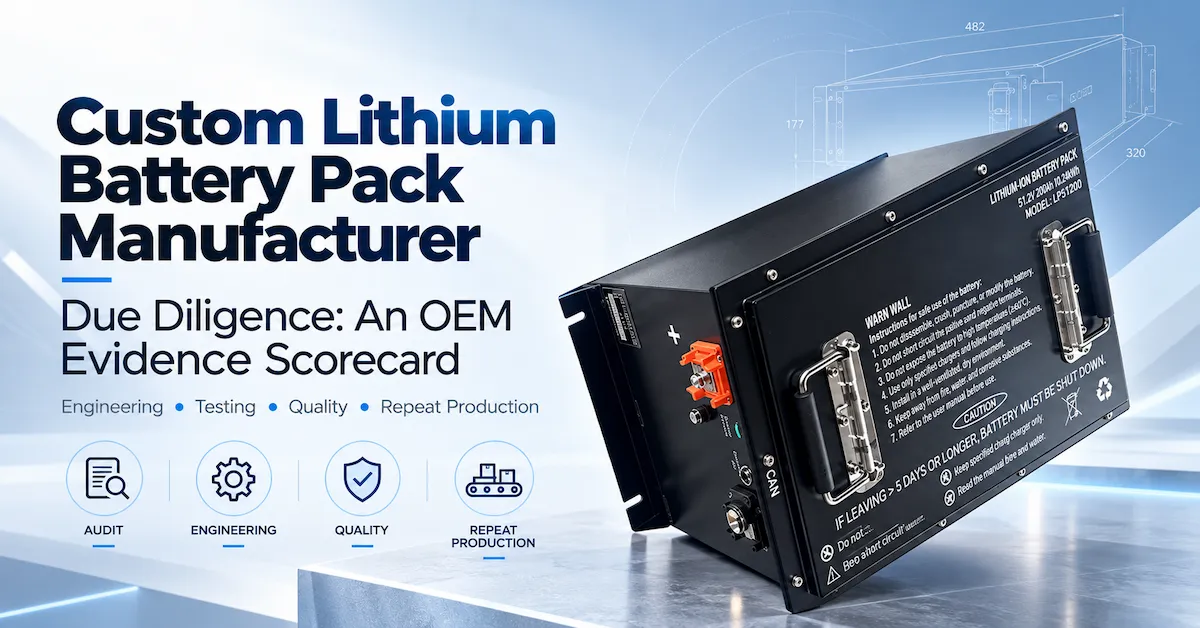
Evaluate Engineering Capability
For industrial battery projects, engineering support is often as important as manufacturing ability.
Buyers should understand:
- Who reviews the application requirements
- Who confirms battery specifications
- Who manages BMS requirements
- Who supports sample testing
- Who handles technical changes
A supplier that only provides a quotation may not be able to support complex OEM projects.
Dailymag's custom battery services provide a starting point for projects requiring further technical evaluation and customization.
Evaluate Manufacturing Control
A reliable lithium battery pack bulk order depends on production consistency.
Buyers should review:
- Production instructions
- Component control
- Assembly process
- Inspection procedures
- Testing requirements
- Product identification
- Change management
The goal is to ensure that future batches match the approved sample.
Why Battery Specifications Need to Be Controlled Before Mass Production
Many bulk-order problems come from unclear specifications.
A battery specification should define more than voltage and capacity.
Important controlled items may include:
- Battery model
- Electrical parameters
- Dimensions
- Weight
- Connector type
- Cable length
- BMS configuration
- Communication requirements
- Charging requirements
- Label information
- Packaging requirements
Why Specification Revision Matters
During product development, changes may happen after sample testing.
For example:
- A connector may be updated
- A cable length may change
- A BMS parameter may be adjusted
- A housing design may be modified
These changes should create a new revision record.
Without revision control, different departments may use different versions of the battery requirement, creating problems during production and after-sales service.
How Should Buyers Validate Battery Samples?
A sample is not only a product demonstration. It represents a specific battery configuration that needs to be validated.
Before approving a sample, buyers should define:
- Test equipment
- Operating conditions
- Charging conditions
- Load requirements
- Acceptance criteria
- Test results
Equipment-Level Validation Is Important
A battery should be tested in the actual application whenever possible.
For example:
An AGV battery should be evaluated under realistic movement and charging conditions.
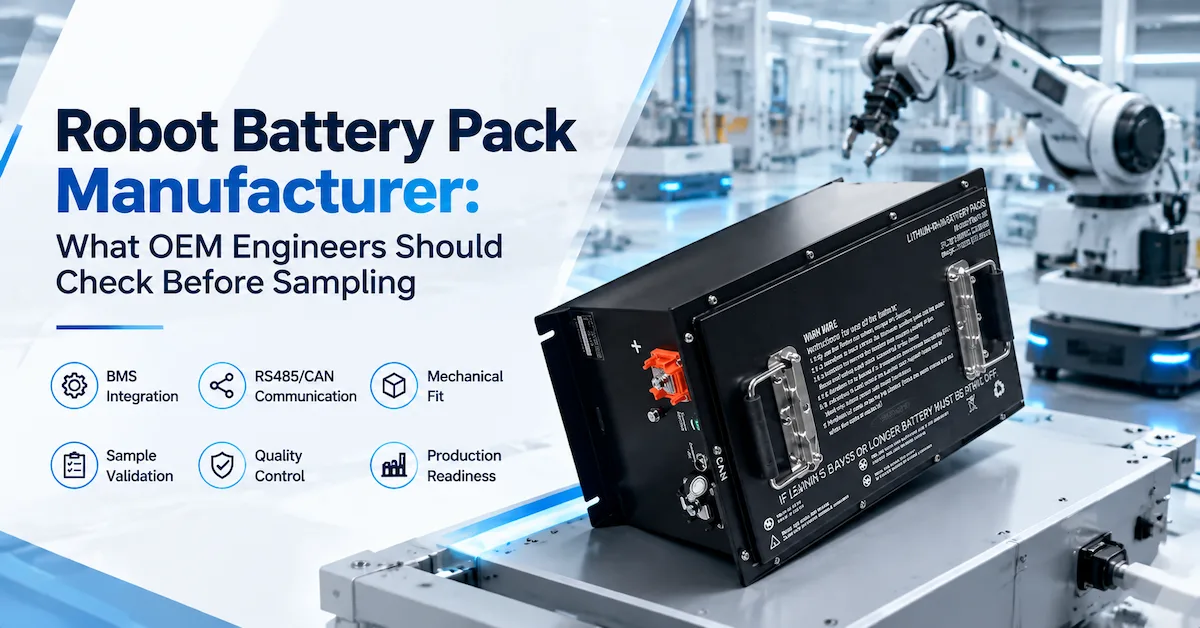
A robot battery should be checked for installation, communication, and movement requirements.
A vehicle battery should be reviewed with the controller and charger.
Successful charging does not automatically prove complete compatibility.
Why BMS Integration Matters in Bulk Battery Orders
The battery management system is a key part of industrial battery integration.
A BMS may control:
- Over-voltage protection
- Under-voltage protection
- Over-current protection
- Temperature monitoring
- Battery status information
- Charging management
For smart equipment, communication is also important.
A statement such as CAN or RS485 support does not define complete compatibility.
Buyers may need to confirm:
- Communication protocol
- Data information
- Connector definition
- Communication timing
- Fault reporting
- Software or parameter versions
A battery pack that works electrically may still fail system integration if the communication requirements are unclear.
How to Control Battery Quality During Bulk Production?
Quality control should be based on measurable requirements instead of general statements.
A complete quality process may include:
Incoming Material Control
Verify important components before production.
Examples:
- Battery cells
- BMS components
- Connectors
- Cables
- Housing materials
Production Process Control
Ensure manufacturing follows the approved specification.
Important points may include:
- Assembly instructions
- Wiring process
- Component identification
- Inspection procedures
- Revision control
Finished Battery Inspection
The final battery inspection should confirm agreed requirements.
Possible checks include:
- Electrical performance
- Protection functions
- Communication
- Appearance
- Dimensions
- Packaging
The exact inspection requirements should be defined according to the product and application.
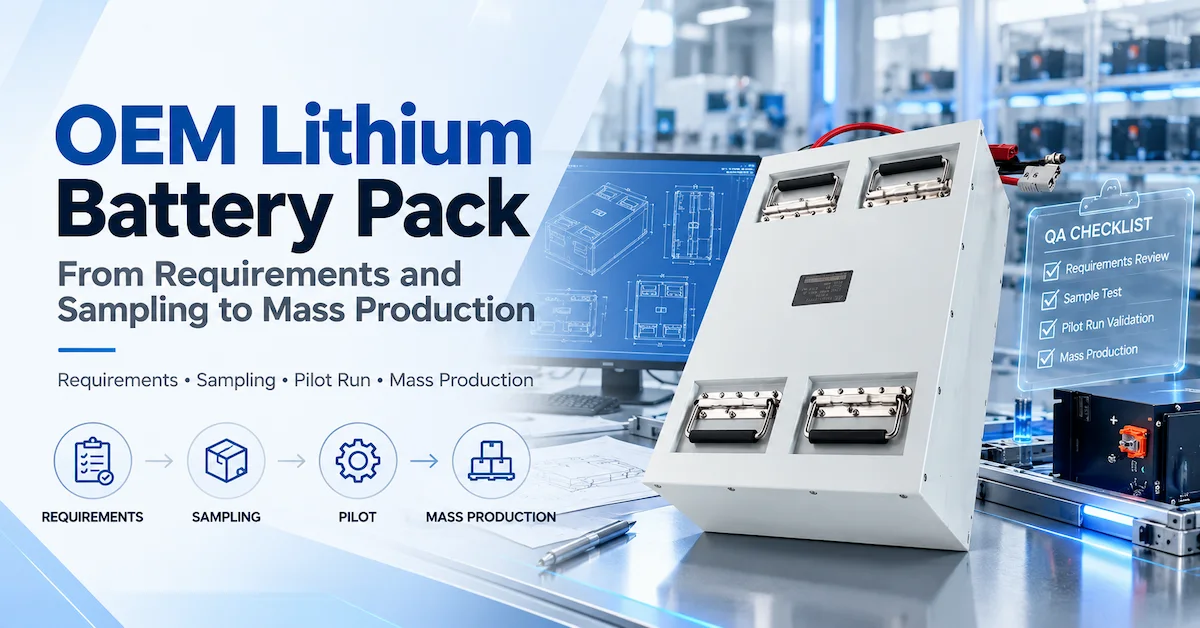
How Do Prototype, Pilot, and Bulk Orders Connect?
A professional battery supply process usually includes several stages.
| Stage | Purpose |
|---|---|
| Prototype | Verify technical solution |
| Pilot production | Confirm manufacturing repeatability |
| Bulk order | Maintain consistent production |
Prototype Stage
The buyer confirms whether the battery meets equipment requirements.
Pilot Stage
The supplier confirms whether production can reproduce the approved design.
Bulk Production Stage
Both sides confirm that repeated batches remain consistent.
This process reduces risks caused by differences between engineering samples and mass-produced batteries.
Compare Dailymag Battery Applications Before Bulk Purchasing
Dailymag provides different battery categories according to application scenarios.
| Application | Suitable Buyers | Main Evaluation Points |
|---|---|---|
| RGV Battery | RGV equipment manufacturers | Installation, duty cycle, charging |
| AGV Battery | Automation companies | Runtime, load, fleet operation |
| Robot Battery | Robotics manufacturers | Size, communication, power demand |
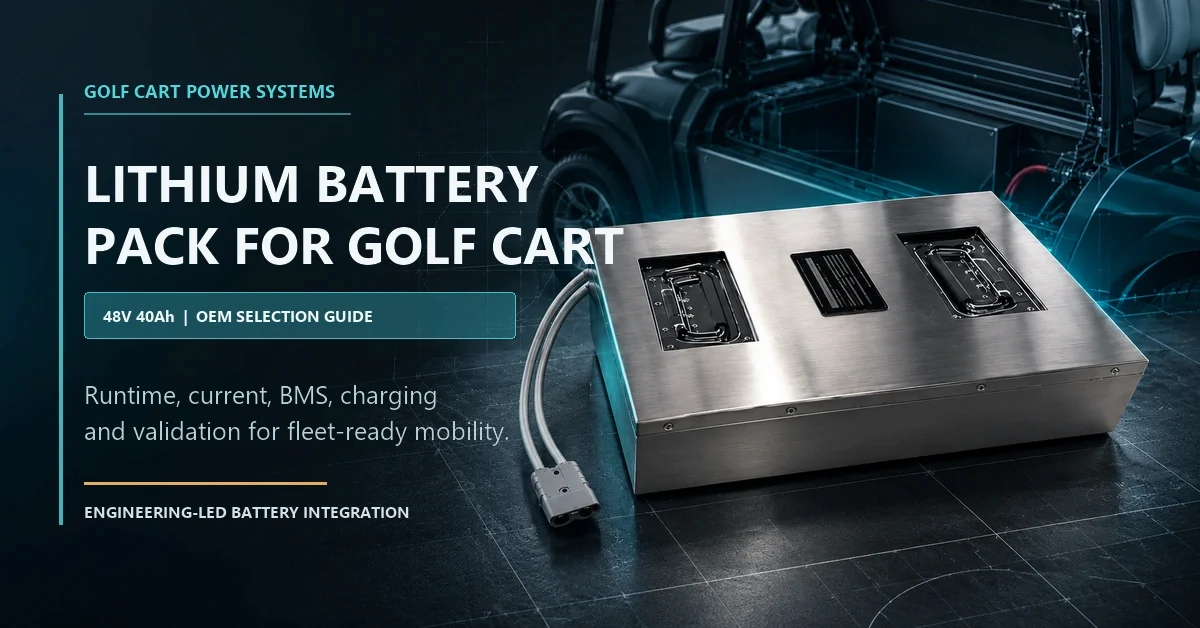
| Golf Cart Battery | Vehicle manufacturers | Charger, controller, installation |
Buyers can review Dailymag's battery products and identify the most relevant application category before discussing bulk requirements.
How Does MOQ Affect Lithium Battery Pack Bulk Orders?
MOQ is an important commercial factor, but it should be evaluated together with project requirements.
MOQ may depend on:
- Battery configuration
- Customized components
- BMS requirements
- Housing design
- Connector requirements
- Packaging
Buyers should ask:
- What creates the MOQ?
- Can products be delivered in batches?
- How are forecasts managed?
- How are unused materials handled if specifications change?
A clear MOQ discussion helps both suppliers and buyers plan production more effectively.
How Should Buyers Compare Bulk Battery Costs?
The lowest unit price does not always represent the lowest total cost.
A complete cost evaluation should consider:
- Battery price
- Engineering support
- Sample cost
- Testing
- Packaging
- Documentation
- Logistics
- Inspection
- Replacement management
- Future changes
A cheaper battery may create additional costs if it causes:
- Equipment compatibility issues
- Production delays
- Additional testing
- Replacement problems
The best supplier choice should balance price, technical capability, quality control, and long-term supply stability.
What Information Should Buyers Send for a Lithium Battery Pack Bulk Order?
A detailed inquiry helps suppliers provide accurate proposals.
Buyers should provide:
- Equipment application
- Voltage requirements
- Runtime target
- Current requirements
- Charger information
- Installation dimensions
- Connector requirements
- Communication needs
- Operating environment
- Sample quantity
- Bulk quantity
- Delivery schedule
- Documentation requirements
Buyers can review Dailymag's battery products and submit project details through Contact Us.
Frequently Asked Questions
What is a lithium battery pack bulk order?
A lithium battery pack bulk order refers to purchasing multiple battery packs for industrial production, distribution, fleet use, or repeated equipment applications.
How do I choose a lithium battery supplier?
Evaluate application understanding, engineering capability, manufacturing control, quality management, customization support, and long-term supply capability.
Should I test samples before ordering bulk batteries?
Yes. Sample validation helps confirm equipment compatibility before releasing larger production quantities.
What affects lithium battery MOQ?
MOQ may depend on battery configuration, customization requirements, components, packaging, and production planning.
Can bulk battery orders be shipped in multiple batches?
Many projects use scheduled deliveries. Buyers should define shipment timing, inventory responsibility, and production planning.
Why is BMS important for industrial batteries?
BMS controls battery protection, monitoring, charging behavior, and sometimes communication with equipment controllers.
Is higher battery capacity always better?
No. Capacity must be evaluated together with current demand, dimensions, charging requirements, and equipment conditions.
How can buyers ensure batch consistency?
Use approved specifications, sample references, production revisions, inspection requirements, and change-control processes.
What should be included in a battery quotation request?
Include technical requirements, application information, quantity, delivery plan, and customization requirements.
How can I start a Dailymag battery project?
Review the Dailymag battery portfolio, prepare project information, and contact Dailymag through Contact Us.
Conclusion
A successful lithium battery pack bulk order requires more than purchasing batteries in large quantities. Industrial OEM buyers need to control technical specifications, equipment compatibility, BMS integration, sample validation, production consistency, quality requirements, MOQ, delivery planning, and future changes.
The right supplier relationship ensures that every production batch matches the approved battery configuration and supports reliable long-term equipment operation. Dailymag provides industrial lithium battery solutions through its product portfolio and custom services. Buyers preparing a bulk project can contact Dailymag with equipment requirements, technical specifications, expected quantity, and delivery plans through Contact Us.