Why Li Ion Battery Pack Custom Solution Is Important for Industrial Equipment
A li ion battery pack custom solution is designed to solve application-specific requirements that cannot always be achieved by standard battery products. For industrial equipment manufacturers, the battery is not only an energy source but also a key component connected with the machine structure, controller, charger, communication system, and operating environment.
Many OEM buyers start battery sourcing with basic requirements such as voltage, capacity, and quantity. However, industrial applications often require additional considerations:
- Limited installation space
- Specific connector requirements
- Different current demands
- Equipment communication needs
- Special charging conditions
- Environmental requirements
- Long-term production consistency
A suitable custom battery solution should connect engineering requirements with a controlled manufacturing process. The goal is not simply to create a battery with different specifications, but to develop a battery system that works reliably within the customer's equipment.
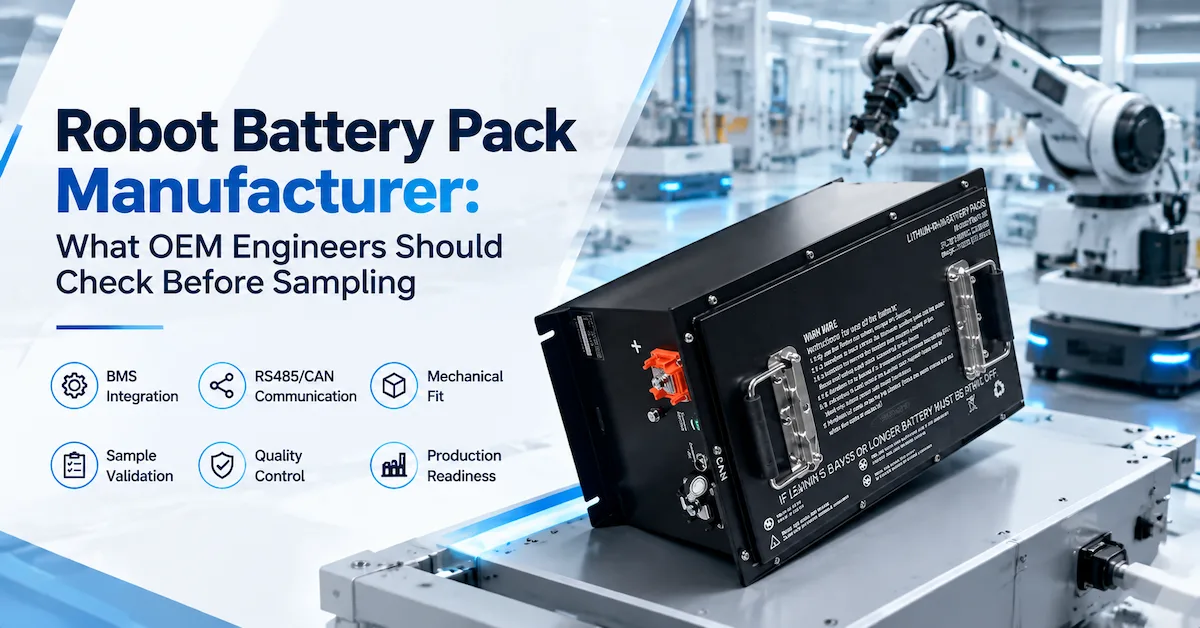
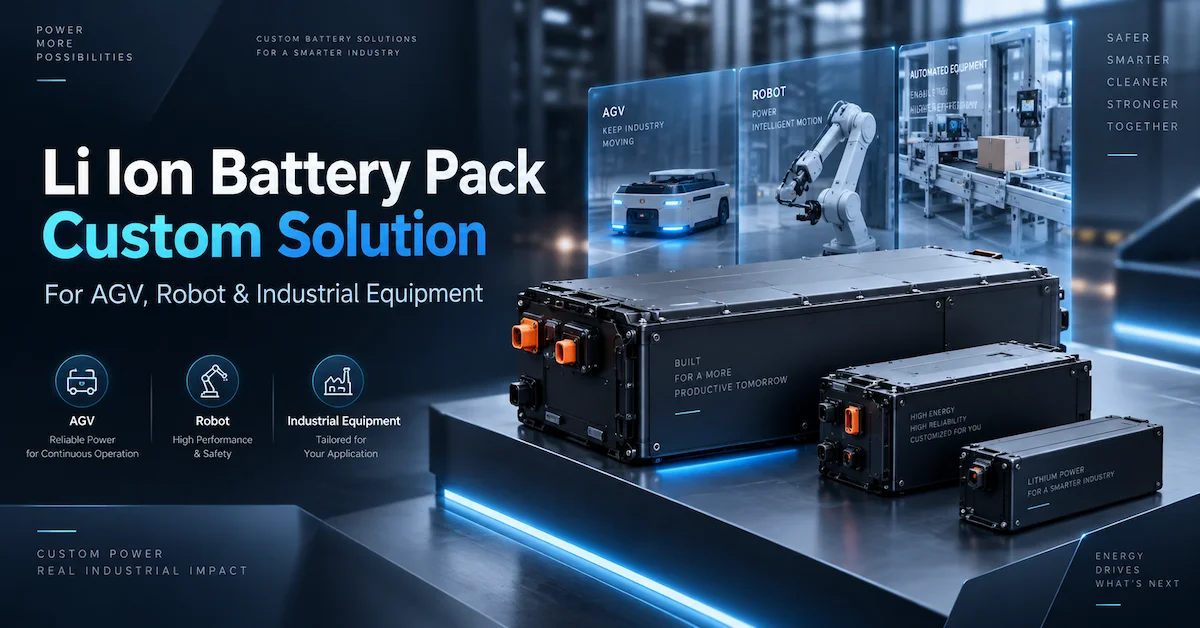
Dailymag provides industrial lithium battery solutions for different applications through its battery product portfolio, including AGV lithium batteries, RGV lithium batteries, and robot lithium batteries.
When Do Buyers Need a Custom Lithium Battery Solution?
Not every project requires a customized battery. A standard battery may already meet the application requirements in some cases.
However, a custom solution becomes valuable when the equipment has specific limitations or performance requirements.
Equipment Integration Requirements
Industrial equipment manufacturers may require:
- Special battery dimensions
- Customized mounting structure
- Unique cable arrangement
- Specific connectors
- Equipment communication
- Custom battery identification
For example, a mobile robot may have limited internal space, while an AGV may require specific communication between the battery and controller.
Performance Requirements
Some applications require evaluation of:
- Runtime requirements
- Continuous current
- Peak current
- Charging frequency
- Working environment
A custom solution allows the battery configuration to be matched with the actual equipment operation instead of using general assumptions.
Long-Term Product Development
OEM customers often need batteries that remain available throughout the equipment lifecycle.
A custom battery project can help define:
- Product specifications
- Revision control
- Replacement compatibility
- Production consistency
This is especially important when the battery becomes part of a customer's own equipment platform.
What Information Should Buyers Provide Before Custom Battery Development?
A successful custom battery project starts with complete requirements.
A supplier needs to understand both technical and commercial expectations.
| Requirement Area | Information to Confirm |
|---|---|
| Application | Equipment type and operating scenario |
| Voltage | Required voltage range |
| Capacity | Target runtime and energy demand |
| Current | Continuous and peak current requirements |
| Charging | Charger specifications and charging method |
| Dimensions | Available installation space |
| Weight | Equipment limitations |
| Connector | Connection requirements |
| Communication | CAN, RS485 or other interfaces |
| Environment | Temperature and operating conditions |
| Quantity | Prototype and production requirements |
| Timeline | Development and delivery expectations |
Providing detailed information helps reduce unnecessary design changes and allows the supplier to evaluate the correct battery architecture.
Buyers requiring application-specific development can review Dailymag's custom battery services.
How Does a Li Ion Battery Pack Custom Solution Development Process Work?
A professional custom battery project usually includes several stages.
Requirement Analysis and Application Review
The first stage is understanding the customer's equipment.
The supplier should evaluate:
- Equipment power demand
- Installation limitations
- Charging method
- Communication requirements
- Operating environment
This stage determines whether the project requires a modified existing platform or a completely new battery design.
Battery Design and Engineering Evaluation
After requirements are confirmed, engineers evaluate possible solutions.
Important areas include:
- Battery configuration
- Electrical design
- Mechanical structure
- Connector selection
- BMS requirements
- Protection functions
The objective is to create a battery design that matches the equipment rather than simply changing a few specifications from an existing model.
Prototype Development and Testing
A prototype allows the customer to verify the proposed solution.
Testing may include:
- Installation testing
- Charging verification
- Runtime evaluation
- Load testing
- Communication testing
- Equipment operation testing
The prototype should represent the approved configuration that will later move toward production.
Why BMS Integration Matters in Custom Battery Solutions
The battery management system is one of the most important elements in industrial custom batteries.
A BMS can support:
- Battery protection
- Voltage monitoring
- Current monitoring
- Temperature monitoring
- Charging management
- Communication functions
For intelligent equipment, BMS integration needs to match the equipment controller.
Buyers should confirm:
- Required battery data
- Communication protocol
- CAN or RS485 requirements
- Fault information
- Parameter settings
- Version control
A battery pack may have the correct voltage and capacity but still fail system integration if communication requirements are not properly defined.
How Should Buyers Evaluate Custom Battery Components?
A custom lithium battery pack is a complete system made from multiple components.
Important components may include:
- Battery cells
- BMS
- Connectors
- Cables
- Protection components
- Enclosure
- Temperature sensors
- Labels
- Packaging
Component Compatibility
Each component can affect the final battery performance.
For example:
A connector change may affect equipment installation.
A cable change may affect assembly.
A BMS change may affect communication.
An enclosure change may affect mounting space.
A reliable custom solution requires control over the components that influence product performance.
How Does Quality Control Work During Custom Battery Production?
Custom battery development should connect prototype approval with production control.
Quality management may include:
Incoming Material Control
Verify important components before production.
Examples:
- Battery cells
- Electronic components
- Connectors
- Structural materials
Production Process Control
Control:
- Assembly procedures
- Wiring processes
- Component installation
- Product identification
Final Product Testing
Verify:
- Electrical performance
- Protection functions
- Communication functions
- Appearance
- Packaging
The exact testing requirements should be defined according to the application and customer expectations.
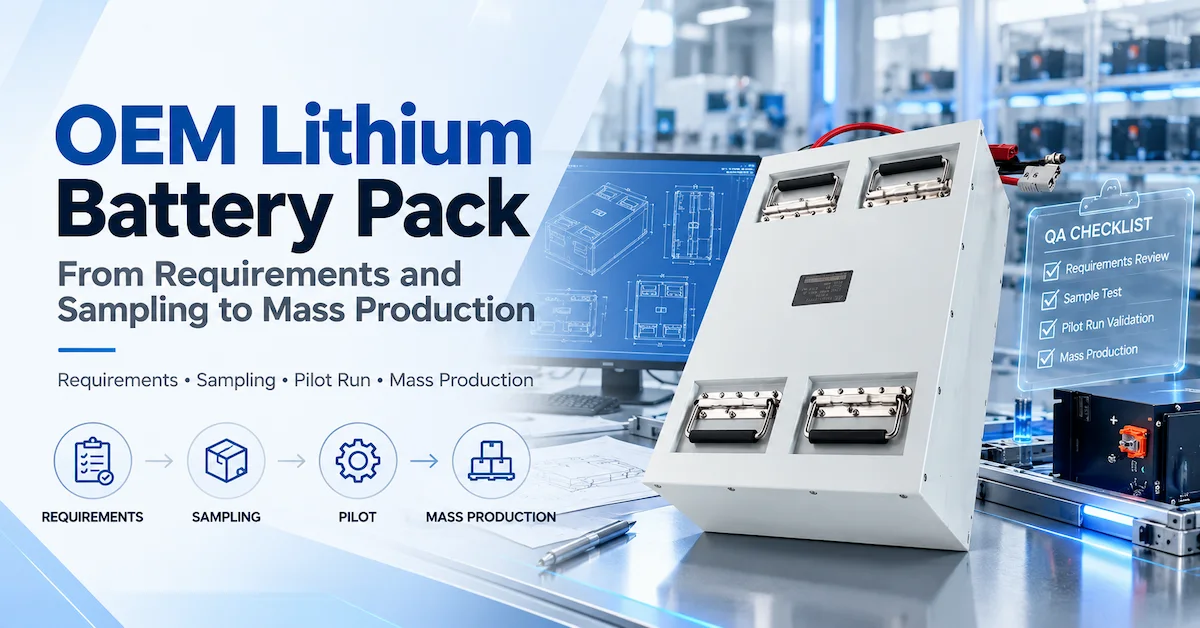
Prototype, Pilot Production, and Mass Production Management
A custom battery project should separate development stages.
| Stage | Purpose |
|---|---|
| Prototype | Verify design concept |
| Pilot Production | Verify manufacturing repeatability |
| Mass Production | Maintain consistent supply |
Prototype Stage
The customer confirms whether the battery meets equipment requirements.
Pilot Production Stage
The supplier confirms whether production can reproduce the approved design.
Important checks include:
- Manufacturing documents
- Assembly process
- Testing procedures
- Product identification
Mass Production Stage
The supplier maintains the approved configuration across future orders.
This process reduces risks caused by differences between development samples and production units.
Compare Dailymag Battery Applications for Custom Projects
Different industrial applications require different battery considerations.
| Application | Main Customization Considerations |
|---|---|
| AGV Battery | Runtime, load, charging and communication |
| RGV Battery | Installation, operating cycle and reliability |
| Robot Battery | Compact design, BMS and integration |
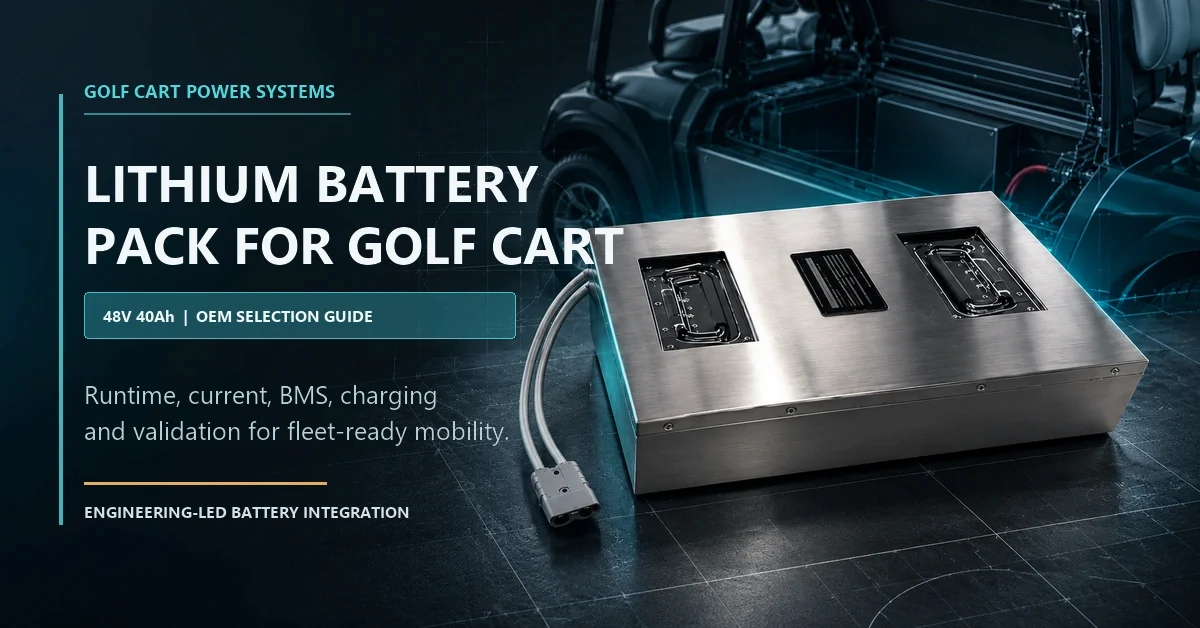
| Golf Cart Battery | Controller, charger and vehicle compatibility |
Buyers can review Dailymag's battery products to identify suitable application directions.
How Does Custom Battery Solution Affect Cost and Timeline?
A custom battery project usually involves more than product manufacturing.
Factors affecting cost and development time may include:
- Engineering evaluation
- Prototype development
- Customized components
- Testing requirements
- Documentation
- Production quantity
A buyer should define the project scope clearly before comparing suppliers.
A lower initial quotation may not always represent lower total project cost if it excludes important development activities or validation requirements.
How to Choose the Right Custom Battery Manufacturer?
A suitable supplier should be evaluated through several areas.
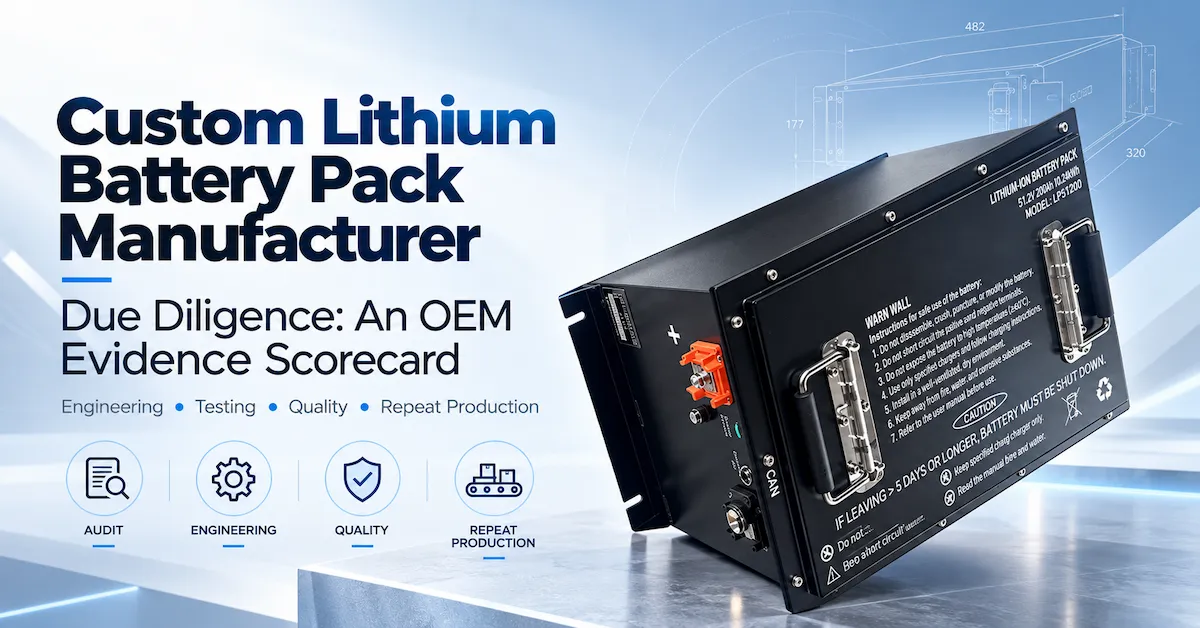
Engineering Capability
Check whether the supplier can support:
- Requirement analysis
- Battery design
- BMS integration
- Prototype development
Manufacturing Capability
Review:
- Production process
- Quality control
- Testing procedures
- Traceability
Supply Capability
Evaluate:
- Production planning
- Repeat-order support
- Change management
- Long-term availability
A custom battery supplier should support the complete product lifecycle rather than only producing the first sample.
What Should Buyers Prepare Before Requesting a Custom Battery Solution?
A complete inquiry should include:
- Equipment application
- Electrical requirements
- Runtime target
- Current requirements
- Charger information
- Installation dimensions
- Connector requirements
- Communication needs
- Operating environment
- Prototype quantity
- Production forecast
- Delivery expectations
Providing complete information allows suppliers to evaluate the correct solution more efficiently.
Buyers can review Dailymag's battery solutions and submit project details through Contact Us.
Frequently Asked Questions
What is a li ion battery pack custom solution?
A li ion battery pack custom solution is a battery design developed according to specific equipment requirements, including electrical, mechanical, communication, and application needs.
Why do industrial companies need custom lithium batteries?
Industrial equipment often has unique requirements that standard batteries cannot fully satisfy, such as size limitations, communication needs, or specific operating conditions.
What information is needed for battery customization?
Buyers should provide application details, voltage, capacity, current requirements, dimensions, charging information, communication requirements, and production expectations.
How long does custom battery development take?
Development time depends on project complexity, customization requirements, testing needs, and customer approval process.
Can BMS communication be customized?
Communication requirements can be evaluated as part of the custom battery project depending on technical needs and system compatibility.
Should customers test prototypes before production?
Yes. Prototype testing helps confirm that the battery works correctly in the intended equipment before mass production.
What industries use custom lithium battery packs?
Applications include AGV, RGV, robotics, industrial equipment, vehicles, and specialized electronic systems.
What affects custom battery cost?
Cost depends on design requirements, components, testing, production quantity, and customization scope.
How can buyers ensure production consistency?
Use approved specifications, prototype validation, production control, and change management processes.
How can I start a custom battery project with Dailymag?
Review the Dailymag battery products, prepare your requirements, and contact Dailymag through Contact Us.
Conclusion
A successful li ion battery pack custom solution requires more than changing battery specifications. Industrial OEM buyers need a complete development process that connects application requirements, battery design, BMS integration, prototype validation, manufacturing control, quality management, and long-term supply.
The right custom battery partner helps transform equipment requirements into a reliable and repeatable battery system. Dailymag provides industrial lithium battery solutions through its product portfolio and custom battery services. Buyers developing new equipment or upgrading existing systems can contact Dailymag through Contact Us with application details, technical requirements, and production plans.