

Golf Cart Lithium Battery Manufacturer: Supporting Daily Use, Not Just Occasional Runs
In many electric vehicle projects, golf carts are often seen as low-demand applications.
But once they are used in real environments—resorts, campuses, industrial parks, or logistics zones—the usage pattern quickly changes. Vehicles run multiple cycles per day, carry varying loads, and operate across different terrains and temperatures.
Under these conditions, battery performance becomes a key factor in operational consistency. A battery system must deliver stable output, predictable runtime, and fast recharge capability, rather than simply meeting nominal capacity.
At eDailyMag, we design golf cart battery systems based on real usage behavior. By combining LiFePO4 chemistry, optimized pack structure, and intelligent BMS control, we help OEM manufacturers and fleet operators achieve reliable daily operation with minimal maintenance.
Cell Chemistry and Pack Structure for Electric Mobility Applications
The internal design of a golf cart lithium battery determines how it performs across repeated charge and discharge cycles.
Most modern systems use LiFePO4 (Lithium Iron Phosphate) cells due to their balance of safety, lifecycle, and stability.
Key characteristics include:
- cycle life of 3000–5000 cycles
- stable discharge plateau around 3.2V per cell
- high thermal stability under continuous use
- consistent performance across varying load conditions
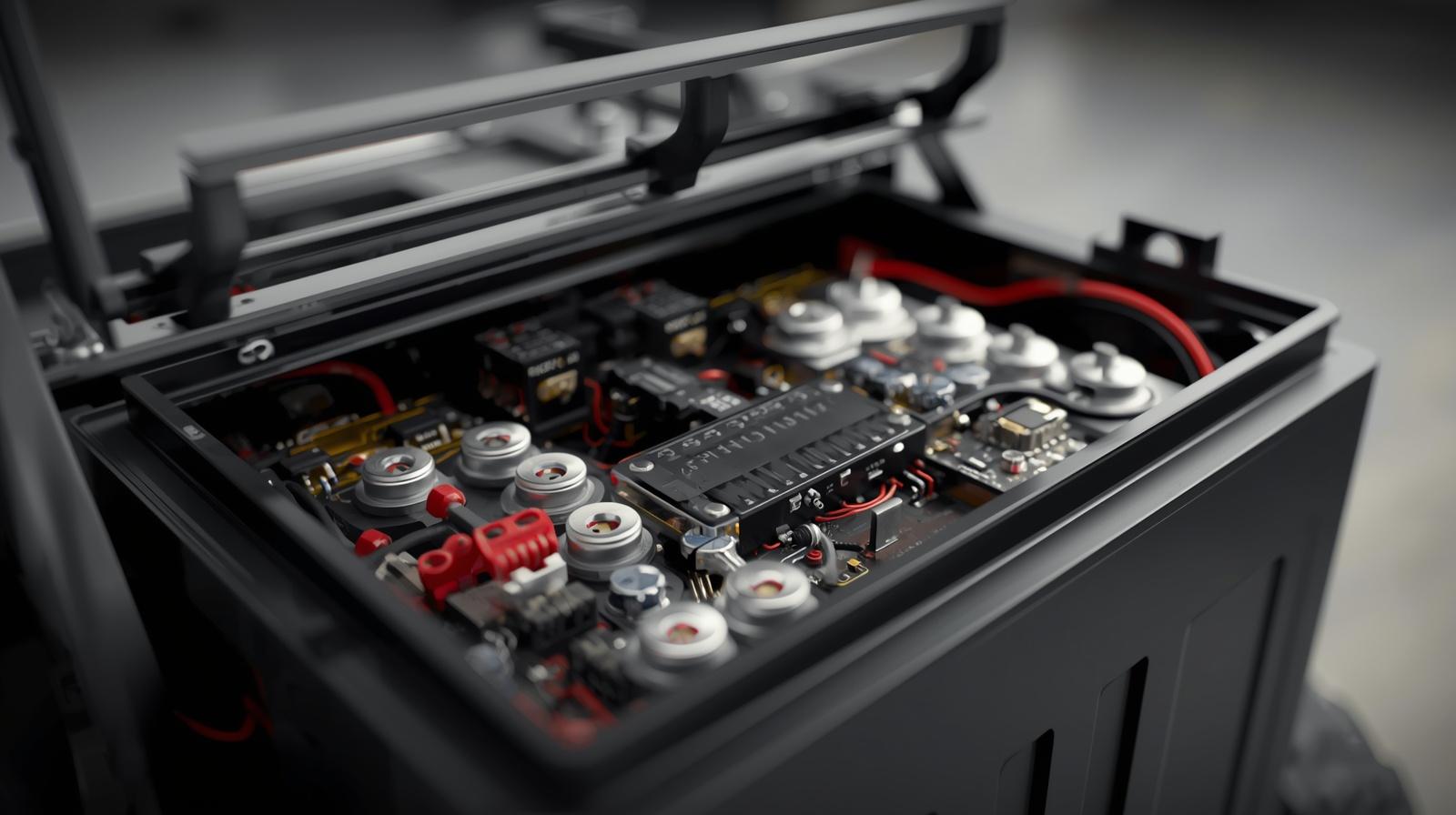
From a structural perspective, battery packs typically include:
- multi-parallel configurations to support acceleration and load variation
- low-resistance busbars for efficient current flow
- integrated BMS systems for real-time protection and monitoring
- reinforced casing design for vibration resistance
Industry insights from the International Energy Agency highlight the growing adoption of lithium battery systems in electric mobility due to their efficiency and lifecycle advantages.
https://www.iea.org/reports/global-ev-outlook
However, real-world performance depends on how these components are engineered together.
Designing Battery Systems for Real Driving Conditions
A professional golf cart lithium battery manufacturer must consider how vehicles are actually used—not just their rated specifications.
At eDailyMag, our engineering process focuses on:
- Dynamic load behavior
Accounting for acceleration, uphill driving, and passenger weight variation. - Voltage stability during discharge
Maintaining consistent output across the entire battery cycle. - Fast charging compatibility
Supporting quick turnaround for fleet operations. - Thermal management in outdoor environments
Ensuring stable performance in high and low temperatures. - Integration with vehicle control systems
Aligning battery output with motor and controller requirements.
This ensures that the battery system supports both performance and user experience.
Case Insight: Improving Fleet Efficiency in Resort Transportation
A resort operator managing a fleet of electric golf carts faced operational inefficiencies due to inconsistent battery performance. Vehicles required frequent charging, and runtime varied significantly between units.
Our team redesigned the battery system using:
- LiFePO4 cells optimized for long cycle life
- improved parallel configuration for stable current delivery
- a customized BMS to manage daily charge-discharge cycles
After implementation, the fleet demonstrated:
- longer and more consistent runtime
- reduced charging frequency
- improved operational scheduling efficiency
This case highlights how battery design directly influences fleet productivity.
Performance Comparison: Lead-Acid vs Lithium Golf Cart Batteries
| Parameter | Lead-Acid Battery | Lithium (LiFePO4) Battery |
|---|---|---|
| Cycle life | 500–800 cycles | 3000–5000 cycles |
| Charging time | 6–8 hours | 2–4 hours |
| Weight | Heavy | 30–50% lighter |
| Discharge efficiency | 70–80% | 90–96% |
| Maintenance | Frequent | Minimal |
| Voltage stability | Drops over time | Stable output |
These differences significantly impact operating cost, maintenance requirements, and user experience.
Safety and Compliance in Electric Vehicle Battery Systems
Battery safety is critical for electric mobility applications, especially in public or commercial environments.
A reliable system includes:
- overcharge and over-discharge protection
- short-circuit and overcurrent protection
- temperature monitoring systems
- structural reinforcement for impact resistance
The International Electrotechnical Commission provides widely recognized safety standards for battery-powered systems.
https://www.iec.ch
Common certifications include:
- UN38.3 for transport safety
- CE compliance
- MSDS documentation
These ensure both operational safety and compliance with global regulations.
Application Scenarios Beyond Traditional Golf Carts
While commonly associated with golf courses, lithium battery systems for golf carts are widely used in:
- resort and hotel transportation
- campus mobility systems
- industrial park logistics
- airport ground vehicles
- community electric vehicles
Each scenario requires a battery system capable of handling frequent usage, varying loads, and environmental conditions.
Frequently Asked Questions
Why are lithium batteries preferred for golf carts?
Because they provide longer lifespan, faster charging, and more stable performance compared to lead-acid batteries.
How long does a lithium golf cart battery last?
Typically 3000 cycles or more, depending on usage conditions.
Can battery systems be customized for different vehicle models?
Yes. Voltage, capacity, size, and communication protocols can all be tailored.
Reliable Battery Systems for Daily Mobility Applications
In electric mobility applications, consistency matters more than peak performance. A professional golf cart lithium battery manufacturer ensures that battery systems deliver stable output across daily usage cycles.
At eDailyMag, we design lithium battery solutions tailored for electric vehicles and fleet applications. Our focus includes long cycle life, efficient energy use, and flexible OEM customization.
To explore our battery solutions and manufacturing capabilities, visit our homepage:
https://www.edailymag.com/
If you are planning a new electric vehicle project or upgrading an existing fleet, our team can help you develop a battery system that meets your operational requirements:
https://www.edailymag.com/contact-us
Because in mobility systems, reliable power is what keeps everything moving forward.