

Industrial Battery Pack Factory: Where Production Quality Defines Product Reliability
Every equipment manufacturer eventually faces a moment of doubt.
The product design is complete. Testing looks promising. But once production scales and units are deployed in the field, issues begin to appear—battery inconsistency, unexpected failures, or unstable performance under load.
At that point, the problem is no longer design. It’s manufacturing.
Choosing the right industrial battery pack factory becomes critical, because real-world reliability is not built in a lab—it is built on the production line.
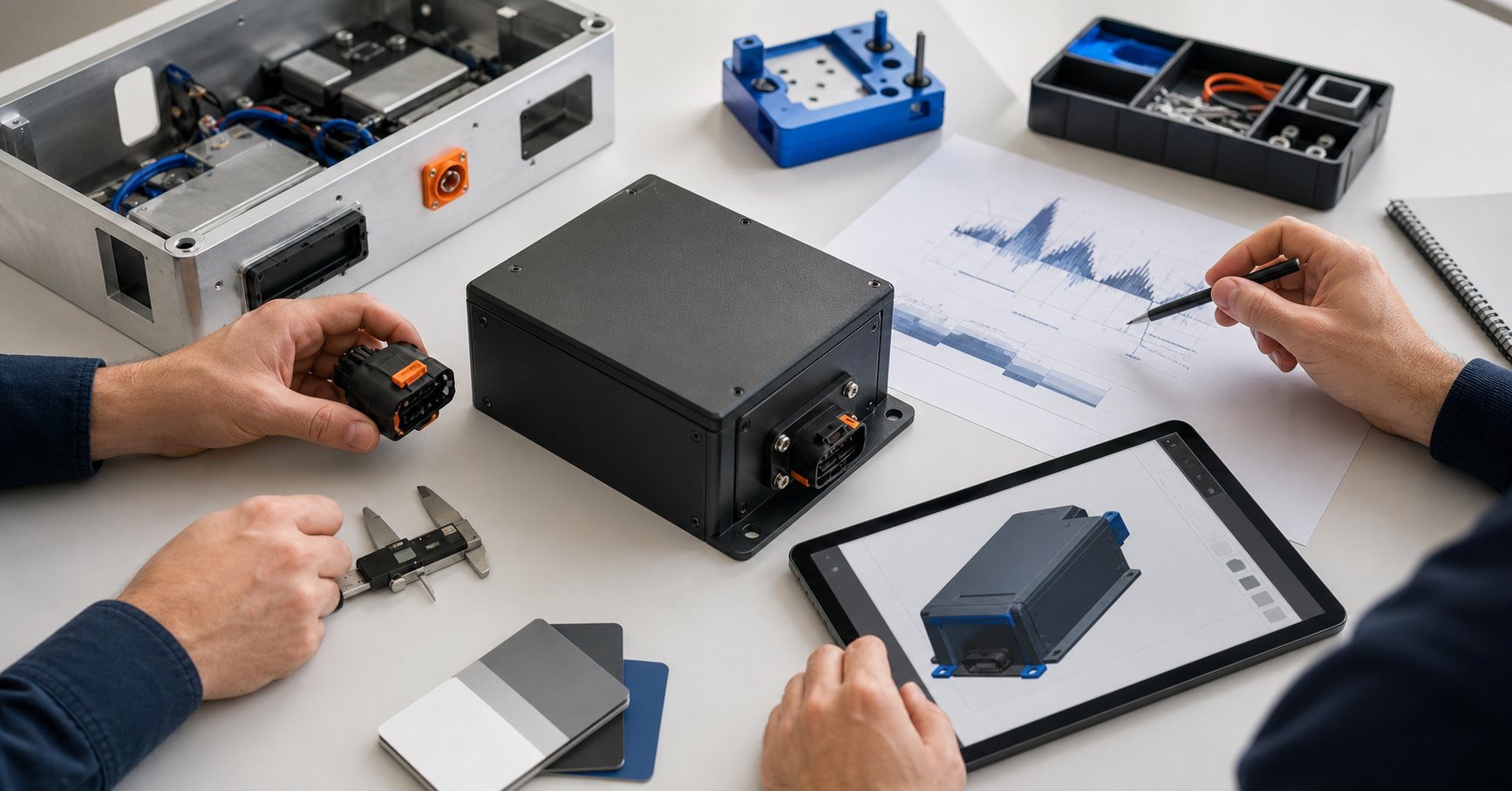
At eDailyMag, we have seen how manufacturing precision directly impacts battery performance. By combining controlled production processes with engineering validation, we help OEM customers move from unstable prototypes to consistent, scalable products.
Materials, Process Control, and Structural Consistency in Battery Manufacturing
Before discussing capacity or performance, it’s important to understand what actually happens inside a factory. A battery pack is not just a collection of cells—it is a system built through controlled processes.
Industrial battery pack manufacturing typically includes:
-
Cell grading and matching based on capacity and internal resistance
-
Automated spot welding to ensure consistent electrical connections
-
Insulation and spacing design to manage heat and prevent short circuits
-
Protective housing assembly for mechanical stability
According to global battery manufacturing reports from the International Energy Agency, production consistency and quality control are key factors influencing battery lifecycle and reliability.
https://www.iea.org/reports/global-ev-outlook
Even small variations during assembly—such as uneven weld resistance or inconsistent cell matching—can lead to significant performance differences over time.
Why OEM Projects Depend on Experienced Battery Factories
A reliable industrial battery pack factory does more than assemble products—it ensures that each unit performs consistently under real operating conditions.
At eDailyMag, our manufacturing approach focuses on:
-
Standardized production processes
Ensuring every battery pack meets the same performance criteria. -
Integrated engineering validation
Testing battery packs under simulated real-world conditions. -
BMS calibration and system matching
Aligning battery behavior with device requirements. -
Thermal and structural optimization
Reducing heat buildup and improving durability. -
Quality inspection at multiple stages
Preventing defects before final assembly.
This combination of engineering and manufacturing ensures stability at scale, not just in small batches.
Real Case: From Prototype Instability to Scalable Production
A mid-sized equipment manufacturer approached us after facing increasing product returns. Their devices worked well during testing, but once production scaled, failure rates increased.
The root cause was traced back to their previous battery supplier. While the design was correct, manufacturing inconsistencies led to uneven cell performance and voltage instability.
Our team restructured the production process by:
-
implementing stricter cell matching standards
-
improving welding consistency
-
optimizing internal layout for thermal balance
After switching to our factory-produced battery packs, the customer reported a significant reduction in failure rates and improved product consistency across batches.
In industrial production, consistency is everything.
Performance Differences: Controlled Factory Production vs Inconsistent Supply
| Performance Factor | Inconsistent Production | Industrial Battery Pack Factory |
|---|---|---|
| Cell matching accuracy | Variable | High precision |
| Voltage consistency | Fluctuating | Stable output |
| Cycle life variation | High | Controlled and predictable |
| Thermal performance | Uneven | Optimized |
| Product failure rate | Higher | Reduced |
| Batch consistency | Low | High |
These differences directly influence product reliability, warranty costs, and brand reputation.
Safety Standards and Compliance in Industrial Battery Manufacturing
Safety is not just a design feature—it is a manufacturing responsibility. A professional factory integrates safety at every stage of production.
Key safety elements include:
-
multi-layer protection systems (BMS + cell protection)
-
short-circuit and overcurrent safeguards
-
temperature monitoring and thermal management
-
strict quality inspection protocols
The International Electrotechnical Commission emphasizes the importance of standardized safety practices for battery-powered products.
https://www.iec.ch
For global distribution, battery packs often require:
-
UN38.3 certification for transportation
-
CE / FCC compliance for electronic products
-
MSDS documentation for material safety
Meeting these standards ensures safe operation and compliance with international regulations.
Where Industrial Battery Pack Factories Add the Most Value
A professional industrial battery pack factory plays a key role in industries where reliability and consistency are essential.
Common applications include:
-
industrial automation equipment
-
robotics and intelligent systems
-
energy storage solutions
-
portable industrial tools
-
monitoring and communication devices
In these applications, stable power supply is directly linked to product performance and operational efficiency.
Frequently Asked Questions
What makes an industrial battery pack factory different from a small supplier?
A factory offers standardized processes, quality control systems, and consistent production at scale.
How important is cell matching in battery production?
It is critical. Poor cell matching leads to imbalance, reduced cycle life, and unstable performance.
Can manufacturing quality affect battery lifespan?
Yes. Inconsistent assembly can significantly reduce battery performance and long-term reliability.
Building Reliable Products Starts With Reliable Manufacturing
Behind every successful product is a supply chain that works without surprises. A professional industrial battery pack factory ensures that battery systems perform consistently—not just once, but across thousands of units.
At eDailyMag, we combine engineering expertise with controlled manufacturing processes to deliver battery solutions that meet real-world requirements. Our focus is on stable performance, scalable production, and flexible OEM support.
To learn more about our manufacturing capabilities and battery solutions, visit our homepage:
https://www.edailymag.com/
If you are evaluating a battery supplier for your next project, our team is ready to help you find the right production solution:
https://www.edailymag.com/contact-us
Because in industrial production, consistency is not optional—it is the foundation of reliability.