

B2B Lithium Battery Solutions: From Specification Matching to System-Level Engineering
In many OEM projects, battery selection starts from a simple checklist—voltage, capacity, size. On paper, multiple options appear interchangeable.
But once the product enters continuous operation—long duty cycles, fluctuating loads, outdoor environments—the difference between a standard battery and a B2B lithium battery solution becomes immediately visible.
At eDailyMag, we approach battery systems as part of the complete product architecture. Instead of adapting the device to the battery, we design the battery to match the device’s electrical behavior, structural constraints, and usage environment. This shift—from component thinking to system engineering—is what defines a reliable power solution.
Material Selection and Internal Architecture: The Foundation of Stability
Before discussing customization, the internal structure of a lithium battery pack must be clearly defined. Performance is not only determined by capacity, but by how materials and structure interact under real conditions.
A typical industrial lithium battery pack includes:
- Cell chemistry selection (Li-ion or LiFePO4 depending on application)
- Series-parallel configuration (e.g., 4S2P, 6S3P)
- Nickel strip or busbar conductivity design
- Insulation layers and spacing for thermal control
LiFePO4 chemistry is often selected in industrial environments due to:
- cycle life exceeding 2000–4000 cycles
- discharge plateau around 3.2V per cell, ensuring stable output
- thermal runaway threshold above 250°C, significantly improving safety
Industry data from the International Energy Agency confirms that lithium iron phosphate batteries are increasingly used in industrial systems due to their lifecycle stability and safety characteristics.
https://www.iea.org/reports/global-ev-outlook
However, material selection alone does not guarantee performance. The real differentiator lies in system-level integration.
Engineering Integration: Aligning Battery Behavior With Equipment Demands
A well-designed B2B lithium battery solution begins with understanding how the device actually consumes power.
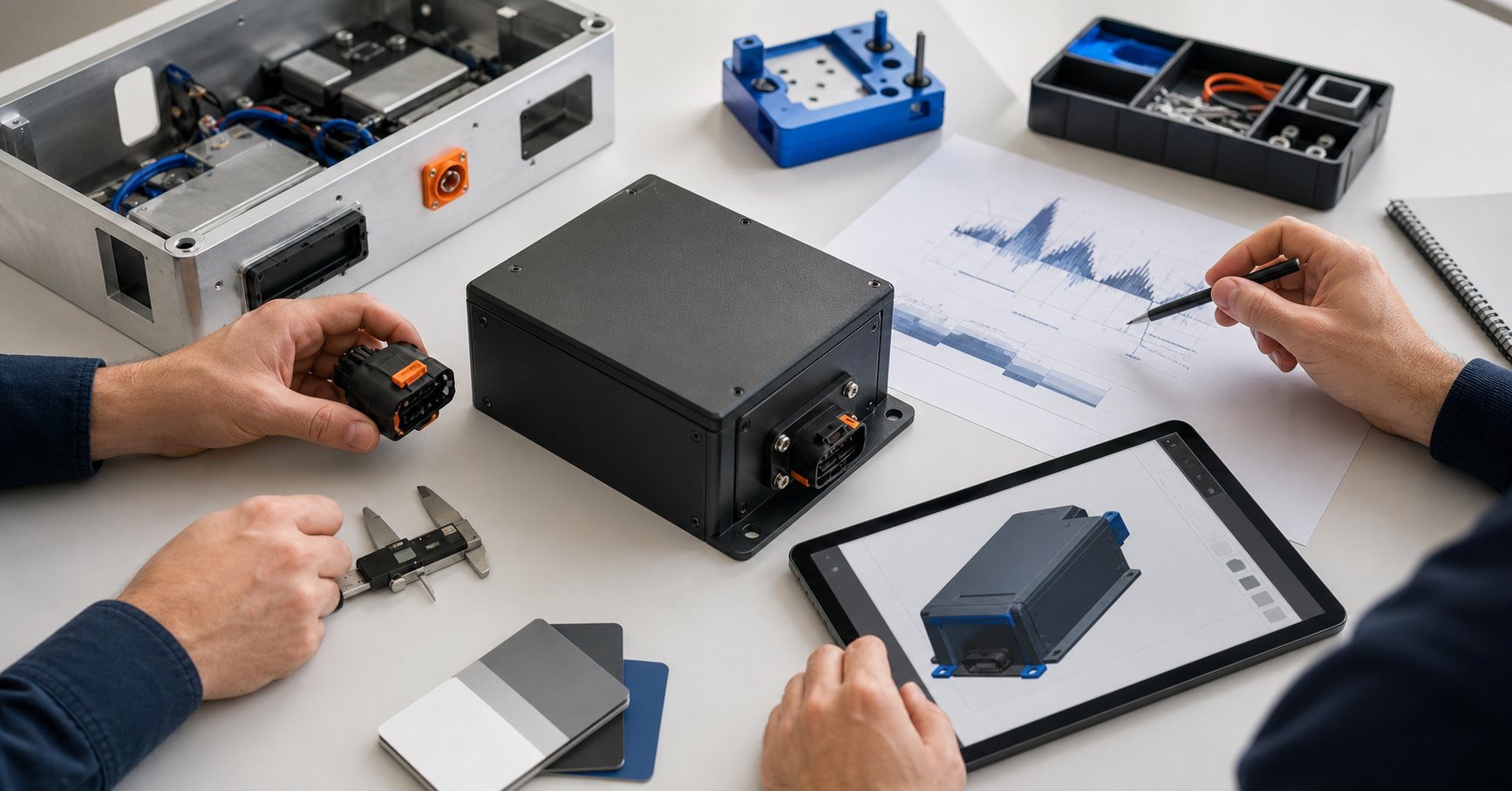
At eDailyMag, our engineering workflow typically includes:
- Load curve analysis
Measuring peak current, startup spikes, and continuous discharge patterns. - Voltage window optimization
Ensuring the battery operates within the device’s stable voltage range. - BMS parameter tuning
Adjusting overcurrent, temperature, and cutoff thresholds based on usage. - Thermal pathway design
Using internal layout and materials to distribute and dissipate heat. - Mechanical fit and integration
Designing housing and connectors aligned with product structure.
This approach ensures that the battery does not just meet specifications—but performs consistently in real operating environments.
Practical Case: Improving System Stability Through Battery Redesign
In one project, a client developing portable inspection equipment required consistent performance during intermittent high-load operations.
Their original battery pack met nominal capacity requirements but showed noticeable voltage fluctuations during peak usage. This affected device accuracy and operational continuity.
Our team redesigned the battery system by:
- switching to LiFePO4 cells for better voltage stability
- increasing parallel configuration to support higher current output
- optimizing BMS response time for load transitions
After implementation, the device demonstrated:
- smoother voltage output under load
- improved operational consistency
- reduced system interruptions during extended use
This example highlights how battery design directly influences overall product performance.
Performance Comparison: Generic Packs vs Engineered B2B Solutions
| Parameter | Generic Battery Pack | B2B Engineered Solution |
|---|---|---|
| Cell matching deviation | ±5–8% | ≤±2% |
| Cycle life | 500–1000 cycles | 2000–4000 cycles |
| Voltage drop under load | 10–15% | 3–5% |
| Thermal rise (continuous load) | 20–30°C | 10–18°C |
| Discharge efficiency | 85–90% | 92–96% |
| System compatibility | Limited | Fully optimized |
These differences are not theoretical—they directly impact product reliability, maintenance frequency, and long-term cost.
Safety Design and Compliance for Global Applications
In B2B applications, safety design is integrated into both hardware and control systems.
A professional lithium battery solution typically includes:
- multi-layer protection (cell + BMS + structural insulation)
- real-time temperature monitoring
- short-circuit and overcurrent protection
- balanced charging control
Global compliance standards are also essential. The International Electrotechnical Commission provides widely recognized safety frameworks for electrical systems.
https://www.iec.ch
Common certifications include:
- UN38.3 for transportation safety
- CE / FCC for electronic compliance
- MSDS for material safety documentation
These standards ensure that battery systems can be deployed globally without regulatory barriers.
Application Compatibility: Supporting Diverse Equipment Requirements
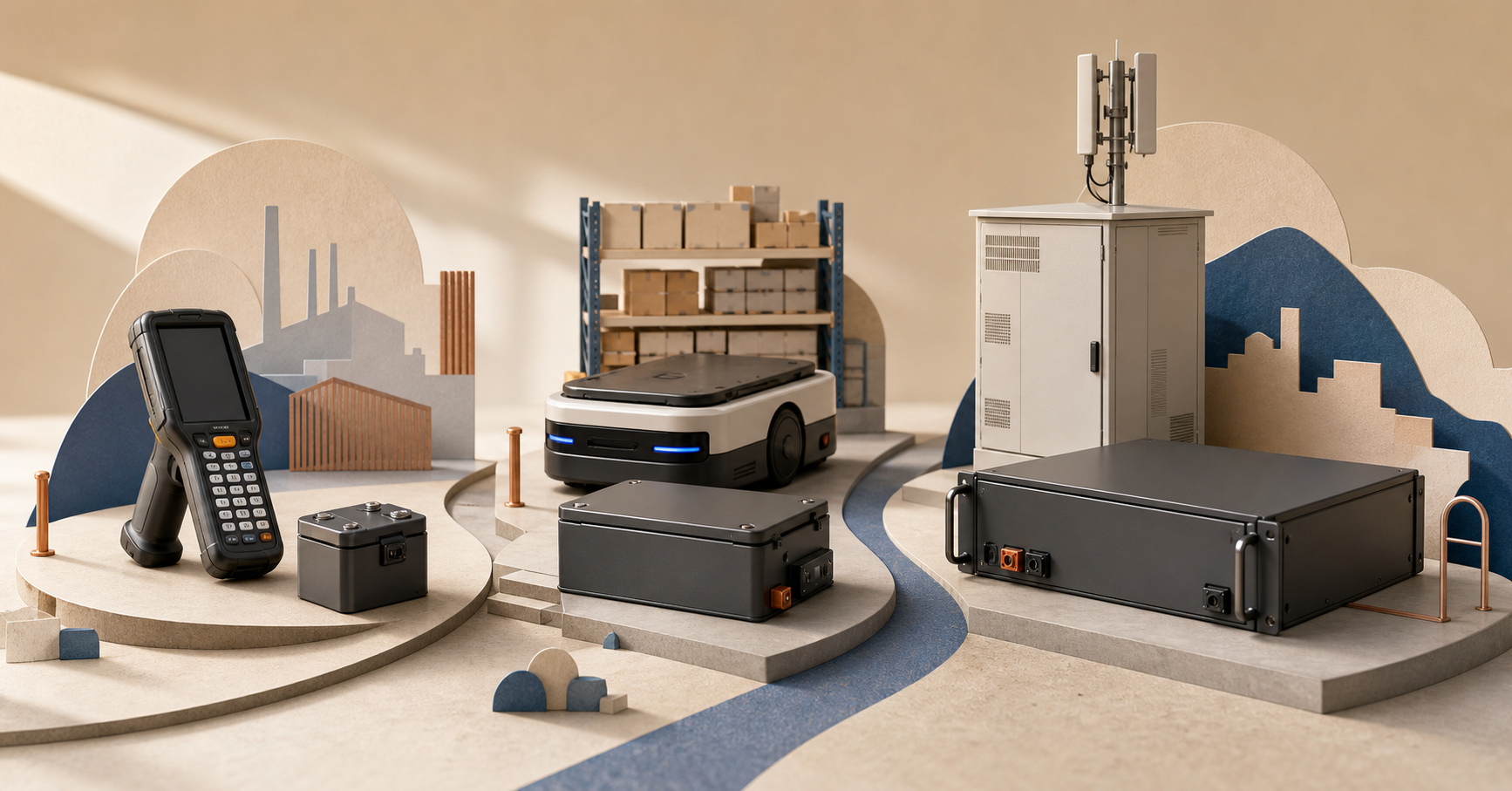
B2B lithium battery solutions are designed to support a wide range of equipment types, each with specific operational characteristics.
Typical applications include:
- industrial automation systems requiring continuous power stability
- outdoor monitoring devices exposed to temperature variation
- energy storage systems requiring long cycle life
- portable professional equipment with high discharge demands
- communication systems requiring reliable backup power
In each scenario, the battery must be adapted to both electrical and environmental conditions, ensuring consistent performance across different use cases.
Frequently Asked Questions
What defines a B2B lithium battery solution?
It is a battery system engineered specifically for OEM equipment, considering load behavior, environment, and integration requirements.
How does customization improve battery performance?
Customization aligns battery parameters with actual usage conditions, improving efficiency, stability, and lifespan.
Is LiFePO4 always the best choice?
Not always. It depends on the application. LiFePO4 is preferred for safety and longevity, while other chemistries may offer higher energy density.
Engineering-Oriented Battery Solutions for Long-Term Performance
In industrial and OEM environments, battery performance is not defined by capacity alone—it is defined by consistency, safety, and integration.
At eDailyMag, we provide B2B lithium battery solutions built on engineering precision and manufacturing control. From material selection to system integration, every step is designed to support stable, scalable product performance.
To explore our battery solutions and manufacturing capabilities, visit our homepage:
https://www.edailymag.com/
If you are planning a new project or optimizing an existing product, our team can help you develop a battery system tailored to your exact requirements:
https://www.edailymag.com/contact-us
Because in B2B applications, the difference is not in the specification—it is in the execution.