


Tag
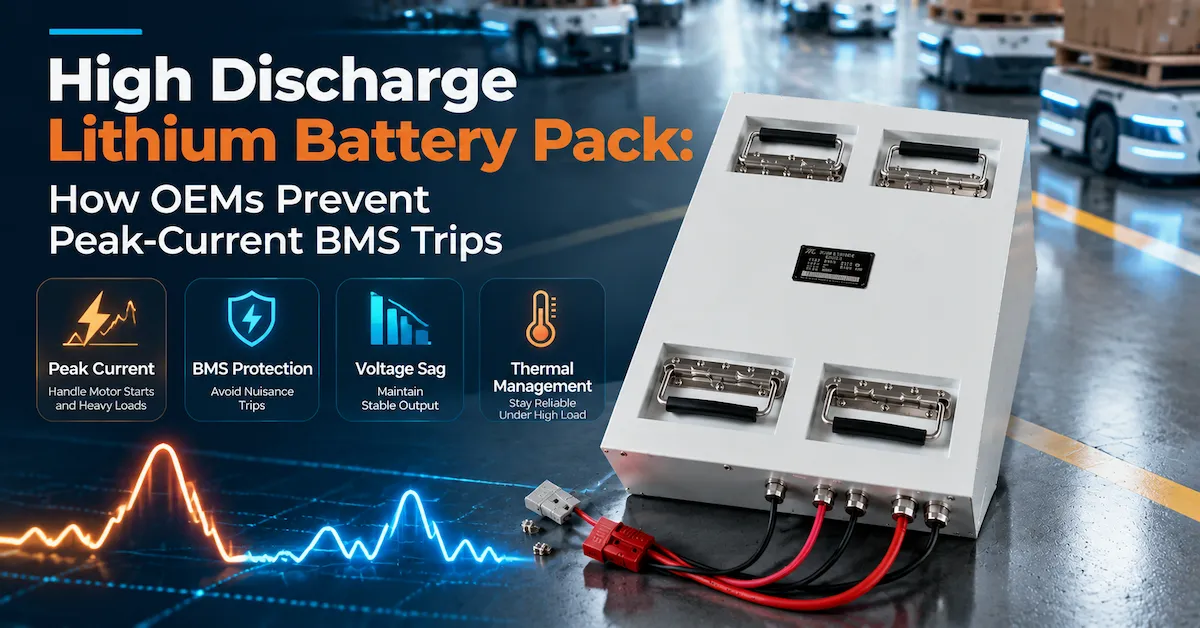
High Discharge Lithium Battery Pack: How OEMs Prevent Peak-Current BMS Trips
A high discharge lithium battery pack can still trip its BMS when the current path, temperature, state of charge, wiring or protection timing is poorly matched to the machine. This guide helps OEM engineers and buyers define peak events, diagnose nuisance trips, validate samples and compare suppliers before production.
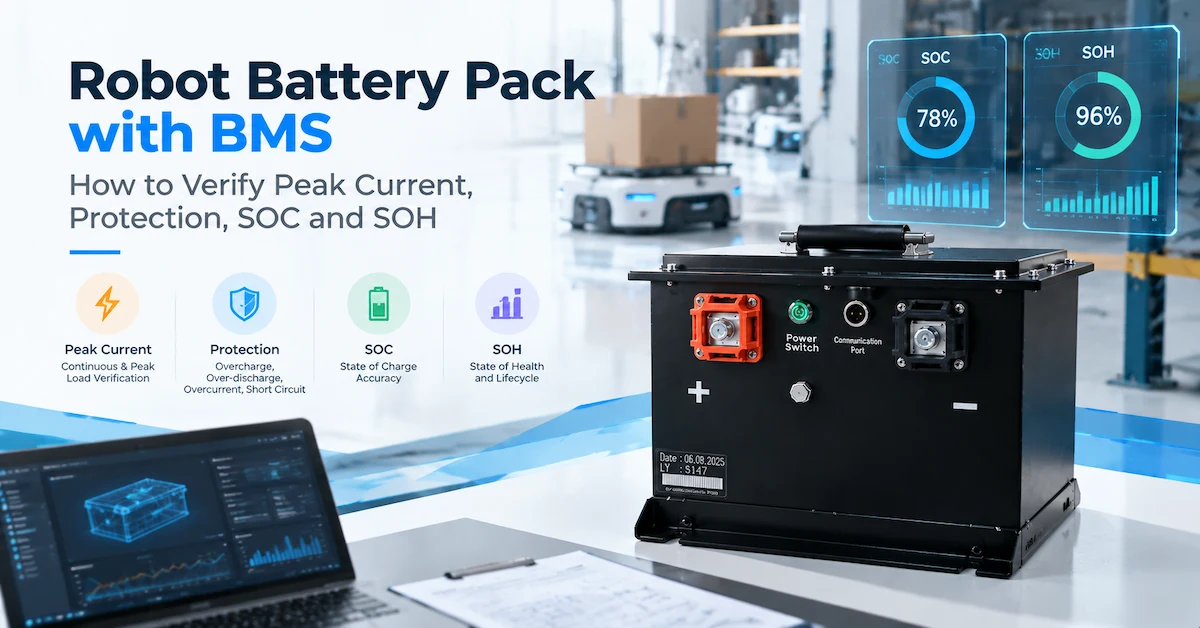
Robot Battery Pack with BMS: How to Verify Peak Current, Protection, SOC and SOH
A robot battery pack with BMS must do more than store energy: it must protect the cells, report usable status and cooperate with the robot controller and charger. This engineering guide shows OEM teams how to evaluate peak current, protection logic, SOC, SOH, communication, validation evidence and production readiness before approving samples.
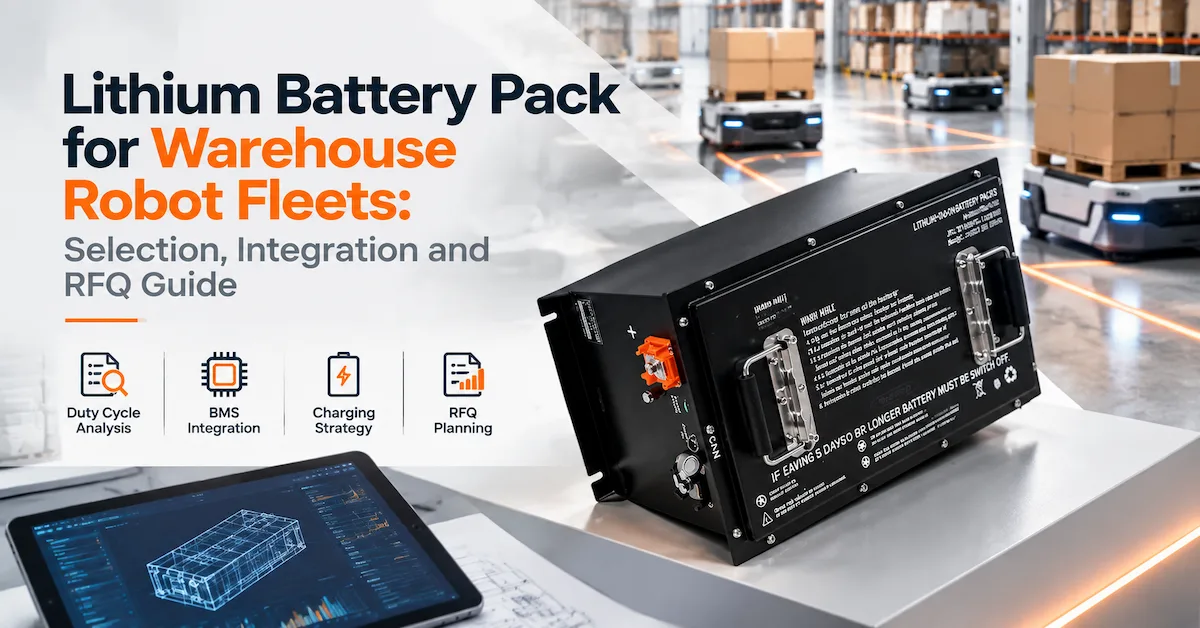
Lithium Battery Pack for Warehouse Robot Fleets: Selection, Integration and RFQ Guide
A lithium battery pack for warehouse robot fleets must match the robot's route, payload, peak current, charging windows, BMS communication and battery-bay constraints. This guide helps robot OEMs, warehouse integrators and procurement teams compare battery configurations, validate samples and prepare a production-ready RFQ without relying on voltage and Ah alone.
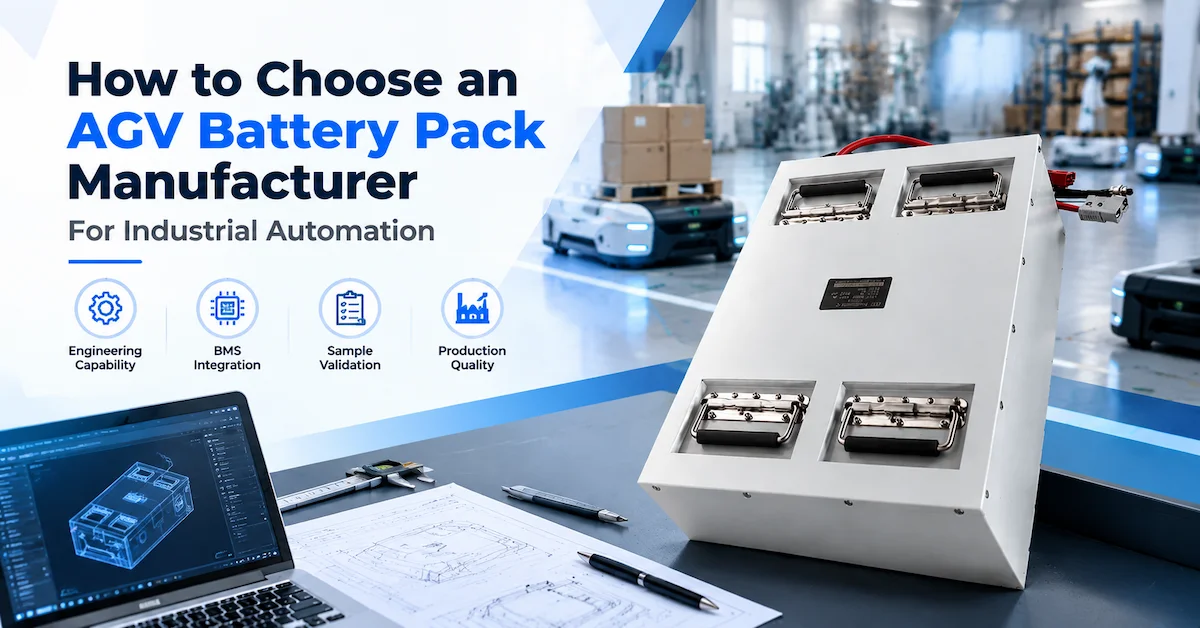
How to Choose an AGV Battery Pack Manufacturer for Industrial Automation
Choosing an AGV battery pack manufacturer requires more than comparing voltage, amp-hours and unit price. This guide gives AGV OEMs and industrial automation buyers a practical supplier-comparison method covering engineering ownership, BMS integration, sample evidence, factory controls, MOQ, lead time, packaging and repeat production.
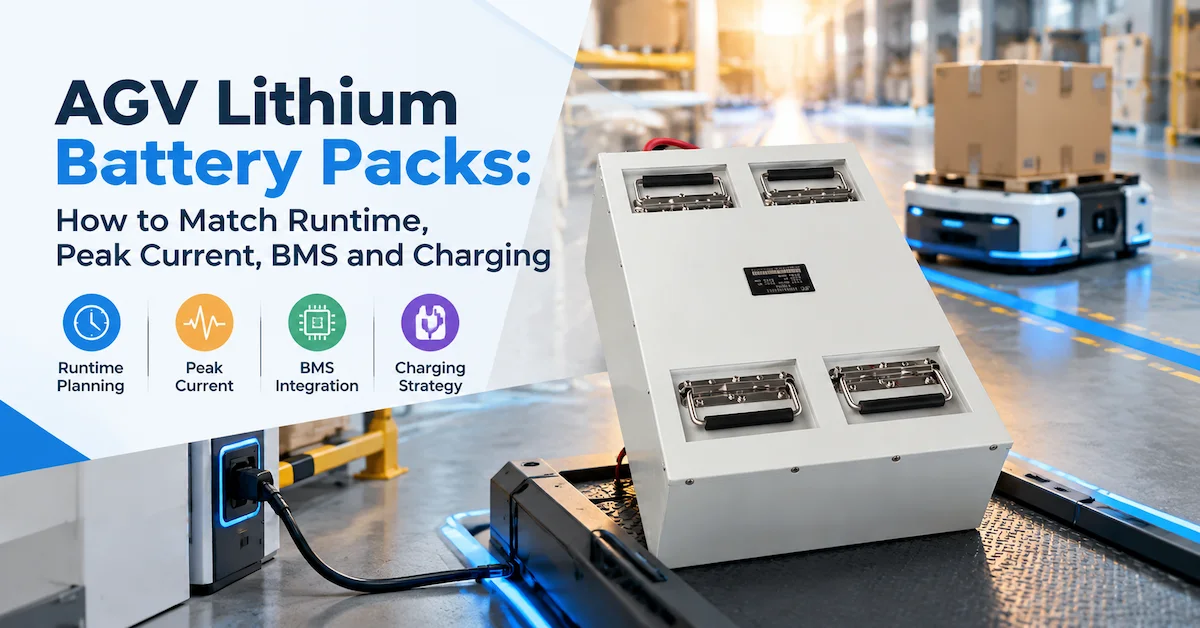
AGV Lithium Battery Packs: How to Match Runtime, Peak Current, BMS and Charging
AGV lithium battery packs should be selected from the vehicle's duty cycle, not from voltage and Ah alone. This guide shows AGV OEMs, warehouse integrators and buyers how to calculate runtime, separate continuous and peak current, validate BMS communication, coordinate charging, check mechanical fit, and prepare a production-ready RFQ.
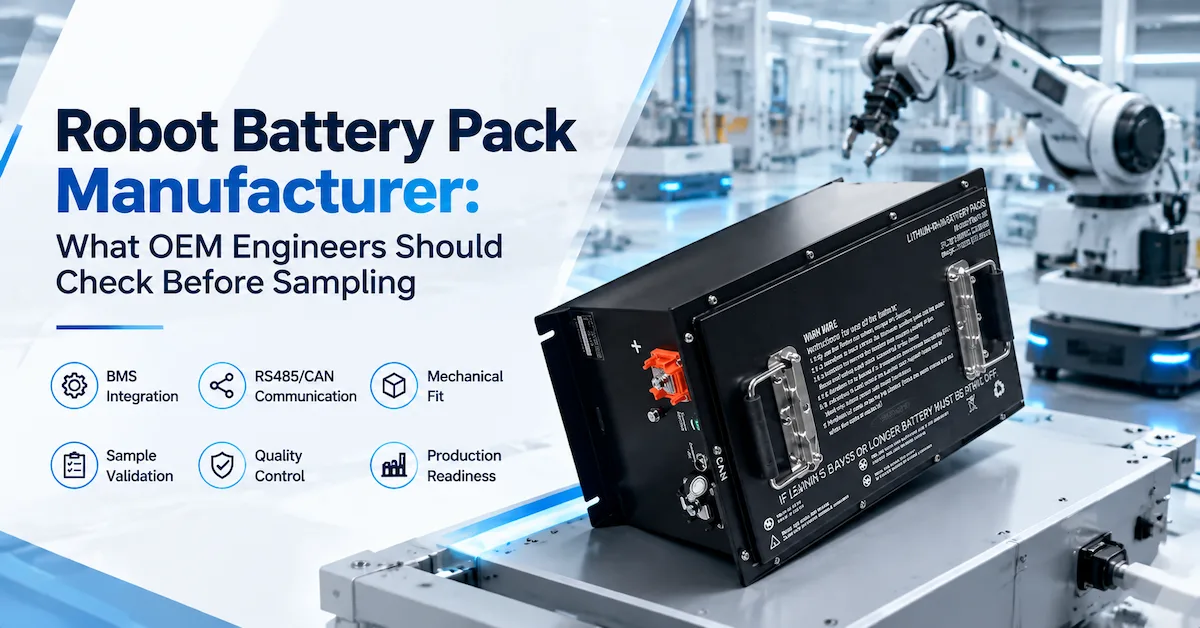
Robot Battery Pack Manufacturer: What OEM Engineers Should Check Before Sampling
Choosing a robot battery pack manufacturer should start with evidence, not only voltage, capacity, or sample price. This guide explains how OEM engineers evaluate duty cycle, BMS and RS485/CAN integration, mechanical fit, testing, MOQ, lead time, quality control, packaging, and production readiness before approving a supplier.
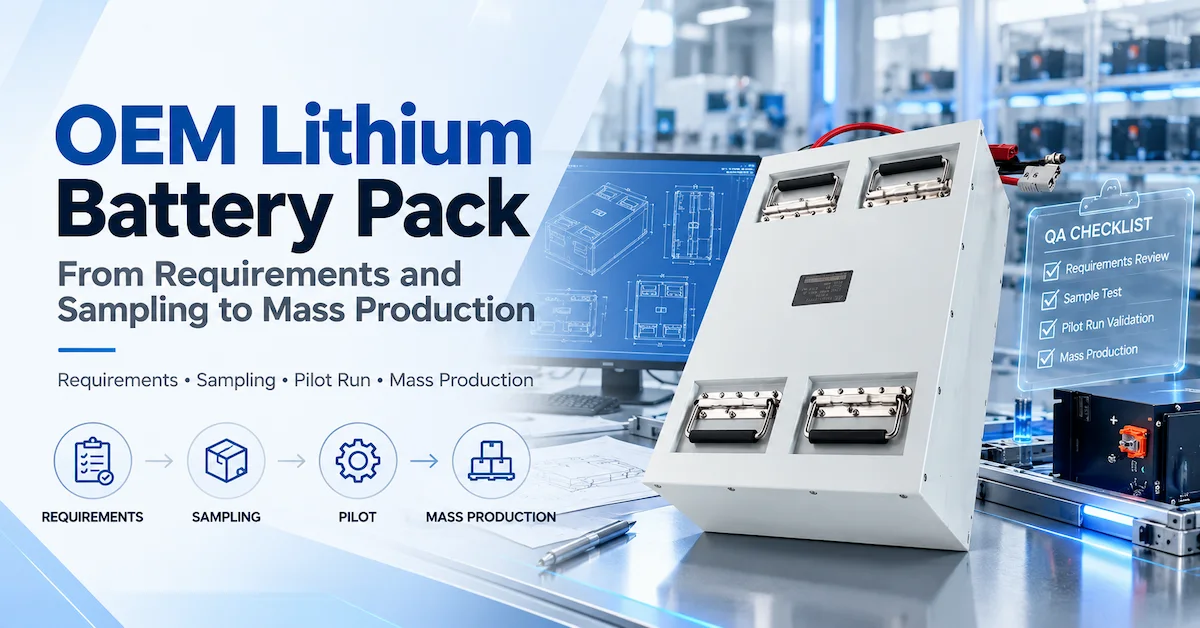
OEM Lithium Battery Pack: From Requirements and Sampling to Mass Production
This practical delivery roadmap explains how OEM teams move an OEM lithium battery pack from equipment requirements to quotation, prototype sampling, validation, pilot production, and repeat supply. It identifies the documents, test evidence, commercial decisions, and approval gates that prevent a working sample from becoming an unstable mass-production program.
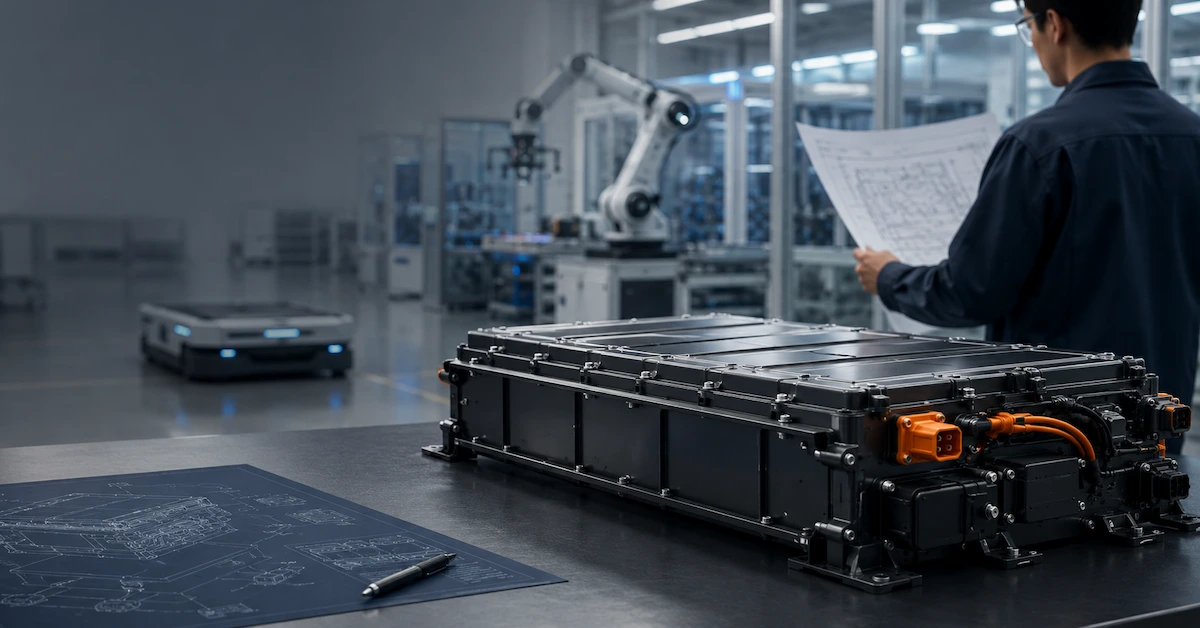
How to Choose a Lithium Battery Pack OEM Manufacturer for Reliable Scale-Up and Custom Integration
Choosing a lithium battery pack OEM manufacturer affects far more than battery price—it influences equipment integration, sample validation, production consistency, delivery risk, and long-term supply stability. This guide helps OEM engineers, procurement teams, automation companies, and equipment manufacturers evaluate battery partners from initial RFQ through prototype approval and mass-production scale-up.