

What Is an Industrial Lithium Battery Manufacturer?
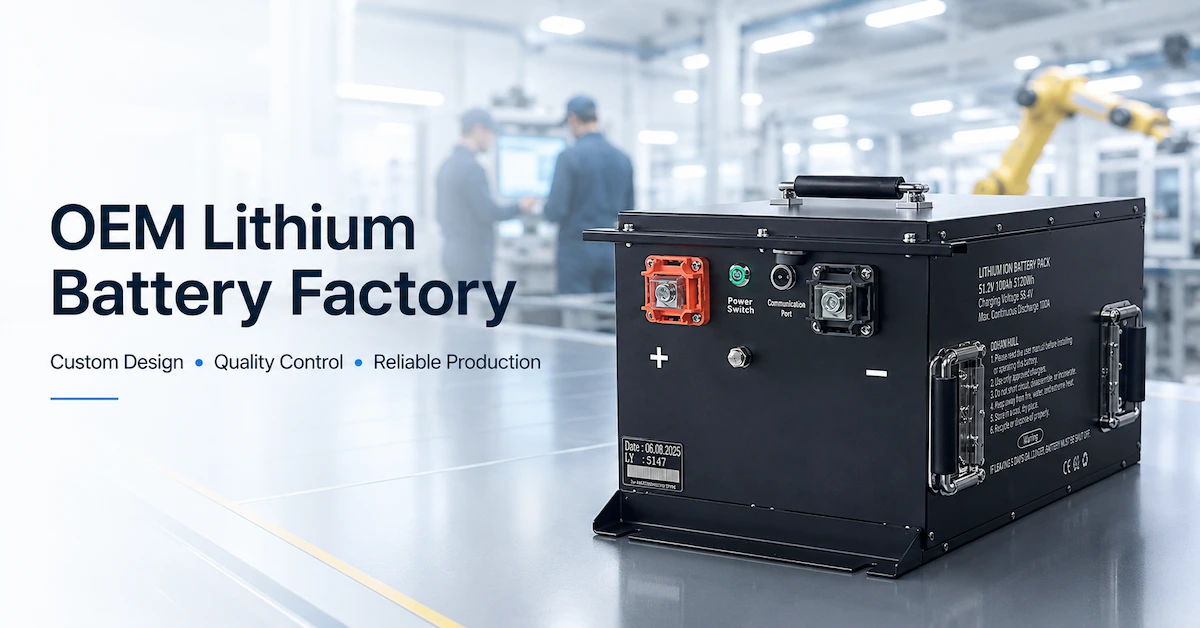
An industrial lithium battery manufacturer develops and produces lithium battery packs designed for professional equipment, automation systems, and industrial applications. Unlike consumer batteries, industrial battery solutions require higher reliability, longer service life, stable performance, and better integration with equipment systems.
For industrial buyers, selecting a battery manufacturer is not only about purchasing a power source. It is about finding a technical partner that can support:
- Battery system design
- Application analysis
- Custom battery development
- Production consistency
- Quality testing
- Long-term supply
Industrial lithium battery packs are commonly used in:
- Industrial robots
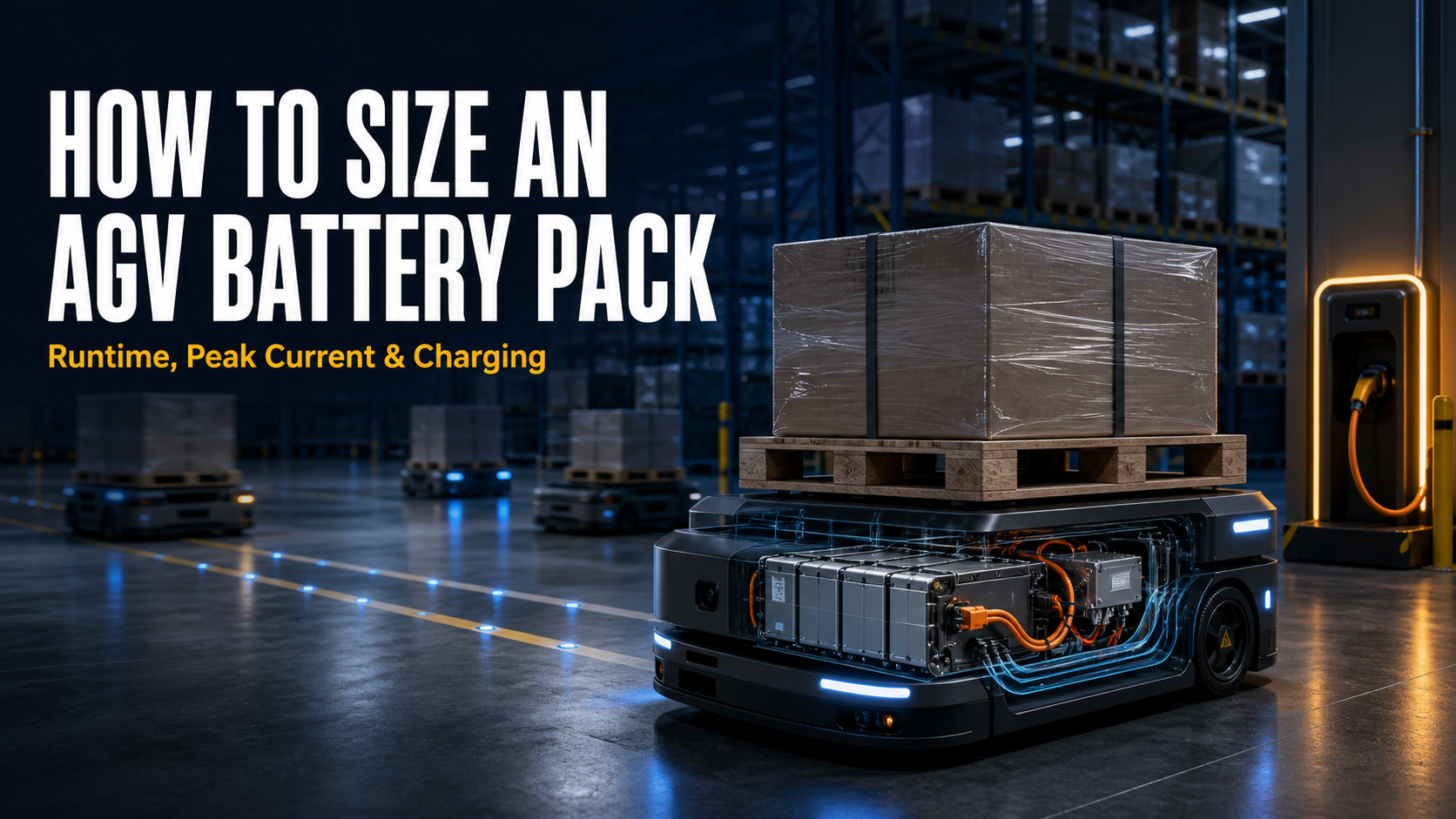
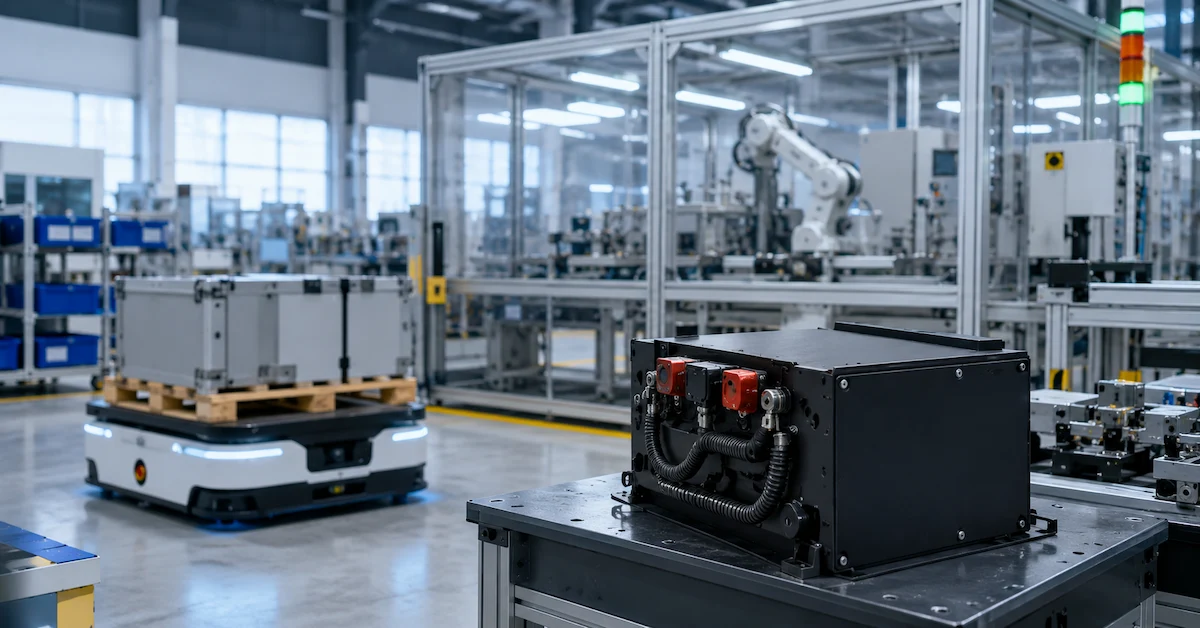
- AGV and RGV systems
- Automation equipment
- Intelligent terminals
- Communication equipment
- Monitoring systems
- Portable industrial devices
A reliable industrial lithium battery manufacturer should understand both battery technology and the customer's equipment requirements.
Why Manufacturing Capability Matters for Industrial Battery Projects
Industrial equipment usually has specific power requirements that cannot always be satisfied by standard battery products.
A professional supplier needs to evaluate:
- Required voltage
- Energy capacity
- Continuous current
- Peak current
- Charging conditions
- Installation space
- Operating environment
- Communication requirements
A battery pack that works in one application may not perform correctly in another.
For example:
- AGV systems need high cycle life and stable charging performance.
- Industrial robots require reliable peak-current output.
- Remote monitoring equipment may require long standby operation.
- Outdoor equipment may require better environmental protection.
Therefore, manufacturing capability directly affects battery reliability and equipment performance.
Lithium Battery Manufacturing Process Explained
The lithium battery manufacturing process includes multiple stages from requirement analysis to final inspection.
A complete industrial battery production process usually includes:
- Battery requirement analysis
- Battery design
- Cell selection
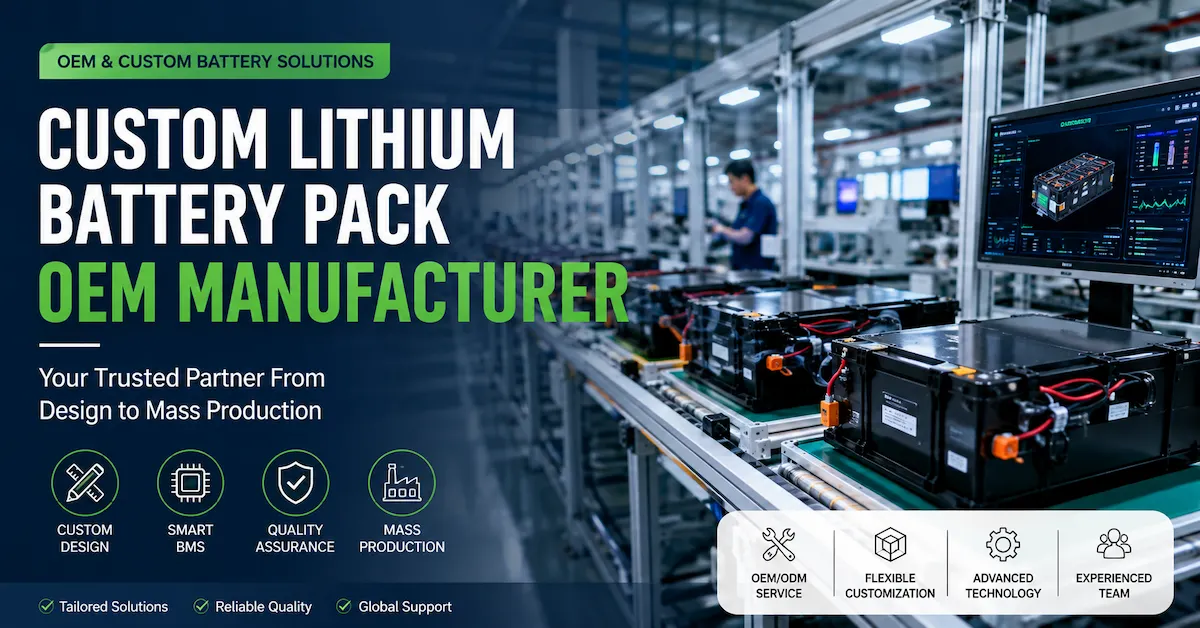
- Battery pack assembly
- BMS integration
- Performance testing
- Quality inspection
- Packaging and delivery
Each stage influences the final battery performance and reliability.
Battery Requirement Analysis and Engineering Design
Before production begins, engineers analyze the customer's application requirements.
Electrical Requirements
The manufacturer needs to understand:
- Nominal voltage
- Operating voltage range
- Battery capacity
- Energy requirement
- Continuous current
- Peak discharge current
- Runtime target
For industrial equipment, battery sizing should be based on actual working conditions instead of only selecting a higher-capacity battery.
For customers preparing a battery project, Dailymag provides a custom lithium battery pack selection guide to help define technical requirements before quotation.
Mechanical Requirements
Battery design also depends on physical integration.
Important factors include:
- Battery dimensions
- Weight limitation
- Mounting structure
- Connector location
- Cable arrangement
- Housing design
A properly designed battery pack should fit the equipment without unnecessary modification.
Environmental Requirements
Industrial applications often face challenging environments.
Manufacturers should consider:
- Operating temperature
- Storage temperature
- Vibration
- Dust
- Humidity
- Outdoor conditions
Environmental requirements influence cell selection, protection design, and testing standards.
Cell Selection and Battery Configuration
Battery cells are the foundation of every lithium battery pack.
Selecting suitable cells is an important step when developing a custom lithium battery pack for industrial applications.
An experienced industrial lithium battery manufacturer evaluates cells based on:
- Energy density
- Discharge capability
- Cycle life
- Temperature performance
- Stability
- Supply availability
Different industrial applications require different battery characteristics.
| Application | Key Battery Requirements |
|---|---|
| AGV systems | High cycle life, stable charging |
| Industrial robots | High discharge capability |
| Portable devices | Lightweight and compact design |
| Monitoring equipment | Long standby performance |
| Automation equipment | Reliable continuous operation |
After selecting suitable cells, engineers determine:
- Series connection
- Parallel connection
- Battery voltage
- Capacity configuration
- Current capability
Battery Pack Assembly Process
After cell configuration, the battery pack enters the assembly stage.
The process may include:
Cell Arrangement
Cells are arranged according to the designed voltage and capacity requirements.
Electrical Connection
Manufacturers complete:
- Cell connections
- Busbar installation
- Wiring
- Insulation protection
Structural Assembly
The battery pack is integrated with:
- Housing
- Brackets
- Connectors
- Protection components
Manufacturing accuracy is important because poor assembly quality may affect:
- Battery safety
- Electrical consistency
- Service life
- Equipment reliability
BMS Integration in Industrial Lithium Battery Packs
The Battery Management System (BMS) is an essential part of industrial lithium battery packs.
A BMS can provide:
- Overcharge protection
- Over-discharge protection
- Overcurrent protection
- Temperature monitoring
- Cell balancing
- Battery status monitoring
For intelligent industrial equipment, battery communication may also be required.
Common communication options include:
- CAN communication
- RS485 communication
However, communication compatibility requires detailed matching between the battery and equipment controller.
A professional manufacturer should confirm:
- Communication protocol
- Data format
- Alarm information
- Controller requirements
For intelligent equipment, Dailymag supports battery solutions that may require customized monitoring and communication functions through its battery customization services.
Lithium Battery Quality Control Process
Quality control is one of the most important factors when selecting an industrial lithium battery manufacturer.
A reliable quality system should cover the entire manufacturing process.
Learn more about Dailymag's approach to battery manufacturing and quality management for OEM battery projects.
Incoming Material Inspection
Before production, manufacturers inspect:
- Battery cells
- Electronic components
- Connectors
- BMS components
- Housing materials
Material consistency directly influences final battery performance.
Production Process Control
During assembly, manufacturers monitor:
- Cell matching
- Connection quality
- Welding process
- Wiring accuracy
- Insulation protection
- Assembly standards
Controlled production helps maintain consistency between battery batches.
Battery Performance Testing
Before shipment, industrial battery packs should undergo testing.
Typical tests include:
| Test Item | Purpose |
|---|---|
| Voltage testing | Confirm electrical parameters |
| Capacity testing | Verify energy performance |
| Charge testing | Check charging behavior |
| Discharge testing | Evaluate output performance |
| Protection testing | Verify BMS functions |
| Communication testing | Confirm system integration |
Testing requirements should match the actual application.
OEM Customization Services from an Industrial Lithium Battery Manufacturer
Many industrial customers require customized battery solutions instead of standard products.
Dailymag provides OEM battery pack development services for businesses requiring application-specific lithium battery solutions.
OEM customization may include:
Voltage and Capacity Customization
Battery specifications can be designed according to:
- Equipment power requirements
- Runtime needs
- Space limitations
Battery Structure Customization
Customization may include:
- Battery size
- Housing design
- Mounting method
- Cable length
- Connector type
BMS Customization
Depending on application requirements, manufacturers can evaluate:
- Protection parameters
- Communication functions
- Monitoring requirements
Label and Packaging Customization
For distributors and OEM brands, customization may include:
- Product labels
- Packaging requirements
- Private label solutions
Industrial Applications of Lithium Battery Packs
AGV and RGV Systems
For automated equipment applications, customers can explore Dailymag's robot and AGV lithium battery solutions.
Automated vehicles require batteries that can support:
- Frequent charging cycles
- Long operation periods
- Stable power output
- Intelligent monitoring
Battery performance directly influences automation efficiency.
Industrial Robotics
Robot applications often require:
- High reliability
- Compact battery structure
- Stable discharge capability
- Communication integration
Intelligent Equipment
Portable and intelligent industrial devices may require:
- Lightweight battery design
- Long runtime
- Fast charging capability
- Reliable protection
Dailymag develops rechargeable lithium battery pack solutions for professional equipment applications.
Communication and Monitoring Systems
These applications usually focus on:
- Long standby time
- Stable power supply
- Low maintenance requirements
How to Choose a Reliable Industrial Lithium Battery Manufacturer?
Before selecting a supplier, industrial buyers should evaluate several areas.
Engineering Capability
A capable supplier should support:
- Battery requirement analysis
- Technical consultation
- Custom design
- Prototype development
Manufacturing Capability
Evaluate:
- Production process
- Quality control
- Manufacturing consistency
- Delivery ability
Testing Capability
Ask suppliers:
- What tests are performed?
- Are testing standards documented?
- Can equipment-level validation be supported?
Long-Term Supply Capability
Industrial projects often require years of support.
Important factors include:
- Stable component sourcing
- Production consistency
- Technical support
- After-sales service
Why Choose Dailymag Energy as Your Industrial Lithium Battery Manufacturer?
Dailymag Energy provides customized lithium battery pack solutions for industrial and professional applications.
Learn more about Dailymag Energy's background, capabilities, and development approach through the Dailymag Energy company profile.
The company supports customers with:
- Battery requirement evaluation
- Custom battery pack design
- Prototype development
- Quality management
- Production support
- Packaging and delivery solutions
Dailymag focuses on developing battery solutions based on actual equipment requirements instead of providing only standard battery products.
Its application areas include:
- Industrial robots
- Intelligent terminals
- Low-temperature equipment
- Communication systems
- Power monitoring applications
Learn more about:
- Dailymag lithium battery products
- OEM and custom battery services
- Dailymag Energy company information
FAQ
What does an industrial lithium battery manufacturer produce?
An industrial lithium battery manufacturer designs and produces lithium battery packs for professional applications, including battery cells, BMS systems, protection components, housings, and customized structures.
Dailymag Energy provides OEM lithium battery pack solutions based on different equipment requirements, including battery design, customization, testing, and production support.
What industries use industrial lithium battery packs?
Industrial lithium batteries are commonly used in robotics, AGV systems, automation equipment, communication systems, monitoring equipment, and portable industrial devices.
Can industrial lithium batteries be customized?
Yes. Manufacturers can customize battery voltage, capacity, dimensions, connectors, BMS functions, communication systems, and packaging.
How does a lithium battery manufacturer control quality?
Quality control includes material inspection, production monitoring, electrical testing, protection testing, and final product inspection.
Why is BMS important for industrial batteries?
BMS helps protect the battery, monitor operating conditions, balance cells, and communicate battery status with equipment systems.
What information is required for a battery quotation?
Customers should provide:
- Application
- Voltage requirement
- Capacity
- Current demand
- Dimensions
- Charging method
- Environment
- Quantity
How long does custom battery development take?
Development time depends on battery complexity, customization requirements, testing needs, and production quantity.
What is the difference between standard and OEM lithium batteries?
Standard batteries use fixed specifications, while OEM batteries are developed according to equipment requirements and may include customized structure, BMS, and communication functions.
Conclusion
Choosing the right industrial lithium battery manufacturer is essential for companies developing industrial equipment and automation solutions.
A reliable battery partner should provide:
- Engineering support
- Manufacturing capability
- Quality control
- OEM customization
- Long-term supply reliability
Industrial lithium battery manufacturing is not only about assembling cells. It requires careful design, testing, validation, and continuous production management.
For OEM manufacturers, distributors, and industrial solution providers, working with the right lithium battery supplier can improve equipment reliability and reduce long-term operational risks.
Dailymag Energy provides customized lithium battery pack solutions for industrial applications. Businesses looking for OEM lithium battery manufacturing support can contact Dailymag Energy with their project requirements for technical evaluation.