

Pack Lithium Battery Design Decisions That Directly Affect Equipment Performance
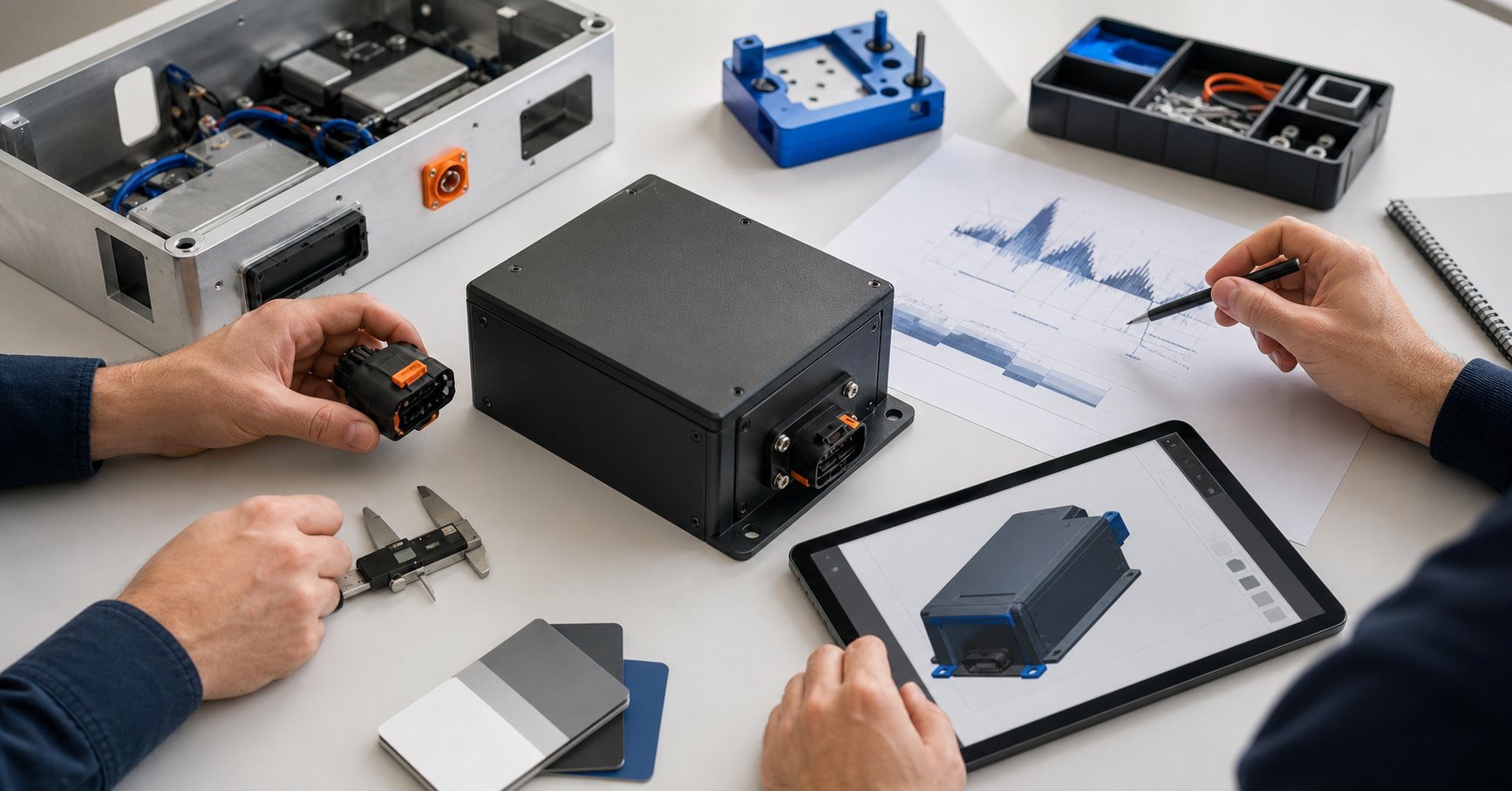
In many OEM projects, engineers initially focus on capacity or voltage when selecting a pack lithium battery. However, real system failures often originate from mismatches between the battery pack and the equipment’s electrical, structural, and control requirements. In one industrial handheld device project, replacing a generic pack lithium battery with a structurally optimized design reduced unexpected shutdowns by over 30% during peak load operation. The improvement did not come from higher capacity, but from better current path design and more stable voltage output.
In practical integration, three factors determine performance:
-
Electrical behavior under dynamic load
-
Structural fit within limited device space
-
Interaction with system-level protection and control logic
Ignoring any of these leads to instability, even if the battery specifications appear sufficient on paper.
Electrical Matching: Beyond Nominal Voltage and Capacity
A pack lithium battery must behave correctly under real operating conditions, not just meet nominal specifications.
From an engineering perspective, key electrical parameters include:
-
Nominal voltage vs operating voltage range (e.g., 11.1V nominal, 9–12.6V working window)
-
Peak discharge current capability (commonly 2–5× average load)
-
Internal resistance (IR) affecting voltage drop under load
-
Discharge curve stability across the usable capacity range
For example, if a device requires 2A peak current and the battery pack exhibits a 12% voltage drop under load, the system may trigger undervoltage protection even when 40% capacity remains. Optimizing IR and current delivery is therefore more critical than increasing capacity alone.
Structural Integration: Space Constraints and Thermal Behavior
Battery pack structure directly impacts system reliability, especially in compact or sealed devices.
A properly designed pack lithium battery considers:
-
Cell arrangement (series vs parallel layout) for balanced current flow
-
Heat dissipation paths to prevent localized temperature rise
-
Mechanical reinforcement to prevent vibration-induced connection failure
-
Connector positioning aligned with device assembly constraints
In compact OEM devices, poor structural layout often leads to uneven thermal distribution, accelerating cell degradation and shortening lifecycle.
Key Performance Parameters for OEM Battery Packs
The table below summarizes typical engineering reference values used in OEM battery pack design and evaluation.
| Parameter | Typical Value Range | Engineering Impact |
|---|---|---|
| Nominal voltage | 7.4V / 11.1V / 12V | System compatibility |
| Capacity | 2Ah – 20Ah | Runtime duration |
| Peak discharge rate | 2C – 5C | Load handling capability |
| Internal resistance | <80 mΩ | Voltage stability |
| Cycle life | 500 – 1000 cycles | Long-term cost |
| Operating temperature | -10°C to +60°C | Environmental adaptability |
| Voltage drop under load | <10% | Prevents system reset |
These values should be validated under actual operating conditions rather than relying solely on datasheet claims.
Design Approach: 5 Practical Steps to Reduce Integration Risk
When integrating a pack lithium battery into OEM equipment, a structured approach helps reduce both technical and commercial risk:
-
Define real load profile
Measure standby current, average load, and peak current instead of estimating. -
Match voltage window to system tolerance
Ensure the battery’s discharge curve stays within acceptable operating limits. -
Optimize internal resistance and current path
Use cell selection and layout to reduce voltage drop under load. -
Validate thermal behavior under continuous operation
Simulate worst-case scenarios to avoid overheating. -
Align protection logic with system control
Prevent conflicts between battery BMS and device firmware.
This approach ensures the pack lithium battery functions as a stable energy source rather than a system bottleneck.
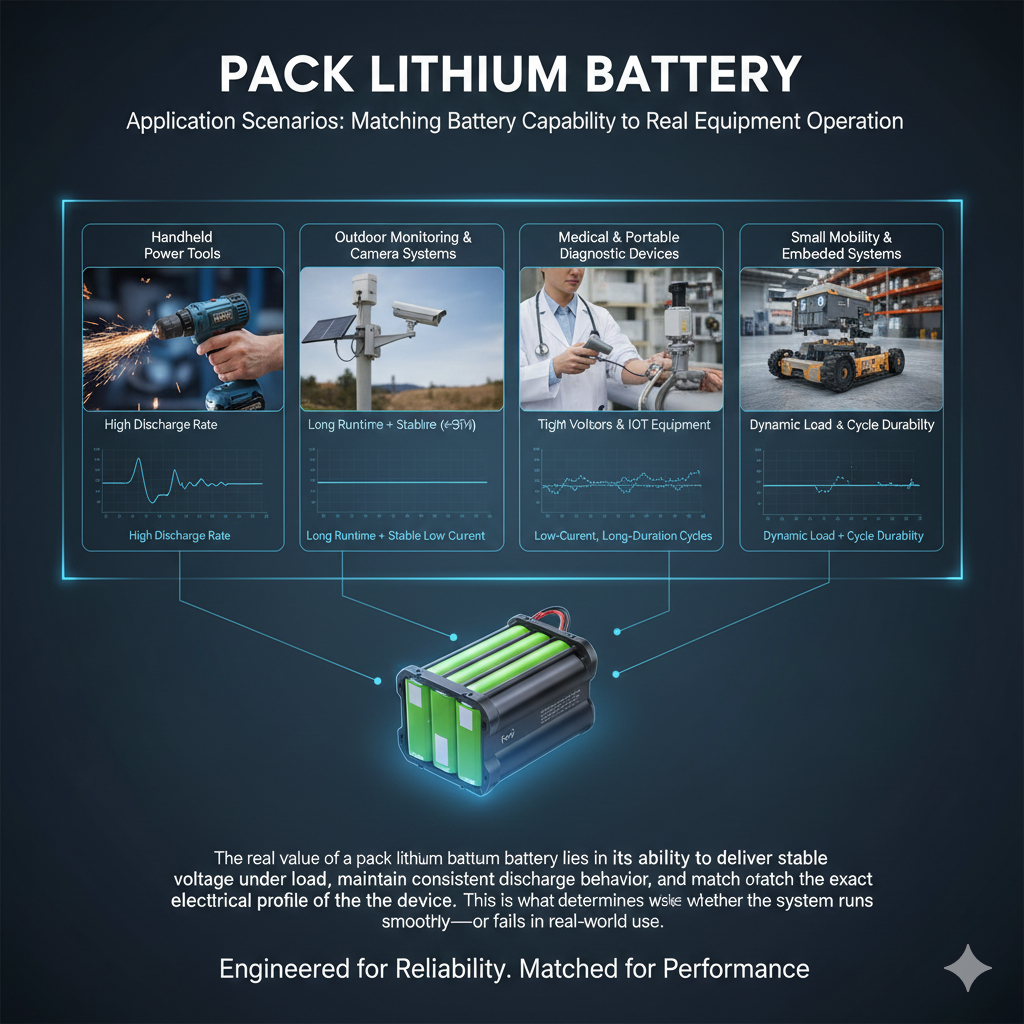
Application Scenarios: Matching Battery Capability to Real Equipment Operation
In real OEM applications, selecting a pack lithium battery is not just about fitting into a device—it must reliably support the equipment’s actual operating behavior under different load conditions. The key question is always: can the battery pack sustain stable operation without voltage drop, overheating, or premature shutdown?
Different equipment types impose very different electrical demands, and a properly engineered battery pack must be matched accordingly:
-
Handheld Power Tools (12V–21V systems)
These devices typically require high burst current (5–15A) during startup or heavy use. A pack lithium battery must support high discharge rates (≥3C) and maintain voltage stability under load. Without this, tools may lose torque or shut down under resistance. -
Outdoor Monitoring & Camera Systems
These applications prioritize low standby consumption + long runtime. A well-designed pack should support continuous operation for 24–72 hours, with stable low-current discharge and minimal self-discharge. Inconsistent output can cause recording interruptions or data loss. -
Medical & Portable Diagnostic Devices
Stability is critical. These devices require tight voltage tolerance (±5%) and consistent output even at low capacity levels. Battery packs must avoid sudden voltage drops that could affect measurement accuracy or device safety. -
Industrial Sensors & IoT Equipment
Often running in remote environments, these systems rely on low-current, long-duration discharge. A pack lithium battery should support hundreds of charge-discharge cycles while maintaining predictable performance across temperature variations. -
Small Mobility & Embedded Systems (AGV, Robotics Modules)
These systems require a balance between continuous current supply (2–10A) and cycle durability. Battery packs must handle frequent charge cycles and dynamic load changes without degradation in performance.
Across these scenarios, the real value of a pack lithium battery lies in its ability to deliver stable voltage under load, maintain consistent discharge behavior, and match the exact electrical profile of the device. This is what determines whether a system runs smoothly—or fails in real-world use.
FAQs
1. Why do some battery packs cause device resets under load?
Because voltage drops below the system threshold during peak current demand, often due to high internal resistance.
2. Is higher capacity always better for OEM devices?
No. Without proper electrical matching, higher capacity does not improve stability and may increase size and cost unnecessarily.
3. How can OEM buyers reduce long-term battery cost?
By selecting battery packs with stable cycle life and consistent discharge behavior, reducing replacement frequency and maintenance.
Building Reliable Battery Pack Solutions for OEM Systems
A well-designed pack lithium battery improves not only runtime but also system stability and lifecycle cost. eDailyMag focuses on battery pack solutions that integrate electrical performance, structural design, and real-world application requirements. Our engineering approach ensures consistent output, controlled thermal behavior, and compatibility across different equipment types.
Explore more about our battery solutions on our homepage:
https://www.edailymag.com/
If you are developing or upgrading an OEM device and need a stable battery integration solution, contact us here:
https://www.edailymag.com/contact-us