

In many OEM projects, the real problem is not finding a battery supplier—it’s dealing with batteries that almost work. Devices shut down under peak load, runtime doesn’t match expectations, or thermal issues appear after deployment.
These issues don’t come from poor battery quality, but from mismatch between battery design and actual system requirements.
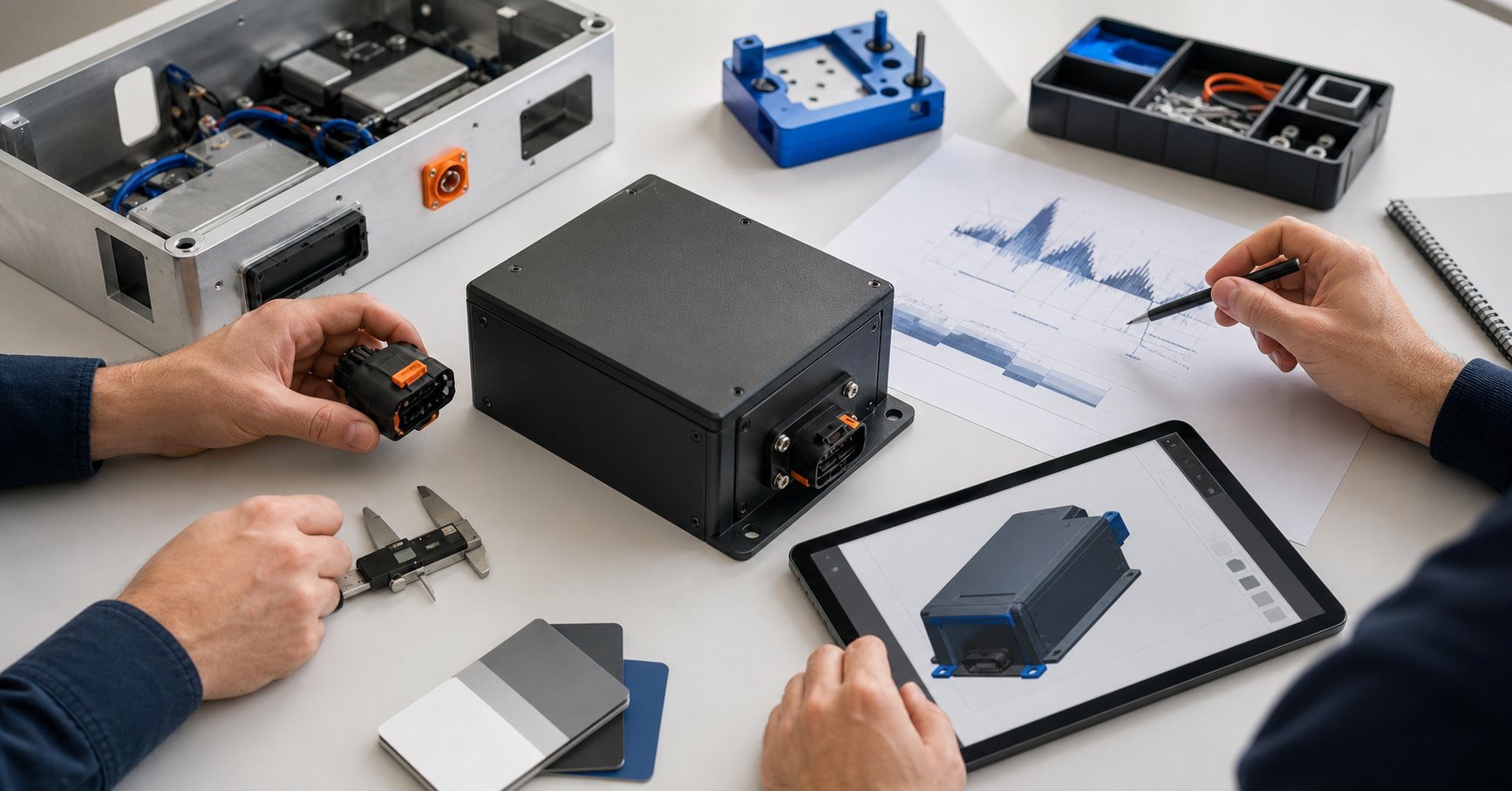
At eDailyMag, we approach this differently. Instead of offering standard packs, we build custom lithium battery packs based on real device load profiles, operating environments, and lifecycle requirements—so the battery works as part of the system, not just a component.
What You Actually Need to Define Before Choosing Custom Lithium Battery Packs
A successful battery selection starts with understanding how your device behaves in real conditions—not just datasheet values.
Key factors that must be clearly defined:
-
Load profile: continuous current vs peak current (e.g., 3A steady + 10A peak)
-
Operating voltage range: acceptable voltage drop during discharge
-
Runtime requirement: hours of operation per cycle
-
Environment: temperature, humidity, outdoor exposure
-
Charging logic: fast charge, trickle charge, or intermittent charging
For example, a monitoring device with low standby current but periodic high-load transmission requires a completely different configuration compared to a continuously running industrial tool.
Without this clarity, even a “high-capacity” battery may fail in real use.
Key Design Decisions That Define a Properly Matched Battery Pack
Choosing custom lithium battery packs is essentially a process of engineering trade-offs. The following decisions determine performance:
-
Cell Type Selection (18650 vs 21700 vs LiFePO4)
-
18650 → compact, cost-effective
-
21700 → higher energy density, longer runtime
-
LiFePO4 → better thermal stability and cycle life
-
-
Series & Parallel Configuration
-
3S (11.1V nominal) or 4S (14.8V nominal) depending on system tolerance
-
Parallel design determines capacity and discharge capability
-
-
Discharge Rate Matching
High-drain applications require ≥3C cells to avoid voltage sag -
Battery Management System (BMS)
Must be customized for:-
Overcurrent cutoff thresholds
-
Temperature protection
-
Charging compatibility
-
-
Mechanical & Interface Design
Includes connectors, housing, waterproofing, and mounting compatibility
This is where most “standard battery packs” fail—they are not designed around these real conditions.
Performance Comparison: Generic vs Custom Battery Pack
| Parameter | Generic Battery Pack | Custom Lithium Battery Packs |
|---|---|---|
| Continuous Discharge | 3–5A | 8–15A (custom matched) |
| Peak Current | 6–8A | 15–25A |
| Voltage Stability | Drop 15–20% | Drop <8% |
| Cycle Life | 300–400 cycles | 600–1000 cycles |
| Thermal Control | Basic | Optimized layout + protection |
| Integration Fit | Limited | Fully matched to system |
A well-designed custom lithium battery pack directly improves device reliability, reduces failure rates, and lowers after-sales costs.
Safety and Certification: What Cannot Be Compromised
In battery projects, safety is not optional—it is a core design requirement. A reliable supplier must ensure both engineering safety and certification compliance.
Key safety considerations:
-
Multi-layer protection (BMS + cell-level safety)
-
Overcharge / over-discharge / short circuit protection
-
Thermal management design (NTC sensors, heat dissipation paths)
-
Cell consistency and matching to prevent imbalance
Certification and compliance typically include:
-
UN38.3 → transportation safety certification
-
CE / FCC → compliance for EU/US markets
-
MSDS & IEC standards → material and safety documentation
Without these, products may face shipping restrictions, compliance issues, or safety risks in end-use environments.
How Customization Reduces Long-Term Cost Instead of Increasing It
Many buyers assume customization increases cost—but in real OEM scenarios, it often reduces total cost.
Here’s why:
-
Lower failure rate → fewer returns and replacements
-
Optimized capacity → no overpaying for unnecessary energy
-
Better cycle life → longer product lifespan
-
Reduced integration issues → faster time to market
For example, adjusting a battery pack to match real discharge needs can reduce system failure rates by 20–30%, directly impacting overall project profitability.
Where Custom Lithium Battery Packs Deliver the Most Value
Custom lithium battery packs are especially valuable in applications where performance stability is critical:
-
Portable electronics & embedded systems → compact + efficient
-
Industrial equipment → high discharge + durability
-
Outdoor devices → temperature resistance + long runtime
-
Medical systems → voltage stability + safety compliance
-
IoT & monitoring systems → low consumption + long lifecycle
In these scenarios, customization is not optional—it is necessary for stable operation.
FAQs
1. How long does it take to develop custom lithium battery packs?
Typically 2–4 weeks depending on design complexity, including prototyping and testing.
2. What is the typical MOQ for custom battery packs?
Most projects start from 50–200 units, depending on configuration and materials.
3. Can custom battery packs be upgraded later?
Yes, capacity, BMS settings, and connectors can be optimized based on updated system requirements.
Build Battery Solutions That Actually Fit Your System
Choosing custom lithium battery packs is not about adding features—it’s about removing mismatch. A properly designed battery improves system stability, reduces operational risk, and ensures long-term performance.
At eDailyMag, we provide:
-
Tailored battery pack design based on real application scenarios
-
Stable performance with optimized discharge and cycle life
-
Flexible OEM/ODM customization support
-
Full safety testing and certification compliance
If you’re working on a project that requires reliable and customized power solutions, you can explore more on our website or contact our team to discuss your requirements:
https://www.edailymag.com/
https://www.edailymag.com/contact-us
A well-designed battery is not just a component—it’s a critical part of your product’s success.