

Buy for Repeat Orders, Not Just Sample Approval
Choose an OEM lithium battery wholesale supplier against three requirements: a battery specification that fits your equipment, a production process that can reproduce the approved configuration, and a delivery arrangement that matches your purchasing schedule. For automated guided vehicle manufacturers and robotics companies, approving a sample should therefore be the beginning of a controlled supply program—not permission to order any battery carrying the same voltage and capacity label. Dailymag’s wholesale battery guidance identifies customization, quality control, technical support, and repeat-order capability as important parts of bulk sourcing. The practical question is how those requirements will be documented and checked for your particular project.
Match the Supply Model to Your Business
An OEM wholesale program is worth evaluating when you need recurring deliveries, equipment-specific interfaces, controlled product revisions, or a battery supplied under your own product identity. An AGV manufacturer might prioritize compatibility across production vehicles; a robotics company might need a defined communication interface; a distributor might require separate part numbers and service records for several equipment platforms. However, do not assume that custom development is automatically the better choice. Where an existing battery already meets the important electrical, mechanical, charging, and operational requirements, buying that validated configuration may avoid unnecessary development. Identify the constraint that customization must solve before adding engineering work to the order.
Fix the RFQ Specification Before Asking for Wholesale Prices
Send every shortlisted supplier the same request for quotation, or RFQ, with the same revision number. Record unknown requirements as open questions rather than allowing each supplier to make a different assumption. Use the following table as a procurement specification template, not as a specification for any individual Dailymag model. It brings together the main equipment inputs covered in Dailymag’s custom lithium battery pack RFQ checklist.
| Specification area | Information to confirm before quotation |
|---|---|
| Equipment and duty cycle | Machine type, operating tasks, load variation, and charging opportunities |
| Voltage | Nominal voltage, permitted operating range, and charger requirements |
| Energy and runtime | Required usable energy, target runtime, and validation conditions |
| Current | Continuous current, peak current, and peak duration |
| Mechanical interface | Maximum dimensions, mounting points, weight limit, and service clearance |
| Electrical connections | Connector identification, pin assignment, cable length, and routing |
| Battery management | Protection, monitoring, communication, and recovery requirements |
| Environment | Charging, operating, and storage conditions; moisture and vibration exposure |
| Commercial scope | Sample quantity, production forecast, delivery pattern, and required documents |
For procurement control, ask suppliers to identify each requirement as confirmed, proposed, or unresolved. A quotation with clearly marked exceptions is easier to evaluate than an apparently complete offer containing hidden assumptions. Before approving pricing, assign an owner and a decision date to every unresolved item that could change the design, validation work, or delivery schedule.
Compare Dailymag Product Starting Points by Application
Dailymag’s catalog lists the following product names within its RGV, AGV, robot, and golf-cart categories. These entries provide starting points for a technical discussion; the catalog names are not complete engineering specifications or confirmation of compatibility. Request the current, approved technical specification before selecting a model or comparing quotations. The final column below suggests questions to investigate rather than claims about verified performance.
| Listed product | Product category | Suggested procurement focus |
|---|---|---|
| 48V 46.2Ah | RGV lithium batteries | Confirm route requirements, installation space, and charging arrangements |
| 48V 200Ah | AGV lithium batteries | Review load profile, charging-system compatibility, and production configuration |
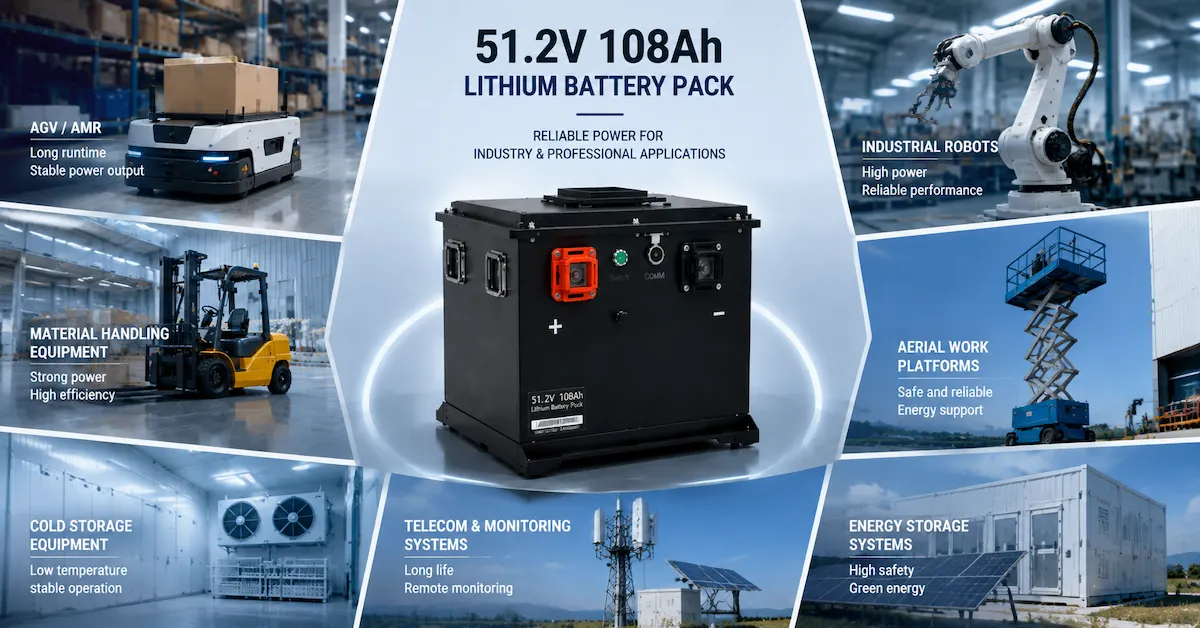
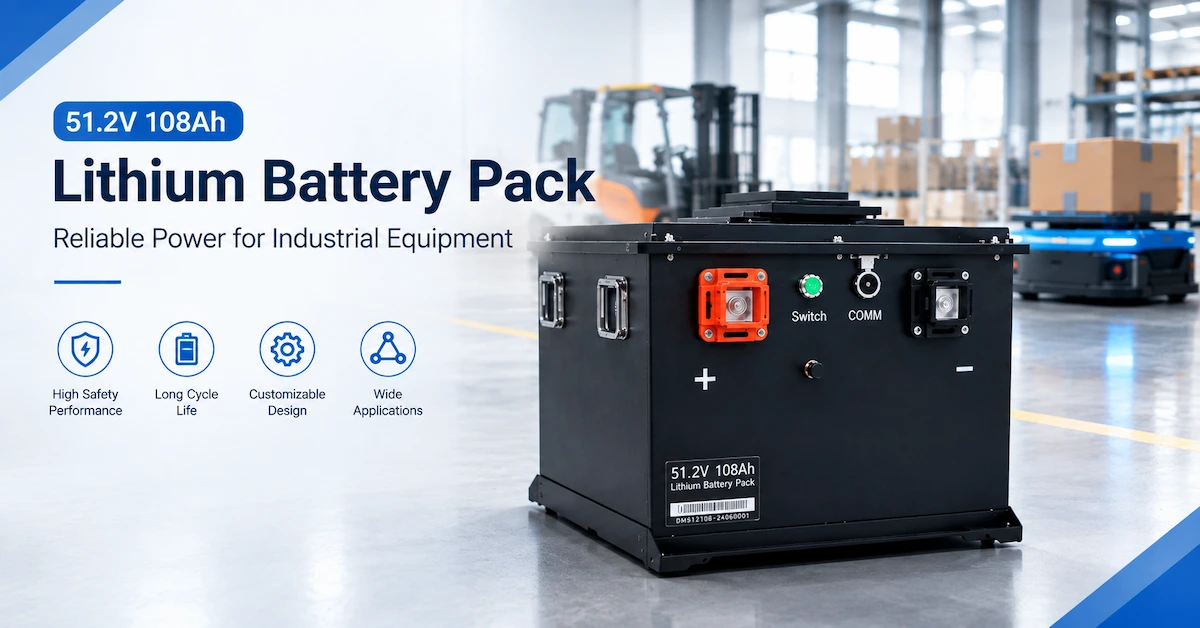
| 51.2V 108Ah | Robot lithium batteries | Define controller communication, mounting, and equipment-level validation |
| 48V 40Ah | Golf-cart lithium battery | Verify the complete vehicle, controller, charger, and installation combination |
Do not rank these products by capacity alone or assume they are interchangeable alternatives. Begin with the application category, then compare the actual proposed configuration against your approved RFQ. Where a listed product requires modification, request a separate quotation identifying what changes and what must be validated again.
Control the Parts and Software That Define Compatibility
Specify Components and Workmanship, Not Only the Finished Appearance
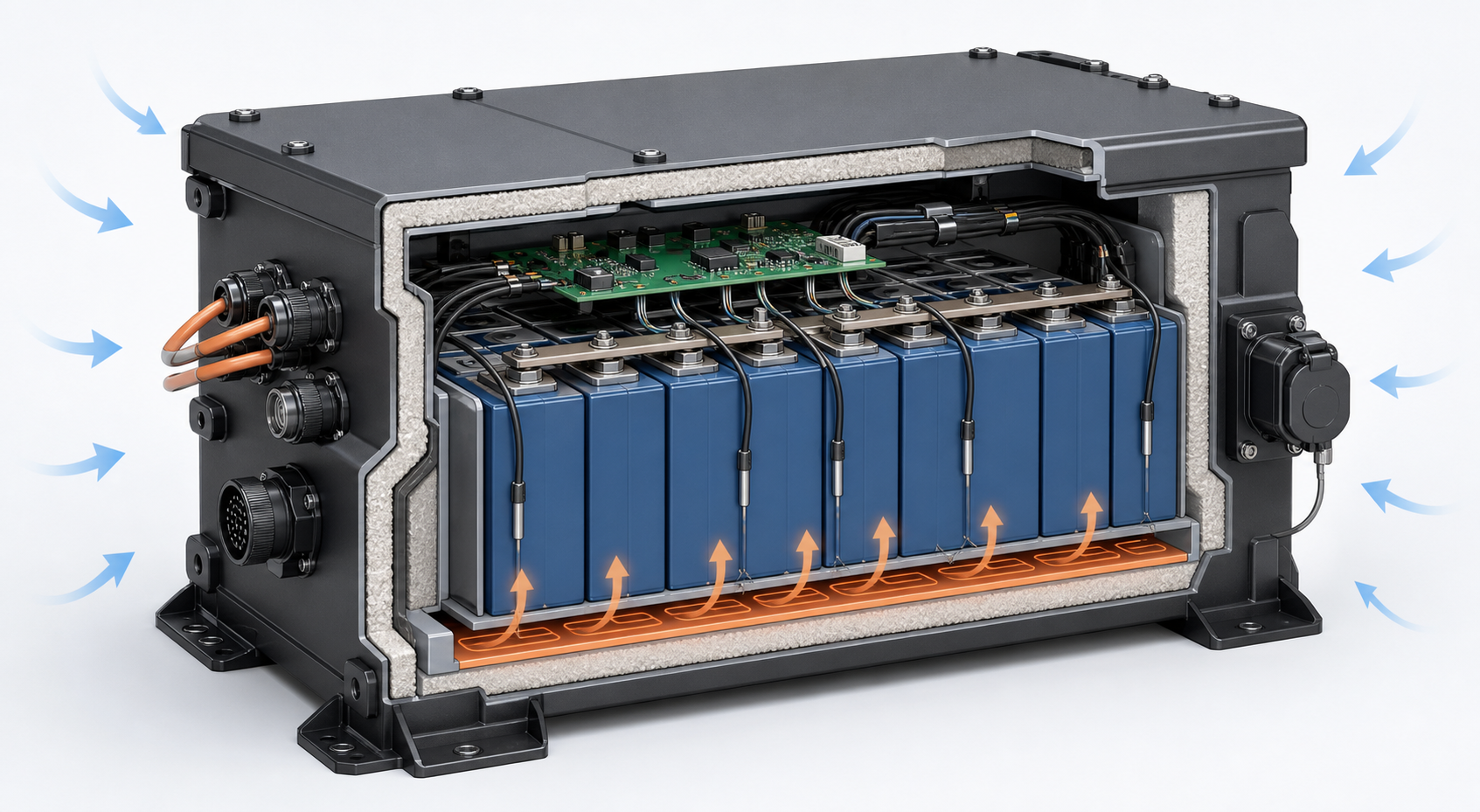
During supplier evaluation, ask how cells, battery management electronics, connectors, cables, and enclosure components are identified and inspected. Then examine the assembly controls relevant to the proposed pack: connections, wiring, insulation, fastening, and structural assembly. Dailymag’s factory-selection guidance treats incoming materials, assembly control, and final testing as separate areas of review. For your project, request a representative record showing how an approved component specification becomes a production instruction and an inspection result. Treat an attractive sample enclosure as evidence of appearance—not proof that the internal configuration and workmanship will remain controlled across orders.
Treat BMS Communication as a Versioned Interface
The battery management system, or BMS, should be reviewed against the equipment’s required protection, monitoring, and communication behavior. “CAN supported” or “RS485 available” does not by itself establish protocol compatibility. Define the relevant communication document, data fields, connector pin assignment, operating sequence, and behavior when communication is interrupted. Include firmware and parameter revisions in the approved configuration where applicable. For repeat purchasing, ask how a replacement pack will be identified as compatible with the controller version already installed in the machine. These questions turn an interface label into something that can be checked during validation and receiving inspection.
Separate Prototype, Pilot, and Batch Acceptance
Prototype Approval: Does the Proposed Design Meet the Requirement?
Before samples are built, agree on the tests, conditions, acceptance limits, and responsibilities. Depending on the application, the validation plan should address startup, representative load operation, runtime, charging, communication, environmental conditions, installation, and service access. Record the sample identity and configuration alongside the results. Dailymag’s development guidance distinguishes between proving that a design meets its specification and proving that the specification adequately describes the real equipment. Use that distinction during review: a successful bench demonstration should not replace the machine-level tests needed for your application.
Pilot Approval: Can the Production Method Reproduce the Design?
Use a pilot order to review the transition from engineering samples to the intended production method. Ask the OEM lithium battery wholesale supplier to identify the production documents, inspection records, software-loading controls, and traceability information that will accompany this stage. Select pilot quantity according to the project’s validation needs rather than treating a particular number as universally sufficient. Before approving the next stage, close discrepancies between the pilot units and the approved design, including labeling, connector orientation, firmware identification, packaging, and documentation. Keep a written record of who authorized production release.
Batch Acceptance: What Evidence Accompanies Each Delivery?
Agree which checks apply to every finished pack, which use batch sampling, and which belong to design qualification or periodic verification. Dailymag’s manufacturing guidance explicitly separates these categories; a test performed during development should not automatically be presented as an inspection completed on every shipped unit. For receiving purposes, request an agreed combination of part number, revision, batch or serial identification, inspection results, and deviation status. Your purchasing team should be able to determine whether a delivery matches the released order without reopening the entire engineering discussion.
Negotiate MOQ and Delivery Releases as One Package
Ask What Creates the Minimum Order Quantity
When discussing minimum order quantity, or MOQ, distinguish finished-pack quantity from commitments for cells, custom electronics, housings, connectors, labels, or packaging. Dailymag’s OEM manufacturing guide notes that MOQ can arise at several component levels, not just at final assembly. Ask which item establishes the constraint and whether scheduled deliveries are possible against a larger commitment. An OEM lithium battery wholesale supplier should also clarify the proposed treatment of unused materials, specification changes, and cancelled releases. Do not assume that agreeing to a larger annual forecast automatically creates a fixed price, reserved inventory, or a guaranteed production slot.
Use a Delivery Example to Expose Different Assumptions
Consider a hypothetical requirement for 600 battery packs annually, released as 50 packs per month. This is a planning example, not a Dailymag MOQ or commercial offer. Ask suppliers to price both a single 600-pack delivery and the proposed monthly-release arrangement using the same specification and support scope. Then ask who would hold any committed inventory, when payment would become due, and how a design change would affect undelivered quantities. The purpose is not to presume which arrangement is cheaper. It is to make the inventory, delivery, and change responsibilities visible before choosing a purchasing model.
Compare the Full Cost of a Usable, Supported Pack
Ask each supplier to separate recurring unit prices from engineering, prototypes, tooling, validation, documentation, packaging, and delivery charges. Dailymag’s RFQ guidance recommends separating these commercial elements rather than treating the battery unit price as the whole project cost. For your comparison, create a common scope that includes the approved battery configuration, required accessories, acceptance evidence, delivery arrangement, and after-sales responsibilities. Mark exclusions explicitly. A lower quotation should trigger a scope check, not an automatic rejection or acceptance: determine whether it reflects a genuine commercial advantage, a different technical proposal, or work that your team would need to fund separately. Compare the quantities you realistically expect to release, not only the largest price tier offered.
Check Capacity, Lead Time, and Documentation Before Committing
Turn a Delivery Estimate into a Milestone Plan
Dailymag states that custom-order timing varies with project complexity and quantity, with additional development and testing affecting the schedule. Its published service information should therefore be treated as a starting point for project planning rather than an unconditional delivery commitment. Ask your OEM lithium battery wholesale supplier to separate design review, component procurement, sample preparation, customer validation, pilot approval, production, and shipment preparation. For each stage, agree on its starting condition and required approval. When reviewing production capacity, request an explanation tied to the proposed battery configuration and delivery calendar, including material availability and testing resources, rather than relying on a general factory-capacity figure.
Match Evidence to the Battery Being Purchased
Prepare a documentation list for the exact application, destination, battery configuration, and shipping method. Ask the supplier and relevant testing or logistics partners to confirm which reports and shipment documents apply, which already exist, and which require additional work. Dailymag’s OEM sourcing guidance emphasizes checking documentation against the finished battery configuration rather than assuming another product’s documents provide coverage. For procurement review, connect each required document to the applicable model or revision and give outstanding items a completion date. Keep internal acceptance testing, third-party evidence, and shipment preparation as separate approval questions.
Keep Change Control and After-Sales Support in the Order Terms
Before approving repeat purchases, agree on how proposed changes will be communicated and reviewed. Include the components, software, interfaces, drawings, and test requirements that define your approved pack, and require a documented decision on whether a proposed change needs additional validation. Dailymag’s sourcing guidance identifies configuration control and long-term support as important parts of OEM supply continuity. For your own order administration, maintain a record connecting battery revisions with the equipment versions they serve. Also agree on the information required for a service investigation, such as serial identity, machine configuration, charger details, operating conditions, and available fault records. Define warranty scope, investigation responsibilities, response expectations, and return authorization before a field issue occurs.
Start a Dailymag OEM Wholesale Project with an Approval Plan
Dailymag Energy provides customized lithium-ion battery pack solutions for industrial and professional applications. Its published project process moves through consultation, quotation, sample confirmation, order placement, and delivery. To begin a wholesale project, review the OEM and custom battery services and submit both an equipment specification and a purchasing plan. Explain whether the project requires an existing configuration, changes to a current product, or a new design proposal. Include branding and packaging requirements where relevant, but keep those separate from electrical and system compatibility. Ask for a proposal identifying confirmed requirements, open technical questions, sample scope, production-approval conditions, quotation inclusions, and the proposed delivery sequence.
Frequently Asked Questions
What Should an OEM Lithium Battery Wholesale Supplier Include in a Proposal?
Request the proposed battery configuration, customization scope, sample plan, production quantity assumptions, pricing breakdown, delivery milestones, and required documentation. Ask for exclusions and unresolved requirements to be stated explicitly so engineering and purchasing can review the same offer.
What Is the MOQ for Dailymag OEM Battery Orders?
Request a project-specific MOQ rather than assuming a universal quantity. Provide the proposed configuration, sample needs, annual forecast, and preferred delivery size, then ask whether the minimum applies to finished packs, customized components, or a broader purchasing commitment.
Can I Purchase Samples Before Placing a Bulk Order?
Dailymag’s published process includes sample confirmation before bulk order placement. Confirm the sample quantity, cost, configuration, and acceptance plan for your project, including how any differences between development samples and production units will be handled.
Does a Higher Order Quantity Guarantee a Lower Overall Cost?
Evaluate the complete purchasing arrangement rather than assuming it does. Request comparable prices at your expected quantities, then account for inventory commitments, delivery charges, validation work, and the treatment of unused materials if the equipment design changes.
Can One Battery Model Serve Several AGV or Robot Platforms?
Treat this as a separate validation question for each platform. Compare the equipment requirements and document approval against each machine configuration. Do not authorize shared purchasing or replacement use solely because the catalog voltage and capacity appear suitable.
How Should I Verify CAN or RS485 Compatibility?
Request the applicable interface and communication documents, including data definitions and equipment behavior. Plan a joint battery-controller test using the intended production configuration, and record the approved software and protocol versions for future deliveries.
Which Documents Should Accompany a Production Batch?
Agree on the package before placing the order. It may include the released part number and revision, batch or serial list, agreed inspection results, packing information, and applicable shipment documents. Identify any permitted deviations and their approvals separately.
Can Bulk Battery Orders Be Delivered in Smaller Scheduled Quantities?
Ask for this arrangement during quotation. Define each release quantity and date, the overall commitment, inventory ownership, payment timing, and change responsibilities. Treat scheduled releases as a negotiated supply arrangement, not an automatic feature of wholesale pricing.
What Should Happen When an Approved Component Becomes Unavailable?
Request a documented alternative proposal before substitution. Have the engineering team review the change, determine the required verification, and approve the affected configuration and delivery batches. Also clarify how remaining stock and service replacements will be handled.
What Information Should I Send for an Accurate Wholesale Quote?
Provide the application, voltage requirements, load profile, runtime target, installation drawing, charger information, communication needs, operating environment, validation expectations, and target market. Add sample quantities, forecast volume, delivery frequency, and branding or packaging requirements.
Conclusion
The right OEM lithium battery wholesale supplier should help you establish an approved battery configuration and a workable repeat-order process—not simply provide an attractive first quotation. For AGV, robotics, and other industrial equipment programs, connect specification review, sample validation, production acceptance, commercial terms, and change control before committing to volume. Keep every quotation tied to the same requirements and every delivery tied to an approved revision. To discuss a Dailymag project, contact Dailymag Energy with your equipment requirements, sample needs, expected purchasing volume, and delivery schedule, and request a proposal that identifies both the technical solution and the conditions for repeat supply.