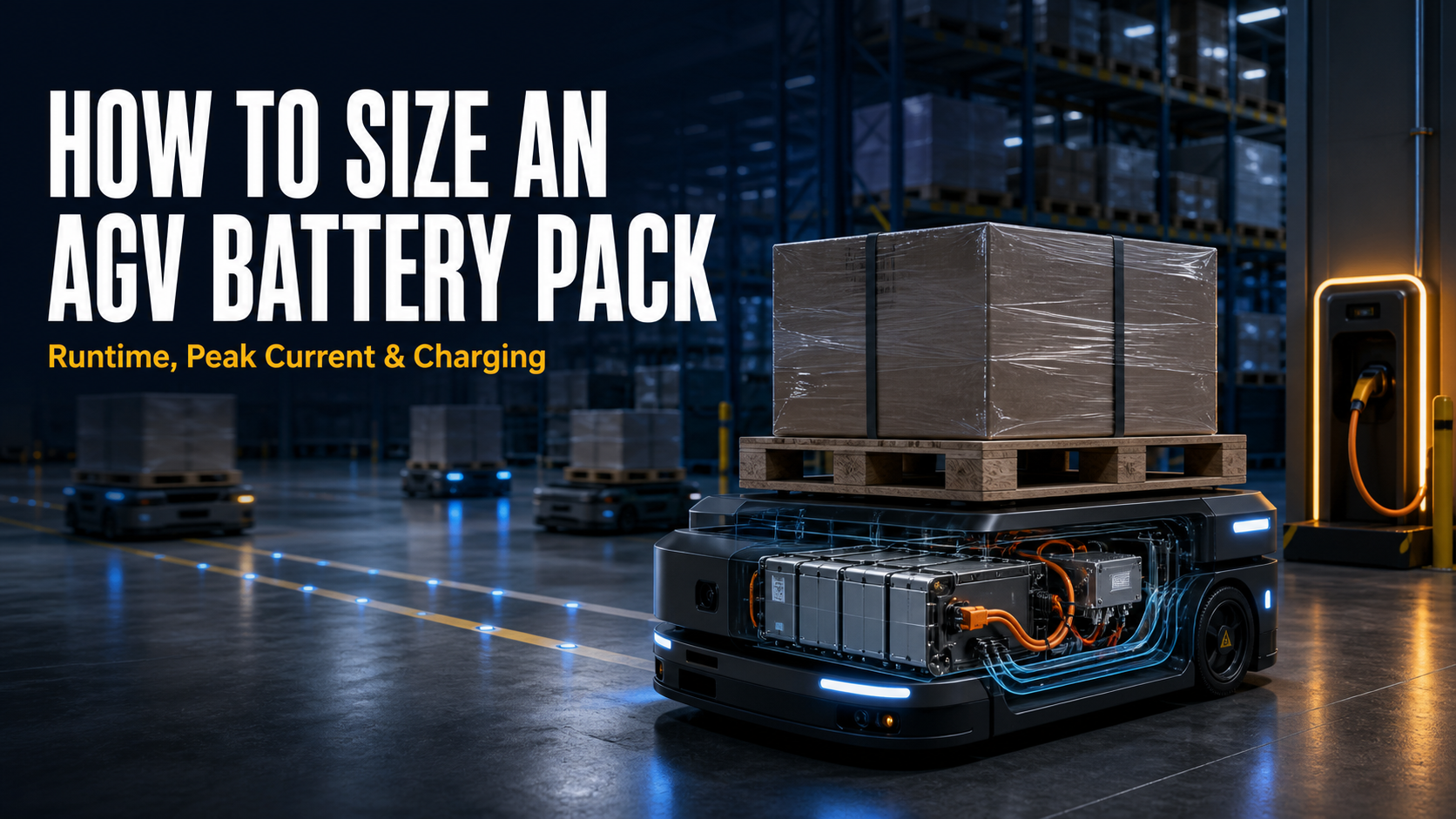


Why Choosing a Lithium Battery Pack OEM Manufacturer Is a Supply-Chain Decision
Selecting a lithium battery pack OEM manufacturer is not the same as buying a standard electronic component from a catalog.
For an OEM equipment project, the battery affects runtime, peak-current capability, charging strategy, mechanical packaging, communication with the controller, product certification planning, serviceability, and ultimately the reliability of the finished machine.
That means procurement should evaluate more than:
- Unit price
- Nominal voltage
- Ah capacity
- Sample appearance
- Quoted delivery time
A battery supplier becomes part of the OEM's engineering and production system.
The U.S. Department of Energy notes that lithium-ion battery pack design is application-dependent and that factors such as voltage requirements, space constraints, battery management, and thermal management influence finished battery-system design.
For B2B buyers, the more useful question is therefore not:
Which supplier can offer the cheapest battery?
It is:
Which manufacturer can repeatedly deliver a battery system that remains compatible with our equipment as production scales?
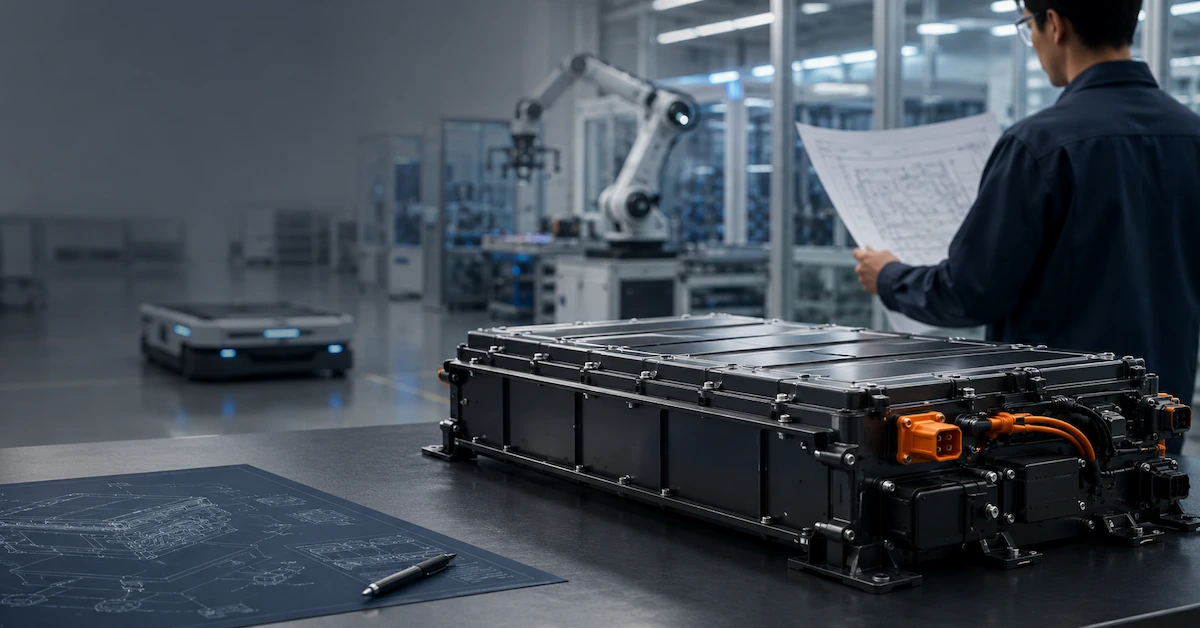
What Should a Lithium Battery Pack OEM Manufacturer Actually Do?
A capable OEM battery manufacturer should help translate equipment requirements into a manufacturable battery specification.
Depending on the project, this can include:
- Application requirement analysis
- Cell selection
- Series/parallel configuration
- Voltage and energy calculation
- Continuous and peak-current evaluation
- Battery Management System selection
- CAN or RS485 integration
- Charger matching
- Mechanical enclosure development
- Connector and cable configuration
- Prototype production
- Equipment-level testing
- Quality-control planning
- Packaging and logistics support
Dailymag's published battery-project content describes support including requirement analysis, cell selection, pack structure design, BMS evaluation, connector customization, charging compatibility, prototype development, testing, quality control, packaging, and logistics.
Buyers can review Dailymag's OEM and custom battery services before preparing a project RFQ.
Start With the Equipment, Not the Battery Catalog
One of the most important principles in an OEM battery project is simple:
The battery should be designed around the equipment requirements—not the equipment redesigned around an arbitrary battery specification.
Before requesting a quotation, define what the equipment actually needs.
Electrical Requirements
Provide:
- Nominal system voltage
- Acceptable voltage window
- Average operating current
- Continuous current
- Peak current
- Peak duration
- Required runtime
- Target Wh
- Equipment cutoff voltage
A supplier cannot properly size a battery from “48V 100Ah required” alone.
For example, two machines may both use a nominal 48V system while having very different peak-current demands, charging windows, communication requirements, and duty cycles.
Mechanical Requirements
Specify:
- Maximum length
- Maximum width
- Maximum height
- Weight target
- Mounting direction
- Installation method
- Service clearance
- Connector position
- Cable exit direction
These constraints can significantly affect pack architecture.
Charging Requirements
Clarify:
- Charger type
- Charge voltage
- Maximum charge current
- Available charging time
- Onboard or external charging
- Opportunity charging
- Dock charging
- Battery swapping
Operating Environment
Document:
- Minimum discharge temperature
- Maximum discharge temperature
- Charging temperature
- Storage conditions
- Humidity
- Condensation
- Dust
- Water exposure
- Vibration
- Shock
Avoid statements such as “outdoor use” or “industrial environment” without measurable conditions.
Why Cell Sourcing and Cell Consistency Matter
Some buyers assume that the most important supplier question is whether the battery pack company manufactures its own cells.
That is too simplistic.
For many OEM programs, the more useful questions are:
- Which cell manufacturer and model will be used?
- Is the cell specification frozen after approval?
- How are incoming cells inspected?
- How are cells matched?
- How is lot traceability managed?
- Can the supplier change cell models without customer approval?
- What happens if the selected cell becomes unavailable?
The key procurement objective is consistency and change control.
A sample pack can perform well during validation, but the OEM still has a problem if later production silently uses different cells, a different BMS, a new connector, or altered firmware.
Ask for a Controlled Bill of Materials
For long-term projects, buyers should identify critical components such as:
- Cell model
- BMS
- Current sensors
- MOSFETs where relevant
- Fuse
- Connector
- Charger interface
- Housing
- Wiring
- Communication components
Not every component needs to be commercially frozen forever, but critical substitutions should follow an agreed approval process.
Standard Battery Pack vs OEM Battery Development
OEM customization is most valuable when a standard battery cannot properly meet the equipment requirement.
| Requirement | Standard Battery | OEM Battery Pack |
|---|---|---|
| Voltage | Fixed | Designed around system |
| Capacity | Fixed range | Matched to runtime |
| Peak current | Predefined | Application evaluated |
| Dimensions | Fixed enclosure | Can be project-specific |
| Connector | Standard | Equipment-specific |
| BMS | Standard functions | Requirement-based |
| Communication | Limited | CAN/RS485 where required |
| Charger | Standard | System matching possible |
| Branding | Limited | OEM/private label possible |
| Validation | Generic | Equipment-level testing |
A standard battery may still be the better option when volume is low, technical requirements are simple, and an existing validated design already fits.
OEM development becomes more valuable when integration requirements outweigh the convenience of an off-the-shelf product.
BMS Capability Should Be Evaluated at the System Level
The Battery Management System is not simply a checklist item.
Depending on the project, a BMS may monitor and manage:
- Cell voltage
- Pack voltage
- Current
- Temperature
- Overcharge conditions
- Over-discharge conditions
- Overcurrent
- Short circuit
- Cell balancing
- State of Charge
- Fault information
- Communication
DOE battery-system guidance identifies the BMS as a critical part of deployed lithium-ion battery systems because it monitors and controls battery state.
“CAN Supported” Is Not a Complete Specification
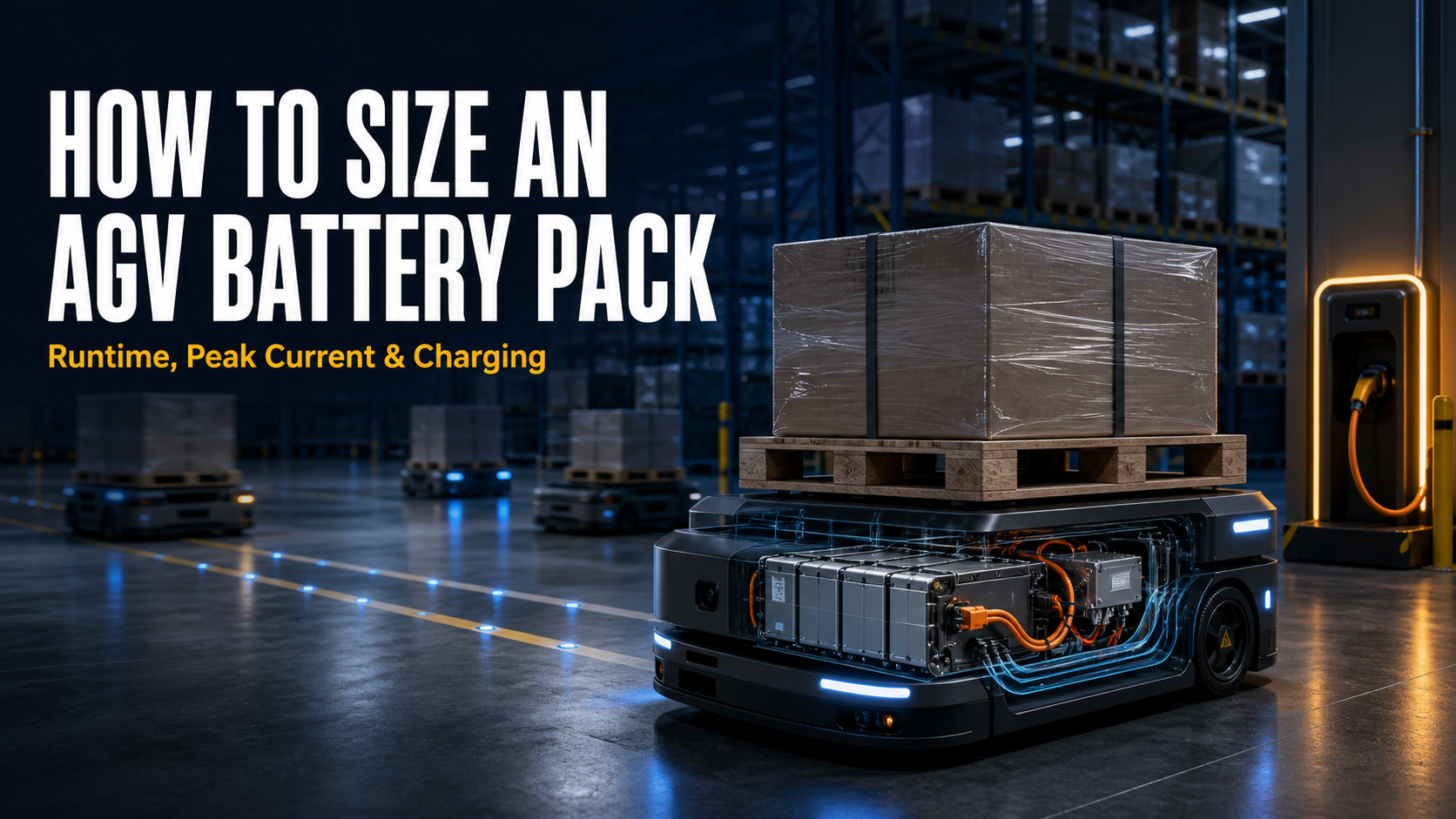
For intelligent equipment such as AGVs, robots, and automated vehicles, buyers often write:
CAN required
or:
RS485 required
That is not enough.
Dailymag's own custom battery RFQ checklist recommends defining details such as the physical interface, protocol, baud rate, node addressing, message identifiers, update intervals, alarm definitions, and communication-loss behavior.
Two batteries can both advertise CAN communication and still be incompatible with the same machine.
Which OEM Applications Need Custom Lithium Battery Packs?
Dailymag currently positions its lithium battery business around applications including handheld intelligent terminals, industrial robots, low-temperature cold-storage equipment, telecommunications, power applications, and online power-grid monitoring equipment.
Its current product portfolio also includes battery packs across several voltage and capacity configurations.
AGV and RGV Equipment
OEM buyers may need to evaluate:
- Shift duration
- Charging windows
- Peak acceleration current
- Payload changes
- Dock charging
- CAN/RS485 integration
- Battery replacement access
Industrial and Mobile Robots
Typical considerations include:
- Compact installation space
- Repeated acceleration
- BMS communication
- Peak-load capability
- Weight
- Thermal behavior
- predictable shutdown
Handheld Intelligent Terminals
Priorities may shift toward:
- Compact size
- Energy density
- Weight
- charging convenience
- long operating time
Low-Temperature Equipment
The OEM specification should clearly separate:
- Discharge-temperature requirement
- Charging-temperature requirement
- Storage-temperature requirement
A category label such as “low-temperature battery” is not enough to approve a design.
Power and Remote Monitoring Equipment
Long-term projects may prioritize:
- Standby reliability
- remote status monitoring
- predictable maintenance
- stable long-term supply
- replacement availability
Buyers can review Dailymag's lithium battery product portfolio for current application directions.
From RFQ to Prototype: What a Good OEM Process Looks Like
A structured OEM development process reduces the risk of discovering fundamental incompatibilities after tooling or mass production.
Stage 1: Requirement Review
The buyer provides:
- Equipment application
- Voltage
- load profile
- target runtime
- dimensions
- connector
- charger
- communication
- environmental conditions
- annual forecast
Stage 2: Technical Proposal
The manufacturer reviews:
- Proposed cell architecture
- capacity
- current rating
- BMS
- charging
- housing
- connection system
- major technical assumptions
The buyer should clarify any assumptions before sample production.
Stage 3: Prototype Development
The prototype is used to validate the proposed architecture.
A prototype should not be treated as a cosmetic sample.
It should answer questions such as:
- Does the battery physically fit?
- Does the equipment start correctly?
- Can it support peak loads?
- Does it charge correctly?
- Does the controller communicate with the BMS?
- Is runtime acceptable?
- Does the pack behave correctly at cutoff?
Stage 4: Equipment-Level Validation
Testing the battery separately is useful, but the final OEM decision should include testing inside the actual equipment.
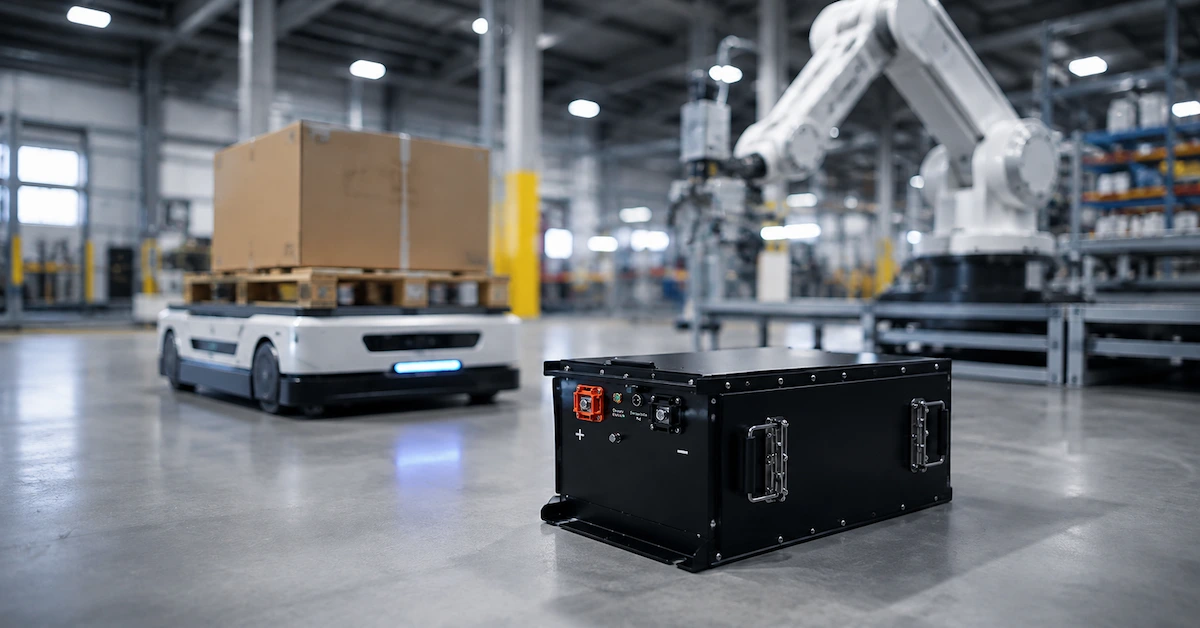
For example, an AGV battery may pass a discharge test on a battery tester but still fail when:
- Motor startup generates a larger transient
- The controller expects a specific CAN message
- The charger does not complete its handshake
- The connector overheats under real operating current
Stage 5: Sample Approval
Before mass production, document:
- Approved specification
- drawing revision
- BOM status
- firmware revision
- test criteria
- labeling
- packaging
- acceptable deviations
This creates a clearer reference for future production.
A Good Sample Does Not Automatically Mean a Good Mass-Production Supplier
This is one of the most important distinctions for OEM procurement teams.
Producing several successful prototype packs is different from repeatedly producing hundreds or thousands of equivalent packs.
As volume increases, the supplier must manage:
- Incoming material variation
- cell lot consistency
- assembly repeatability
- welding quality
- wiring
- BMS programming
- enclosure assembly
- final electrical testing
- production records
- packaging
- delivery scheduling
The manufacturing question therefore changes from:
Can you make this battery?
to:
Can you make the same approved battery repeatedly?
What Should Be Tested Before Mass Production?
The validation plan should be agreed before production approval.
| Test Area | What the OEM Should Confirm |
| Voltage | Correct operating range |
| Capacity | Required Ah/Wh performance |
| Continuous load | Stable operation |
| Peak load | Short-duration current capability |
| Charging | Charger compatibility |
| BMS | Required protection behavior |
| Communication | Controller compatibility |
| Runtime | Actual duty-cycle performance |
| Mechanical | Fit and mounting |
| Connector | Temperature and stability |
| Environment | Agreed conditions |
| Production consistency | Repeatability |
Not every product needs the same validation plan.
The correct test matrix depends on application risk.
Quality Management Should Cover More Than Final Inspection
A mature OEM battery project should not rely only on end-of-line inspection.
Dailymag states that its quality-management process covers raw-material handling, preprocessing, production, and pre-shipment stages.
For buyers, quality discussions should therefore include:
Incoming Quality Control
Potential checks may cover:
- Cell identification
- Cell voltage
- Components
- connectors
- housing materials
- BMS hardware
In-Process Control
Depending on production design:
- Cell matching
- welding
- wiring
- insulation
- fastener torque
- BMS installation
- enclosure assembly
Final Testing
May include:
- Voltage
- charging
- discharge
- protection
- communication
- appearance
- label
- packaging
The buyer should ask which checks are actually performed on its project rather than assuming every supplier uses the same QC plan.
Change Management Is Critical for Long-Term OEM Programs
Once a battery has passed testing and entered production, changes can introduce new risk.
Critical changes might include:
- Cell manufacturer
- Cell model
- BMS supplier
- Firmware
- current sensor
- connector
- cable gauge
- housing
- insulation material
- charger
A strong OEM relationship should define:
- Which changes require notification
- Which changes require customer approval
- Whether revalidation is necessary
- How old and new revisions are traced
This is particularly important when batteries are integrated into regulated, high-value, or field-deployed equipment.
How Should an OEM Buyer Evaluate Production Scaling?
Before selecting a long-term manufacturing partner, ask about the path from prototype to forecast volume.
Useful questions include:
- What is the expected first production quantity?
- How will lead time change when volume increases?
- Which components have long procurement cycles?
- Are critical materials reserved against forecasts?
- How are production revisions controlled?
- What happens if the selected cell becomes constrained?
- How are failed units analyzed?
- How are production records maintained?
Annual volume matters because the commercial and supply-chain approach for 50 batteries is different from the approach for 5,000 batteries.
How Long Does an OEM Battery Project Take?
Dailymag currently states typical delivery periods of approximately 15–30 business days for standard customization and 45–60 business days for more complex projects requiring additional R&D and testing. Actual timing depends on project complexity, testing, quantity, and feasibility.
A realistic timeline may involve:
Requirement review → quotation → engineering → prototype → testing → revisions → approval → mass production
Buyers should avoid evaluating lead time only by asking:
How fast can you make a sample?
The more important question is:
How quickly can the project reach a validated and repeatable production state?
What Determines OEM Lithium Battery Pack Cost?
A custom battery quotation is influenced by multiple factors.
Electrical Architecture
Cost may change with:
- Voltage
- capacity
- number of cells
- continuous current
- peak current
BMS Complexity
A simple protection system and an intelligent communicating BMS do not have the same engineering or hardware scope.
Mechanical Design
Cost may be affected by:
- Standard vs custom enclosure
- tooling
- structural components
- connectors
- cable assemblies
- mounting hardware
Validation Requirements
More demanding equipment may require a larger validation program.
Order Volume
Prototype, pilot, and mass-production pricing may differ because engineering, tooling, material purchasing, and production setup costs are distributed differently.
For this reason, suppliers should compare equivalent specifications—not just “price per Ah.”
OEM Manufacturer vs Low-Cost Pack Assembler: What Should Buyers Compare?
The most useful comparison is not based on labels such as “factory” or “manufacturer.”
Instead, compare capabilities.
| Supplier Evaluation Area | Questions to Ask |
| Engineering | Can they review the complete equipment requirement? |
| Cell sourcing | Are approved cells clearly defined? |
| BMS | Can functions and communication be specified? |
| Prototype | Is sample validation structured? |
| QC | Are test criteria documented? |
| Change control | Are substitutions communicated? |
| Scaling | Can the approved design be repeated at volume? |
| Traceability | Can production lots be identified? |
| Supply | Is long-term material availability considered? |
| Support | Can engineering issues be handled after launch? |
This gives procurement a more objective framework than relying on marketing claims.
Compliance and Lithium Battery Transportation
OEM buyers should also consider the battery's destination and shipping method during project planning.
In the United States, PHMSA states that lithium cells and batteries offered for transportation must have passed applicable design tests under UN Manual of Tests and Criteria, subsection 38.3, and manufacturers must make the applicable test-summary documentation available when required.
This does not mean every Dailymag product should automatically be described as having every certification.
Instead, buyers should confirm which requirements apply to:
- The actual battery model
- Finished battery configuration
- Destination country
- Transport mode
- Intended equipment
The documentation should match the production battery being purchased.
What Should Be Included in an OEM Battery RFQ?
A detailed RFQ improves quotation quality and makes supplier comparisons more meaningful.
| RFQ Item | Information to Provide |
| Application | AGV, robot, terminal, equipment, etc. |
| Nominal voltage | Required system voltage |
| Voltage window | Minimum/maximum |
| Average load | A or W |
| Continuous load | Current requirement |
| Peak current | A + duration |
| Runtime | Hours per charge |
| Dimensions | Maximum L × W × H |
| Connector | Power and signal interfaces |
| BMS | Required functions |
| Communication | CAN, RS485 or other |
| Charger | Existing or new |
| Environment | Temperature, vibration, moisture |
| Testing | Required acceptance criteria |
| Forecast | Prototype + annual quantity |
| Target market | Country/region |
| Branding | OEM/private label |
| Packaging | Bulk or customized |
For a more detailed preparation process, buyers can use Dailymag's custom lithium battery pack RFQ checklist.
Why Long-Term Support Matters More Than a One-Time Order
OEM battery sourcing rarely ends when the first batch ships.
During a product lifecycle, the customer may need:
- Higher production volume
- Battery optimization
- Firmware changes
- New connector configurations
- Alternate packaging
- Field-failure analysis
- replacement supply
- product revision
- future equipment variants
A lithium battery pack OEM manufacturer should therefore be evaluated as a long-term engineering and supply-chain partner.
Dailymag's published service scope includes product design, sampling, R&D, quality management, packaging, transportation, logistics, and after-sales support.
You can also review Dailymag's lithium ion battery pack selection guide for more detail on voltage, BMS, charging, and equipment integration.
Why Consider Dailymag for OEM Lithium Battery Pack Projects?
Dailymag Energy currently positions its battery business around customized lithium-ion battery pack matching solutions and industrial/professional applications. Its website specifically identifies handheld intelligent terminals, industrial robots, low-temperature cold-storage equipment, power-grid monitoring, telecommunications, and power-sector applications.
For OEM projects, its published support scope includes:
- Requirement evaluation
- Product design
- Sampling
- R&D support
- Quality management
- Customized battery solutions
- Packaging
- Transportation
- Logistics
- After-sales support
Buyers can review the current Dailymag battery portfolio, explore OEM battery services, or learn more about Dailymag Energy.
The goal should not be to select a supplier because of one marketing claim. It should be to determine whether the supplier can meet the technical, quality, commercial, and long-term requirements of the specific equipment project.
FAQ
What is a lithium battery pack OEM manufacturer?
A lithium battery pack OEM manufacturer develops or manufactures battery packs according to another company's equipment and commercial requirements. The scope may include electrical configuration, BMS, housing, connectors, communication, prototypes, testing, production, and private-label support.
What information should I provide to an OEM battery manufacturer?
At minimum, provide the application, voltage, load, peak current, target runtime, dimensions, connector requirements, charging method, BMS requirements, environment, quantity forecast, and target market.
Is an OEM battery manufacturer required to make its own cells?
Not necessarily. More important procurement questions include which cells are approved, how suppliers are controlled, how cells are matched and traced, and whether substitutions require customer approval.
How do I evaluate a battery manufacturer's engineering capability?
Provide a real application specification and evaluate whether the supplier asks meaningful questions about voltage window, load profile, peak current, charging, BMS communication, mechanical integration, environment, and testing.
Why is prototype validation important?
A prototype allows engineers to verify electrical performance, mechanical fit, charging, BMS behavior, communication, runtime, and equipment compatibility before committing to mass production.
Can an OEM lithium battery pack support CAN or RS485?
Some custom projects can use CAN or RS485, but interface type alone does not guarantee compatibility. Protocol details, baud rate, identifiers, message definitions, alarm behavior, and controller requirements should be defined.
What causes OEM battery prices to vary?
Major factors include cell configuration, voltage, capacity, current capability, BMS complexity, communication, enclosure, connector, tooling, validation requirements, packaging, and order volume.
How long does a custom OEM battery project take?
Dailymag currently lists approximately 15–30 business days for standard customization and 45–60 business days for more complex R&D/testing projects, subject to project complexity, quantity, and feasibility.
What should be controlled when moving from samples to mass production?
Control the approved specification, cell model, BMS, firmware, drawings, connector, housing, test criteria, labeling, packaging, and any critical component changes.
Does an OEM lithium battery pack need UN38.3?
Lithium battery designs offered for transportation are subject to applicable transport requirements. PHMSA states that batteries offered for transport must pass applicable UN 38.3 design tests and corresponding test-summary obligations. Buyers should verify requirements for the actual finished battery and shipping route.
Conclusion
Choosing the right lithium battery pack OEM manufacturer is ultimately a decision about engineering compatibility, production consistency, supply-chain risk, and long-term scalability.
A strong OEM battery partner should help the buyer move through a controlled process:
equipment requirements → battery architecture → prototype → equipment validation → approved specification → mass production → change control → long-term supply
For procurement teams, this is more valuable than selecting a supplier based only on the lowest quotation or the appearance of one successful sample.
Before requesting final pricing, define the equipment's voltage window, current profile, runtime, charging method, installation space, communication requirements, environment, validation criteria, and production forecast.
For a new industrial or professional battery project, review Dailymag's OEM and custom battery services or contact Dailymag Energy with your application requirements for technical evaluation.