Understanding LiFePO4 Lithium Iron Phosphate Battery Packs for OEM Projects
For industrial equipment manufacturers, selecting the right battery technology is not only a matter of choosing higher capacity or lower cost.
The battery must become a reliable part of the complete equipment system.
This is why many OEM engineers and procurement teams evaluate lifepo4 lithium iron phosphate battery packs when developing products that require:
- Long operating life
- Stable charging and discharging performance
- Reliable safety characteristics
- Frequent cycling capability
- Predictable maintenance requirements
- Consistent production supply
Unlike consumer electronics where battery selection is often driven mainly by size and energy density, industrial battery projects require a broader evaluation process.
A professional OEM battery assessment should consider:
- Battery chemistry
- Voltage architecture
- Required energy
- Continuous and peak current
- Charging requirements
- Battery Management System (BMS)
- Communication interface
- Mechanical installation
- Operating environment
- Production consistency
- Long-term supplier support
A battery that performs well in a laboratory environment may still create problems when installed into real equipment if the electrical, mechanical, or communication requirements are not fully matched.
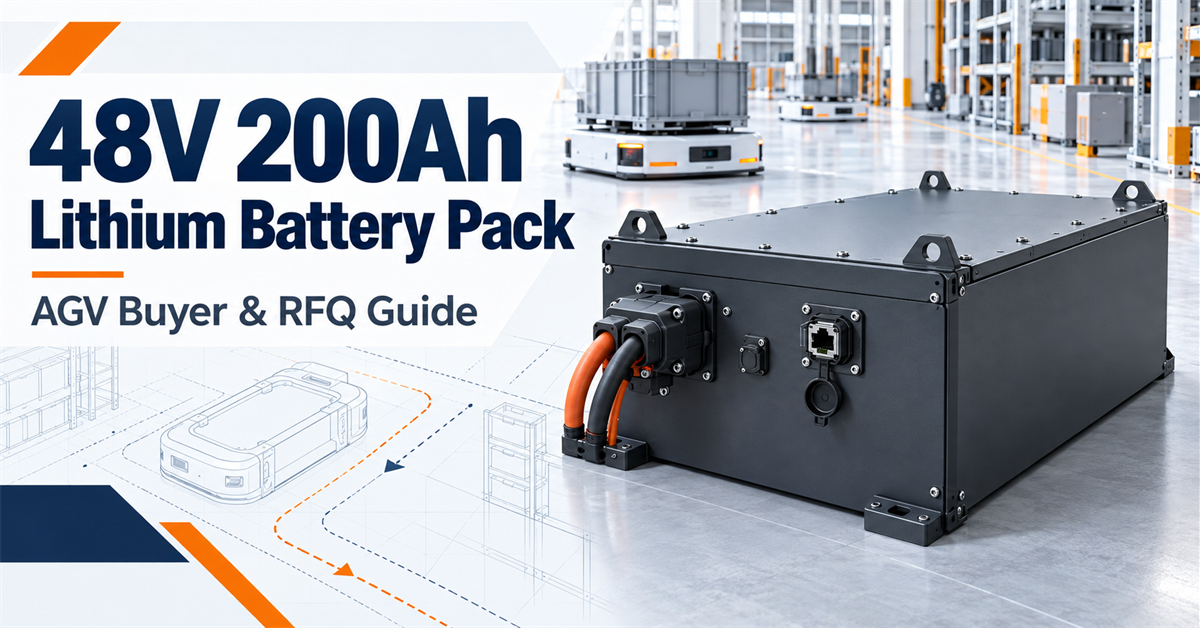
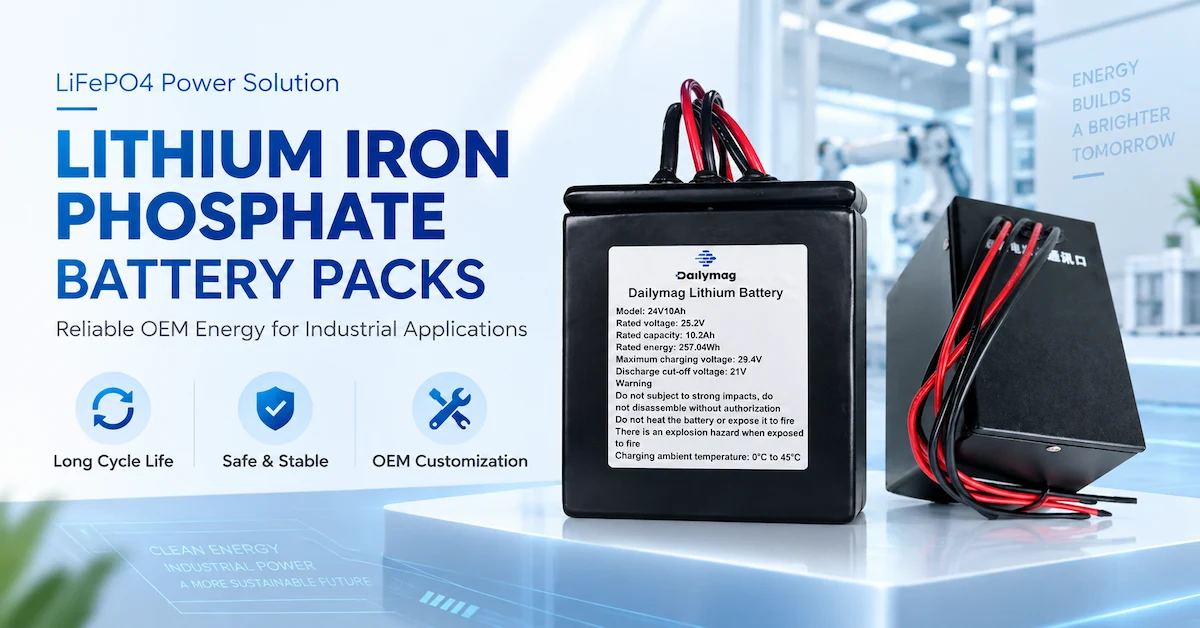
For companies evaluating industrial battery solutions, Dailymag provides different industrial lithium battery products that demonstrate how battery platforms are matched to different application requirements.
Why OEM Buyers Choose LiFePO4 Battery Packs
LiFePO4, also known as lithium iron phosphate, has become an important lithium battery chemistry for applications where safety, stability, and long service life are more important than maximum energy density.
The main reasons OEM buyers consider LiFePO4 battery packs include:
Stable Battery Chemistry
Lithium iron phosphate chemistry is often selected for applications that require predictable performance over repeated operating cycles.
Compared with some other lithium-ion chemistries, LiFePO4 is commonly associated with:
- Stable thermal characteristics
- Strong cycle performance
- Reliable operation under repeated charging
- Lower maintenance requirements
For industrial equipment that operates every day, battery replacement frequency can directly influence operating costs.
A battery system that requires fewer replacements can help reduce:
- Equipment downtime
- Maintenance workload
- Spare inventory requirements
- Service interruptions
However, battery life should always be evaluated according to actual operating conditions.
Important factors include:
- Depth of discharge
- Charging strategy
- Operating temperature
- Current load
- BMS configuration
- Mechanical installation
Cycle-life numbers without application conditions may not provide enough information for an OEM decision.
Suitable for Long-Term Industrial Operation
Many industrial applications are designed for years of service.
Examples include:
- Automated equipment
- Mobile robots
- Material handling systems
- Monitoring equipment
- Professional devices
- Backup systems
For these applications, the battery is not simply a replaceable component.
It becomes part of the product lifecycle.
OEM buyers should therefore evaluate whether the battery supplier can support:
- Initial development
- Prototype validation
- Production repeatability
- Replacement supply
- Engineering changes
A supplier relationship should continue beyond the first shipment.
Selecting the Right LiFePO4 Battery Architecture
Choosing lifepo4 lithium iron phosphate battery packs requires understanding how the battery will operate inside the equipment.
The first decision is not capacity.
The first decision is the system requirement.
Important design inputs include:
- Equipment voltage
- Required runtime
- Power demand
- Current requirements
- Charging method
- Installation space
- Communication requirements
Voltage Platform Selection
LiFePO4 battery systems are commonly designed around different voltage platforms.
Examples include:
- 12V-class systems
- 24V-class systems
- 48V-class systems
- Higher voltage industrial systems
The correct voltage depends on the equipment architecture.
Engineers should evaluate:
- Controller voltage range
- Motor requirements
- Charger compatibility
- DC/DC converter requirements
- Wiring design
- Current demand
A higher voltage system can reduce current for the same power output.
The basic relationship is:
Power = Voltage × Current
For example:
A machine requiring 480W:
At 24V:
- Current ≈ 20A
At 48V:
- Current ≈ 10A
Lower current can help reduce:
- Cable size requirements
- Voltage drop
- Connector stress
- Thermal losses
However, changing voltage architecture may require changes to:
- Controller
- Charger
- Electrical system
- Protection design
Therefore, voltage selection should always be considered at the equipment-system level.
Capacity Selection Based on Real Usage
Capacity determines how much energy the battery stores.
However, OEM buyers should not select capacity only by comparing Ah values.
The better approach is to understand:
- Average power consumption
- Operating hours
- Duty cycle
- Charging opportunities
- Required reserve
The basic relationship is:
Energy (Wh) = Voltage (V) × Capacity (Ah)
For example:
A 24V battery with 50Ah capacity provides approximately:
24 × 50 = 1200Wh
of nominal energy.
Actual usable energy depends on:
- BMS cutoff settings
- Current load
- Temperature
- Battery aging
- Required reserve level
This means two batteries with the same Ah rating may not provide identical real-world runtime.
Avoid Oversizing Without Engineering Review
Selecting a larger battery may appear safer.
However, excessive capacity can create:
- Larger enclosure requirements
- Higher weight
- Higher cost
- Longer charging time
- Additional mechanical challenges
The correct battery size should balance:
- Runtime
- Weight
- Space
- Cost
- Equipment requirements
A professional supplier should help optimize the battery specification instead of simply recommending the largest possible capacity.
Evaluating Current Capability in LiFePO4 Battery Packs
A complete battery specification should define:
- Average current
- Continuous current
- Peak current
- Peak duration
- Charging current
Continuous Current Requirements
Continuous current describes the normal electrical demand during operation.
If the battery system cannot support continuous current requirements, possible issues include:
- Voltage reduction
- BMS protection activation
- Reduced equipment performance
- Increased thermal stress
- Shortened operating stability
For industrial applications, continuous current should be evaluated together with:
- Cable size
- Connector rating
- Battery internal resistance
- Operating temperature
- Cooling conditions
A battery that works under light testing conditions may behave differently when the equipment operates continuously at its normal load.
Peak Current Requirements
Peak current occurs during short high-demand events.
Examples include:
- Motor startup
- Acceleration
- Lifting operations
- Pump activation
- Actuator movement
- Sudden load changes
For OEM applications, peak current should always include duration.
A requirement such as:
Peak current: 50A
is incomplete.
A better specification would describe:
50A peak current for 5 seconds during motor startup.
This information helps the supplier evaluate:
- Cell configuration
- Parallel connection design
- BMS current limits
- Connector selection
- Cable specifications
- Thermal behavior
Why Current and BMS Must Be Designed Together
A battery may contain enough stored energy but still fail because the BMS limits current below the equipment requirement.
Therefore:
Battery capacity + current capability + BMS settings
must be evaluated as one system.
For OEM projects, the supplier should understand the complete equipment load profile instead of designing only around the battery label.
Understanding BMS Design for LiFePO4 Lithium Iron Phosphate Battery Packs
The Battery Management System is one of the most important components inside lifepo4 lithium iron phosphate battery packs.
The BMS controls how the battery operates and protects the battery during charging, discharging, and abnormal conditions.
A LiFePO4 battery pack without proper BMS configuration may not provide reliable performance, even if the cell chemistry itself is suitable.
Main BMS Functions
A typical industrial BMS may manage:
- Cell voltage monitoring
- Pack voltage monitoring
- Charging protection
- Discharging protection
- Overcurrent protection
- Short-circuit protection
- Temperature monitoring
- Cell balancing
- State of Charge estimation
- Fault reporting
- Communication
For OEM applications, these functions should be matched with the equipment requirements.
A battery used in a portable device may need only basic protection.
A battery used in industrial automation equipment may require:
- Communication with the controller
- Alarm reporting
- SOC information
- Remote monitoring
- Defined recovery behavior
Why BMS Configuration Matters for Industrial Equipment
Different machines have different operating characteristics.
For example:
An industrial motor may create a short current surge during startup.
If the BMS protection threshold is too conservative, the battery may disconnect even though the equipment is operating normally.
A properly configured system should balance:
- Protection
- Performance
- Equipment reliability
The goal is not simply maximum protection.
The goal is protection that matches the real operating environment.
BMS Parameters That OEM Buyers Should Confirm
Before approving a LiFePO4 battery solution, buyers should confirm:
- Maximum charging current
- Maximum discharge current
- Overcurrent thresholds
- Temperature limits
- Low-voltage cutoff
- Recovery conditions
- Sleep mode behavior
- Communication settings
- Firmware version control
These parameters should become part of the approved battery specification.
This is especially important when the battery will be produced repeatedly over several years.
Charging Compatibility of LiFePO4 Battery Packs
Charging is one of the most important factors when selecting a lithium iron phosphate battery.
A battery and charger should always be evaluated together.
A common mistake in OEM replacement projects is assuming:
The voltage is similar, therefore the existing charger will work.
This assumption can create problems.
The charger must match:
- Battery chemistry
- Series configuration
- Charging voltage
- Charging current
- BMS requirements
- Connector
- Communication method
LiFePO4 Charging Characteristics
Compared with other battery technologies, LiFePO4 batteries require charging parameters designed specifically for their chemistry.
Important charging considerations include:
- Maximum charge voltage
- Charge current limit
- Charging temperature
- BMS charging protection
- Battery balancing behavior
The charging process should be controlled by the approved battery specification.
Existing Charger Replacement Projects
For applications replacing older batteries, OEM buyers should provide:
- Existing charger model
- Charger output voltage
- Maximum charging current
- Charging connector
- Charging schedule
- Equipment operating environment
The supplier should verify whether:
- The charger can remain unchanged
- Charger settings need adjustment
- A new charger is required
- Communication between charger and battery is necessary
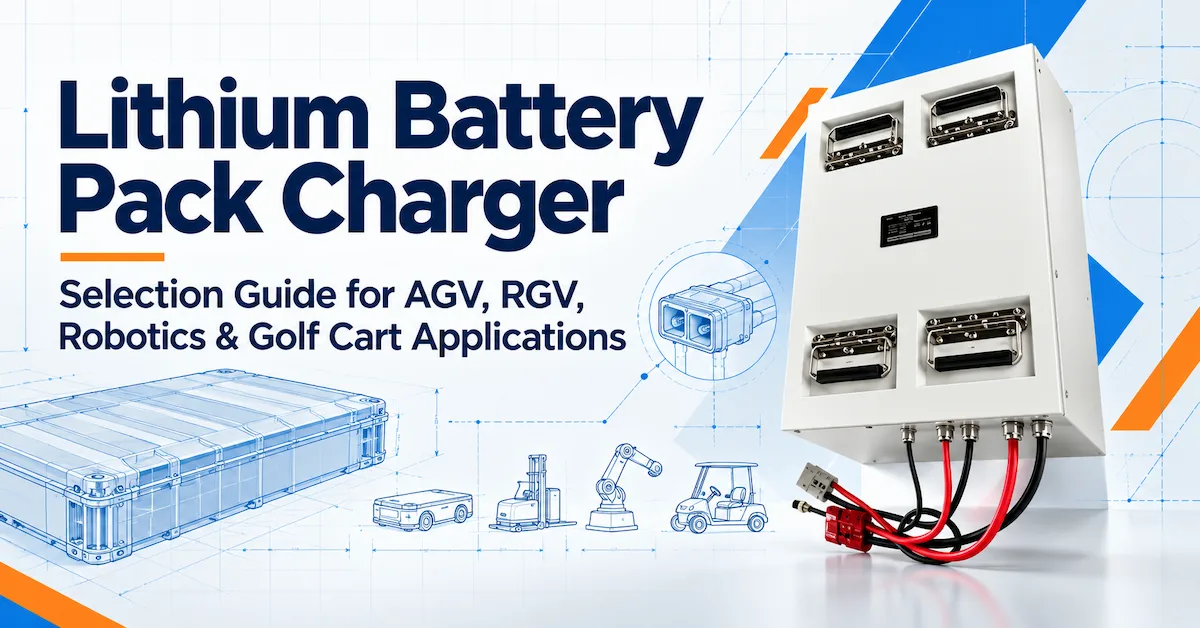
This is particularly important when replacing lead-acid batteries with lithium iron phosphate battery systems.
A lithium replacement is not always a direct plug-in replacement.
The complete electrical system must be reviewed.
Charging Temperature Requirements
Charging conditions can be different from discharge conditions.
The OEM should specify:
- Minimum charging temperature
- Maximum charging temperature
- Storage conditions
- Whether charging occurs indoors or outdoors
- Whether condensation is possible
Cold environments, transportation conditions, and rapid temperature changes may influence battery design requirements.
CAN, RS485, and Communication Requirements
Modern industrial equipment increasingly requires intelligent battery communication.
Applications such as:
- AGV systems
- Automated equipment
- Industrial robots
- Monitoring devices
may require battery information to be exchanged with the main controller.
Common communication methods include:
- CAN
- RS485
However, the existence of a communication interface does not guarantee compatibility.
Why Interface Names Are Not Enough
A supplier may state:
CAN supported
or:
RS485 available
But the OEM still needs to confirm:
- Communication protocol
- Data format
- Baud rate
- Register definition
- Message structure
- SOC reporting
- Alarm information
- Temperature data
- Update frequency
- Timeout behavior
Two systems may both use CAN but still fail to communicate if their protocols are different.
Battery Data Commonly Required by Equipment
Industrial controllers may need:
- Remaining capacity
- Battery voltage
- Current
- Temperature
- Charging status
- Fault information
- Warning status
The battery therefore becomes part of the equipment control system.
For custom projects, communication requirements should be confirmed before prototype production.
Dailymag's custom lithium battery pack guide explains why electrical, communication, and mechanical requirements should be considered together during OEM battery development.
Mechanical Design and Customization Requirements
A technically suitable LiFePO4 battery pack can still fail if it cannot be installed correctly.
Industrial OEM projects require mechanical integration.
Important design factors include:
- Battery dimensions
- Mounting position
- Connector location
- Cable direction
- Housing design
- Weight limitation
- Service access
- Installation method
Battery Enclosure Design
Depending on the application, LiFePO4 battery packs may require:
- Compact housing
- Protective enclosure
- Custom brackets
- External connectors
- Cable assemblies
- Labels
- Customer-specific packaging
The enclosure should match:
- Mechanical environment
- Vibration conditions
- Handling requirements
- Service expectations
Connector and Cable Design
Connector selection affects:
- Installation reliability
- Current capability
- Service replacement
- Safety
OEM buyers should define:
- Connector type
- Pin assignment
- Cable length
- Cable diameter
- Cable routing
- Protection requirements
A battery that has the correct voltage and capacity but an incorrect connector may still require redesign.
Replacement Battery Considerations
Replacement projects require additional attention.
The supplier may need to match:
- Existing battery size
- Mounting holes
- Charger
- Controller
- Cable layout
- Communication interface
The goal is not simply replacing the old battery.
The goal is maintaining equipment functionality.
LiFePO4 Battery Applications for Industrial OEM Markets
The demand for lifepo4 lithium iron phosphate battery packs comes from many industries where reliability and lifecycle cost are important.
Industrial Automation Equipment
Automation equipment often requires:
- Stable power supply
- Long operating cycles
- Predictable charging
- Compact installation
Battery requirements may include:
- Communication
- BMS monitoring
- Mechanical customization
- Repeat production
AGV and Mobile Robots
AGV systems typically require:
- Frequent charging cycles
- Stable runtime
- Peak current capability
- Controller communication
The battery must support the entire vehicle operation.
Important evaluation points include:
- Travel distance
- Load condition
- Charging frequency
- Working shifts
- Peak motor demand
Monitoring and Communication Equipment
Remote systems may prioritize:
- Long standby time
- Low maintenance
- Reliable operation
- Environmental resistance
Examples include:
- Monitoring terminals
- Communication devices
- Remote control equipment
Backup Power Applications
Backup systems may require:
- Stable standby performance
- Reliable charging
- Long storage capability
- Easy maintenance
The battery design depends on whether the system operates continuously or only during power interruption.
How an OEM LiFePO4 Battery Project Should Move From Requirement to Production
For an industrial buyer, selecting lifepo4 lithium iron phosphate battery packs is only the beginning of the project. The greater sourcing risk usually appears when a general battery requirement has to be converted into a repeatable production specification.
A practical development process should reduce uncertainty step by step.
Step 1: Define the Application
The supplier should first understand:
- What the equipment does
- Where it operates
- How many hours it runs
- How frequently it charges
- Whether motors or actuators create peak loads
- Whether the battery communicates with a controller
- Whether the project is a new design or a replacement battery
The application description gives engineering context to every later parameter.
A request such as:
We need a 48V 100Ah LiFePO4 battery.
does not explain enough.
A more useful request would state that the battery is intended for an AGV operating two shifts per day, with opportunity charging, a defined peak motor current, CAN communication, and a fixed installation space.
That allows the supplier to evaluate the complete power system instead of quoting only a voltage and Ah value.
Step 2: Convert Operating Requirements Into Battery Specifications
The engineering team should then translate application requirements into measurable battery parameters.
These typically include:
- Nominal voltage
- Acceptable operating voltage range
- Required usable energy
- Continuous current
- Peak current
- Peak-current duration
- Charging current
- Charger voltage
- Mechanical dimensions
- Connector requirements
- BMS functions
- Communication protocol
- Environmental limits
Unknown values should remain clearly identified as open engineering questions.
Guessing missing data may make an RFQ look complete while introducing hidden design risk.
Step 3: Decide What Can Remain Standard
Not every LiFePO4 project needs a completely new battery design.
An existing platform may already meet:
- Voltage requirements
- Current capability
- Basic energy requirement
- Mechanical size
The project may only require changes to:
- Connector
- Cable length
- Mounting
- BMS parameters
- Communication
- Housing details
- Labels
- Packaging
Using an existing platform where technically appropriate can reduce:
- Engineering workload
- Prototype iterations
- Development cost
- Lead-time uncertainty
The objective should be application-specific optimization, not customization for its own sake.
Dailymag's battery customization services can be used as a reference when evaluating whether an existing battery platform or a more customized project approach is appropriate.
Step 4: Build and Validate the Prototype
The prototype should represent the intended engineering configuration closely enough to answer important technical questions.
It should verify whether:
- The battery fits physically
- Voltage behavior matches the equipment
- Runtime is sufficient
- Peak load can be supported
- Charging works correctly
- BMS behavior is appropriate
- CAN or RS485 communication works
- Connectors and cables are practical
- The battery can be installed and serviced
A prototype should not be approved only because the equipment turns on.
Step 5: Freeze the Approved Specification
Once validation is complete, the approved design should be documented.
The specification may include:
- Voltage and capacity
- Cell configuration
- BMS revision
- BMS parameters
- Communication settings
- Enclosure drawing
- Connector and pinout
- Cable specification
- Charger requirement
- Label
- Packaging
- Final testing criteria
This approved configuration becomes the production reference.
Step 6: Verify Pilot Production
Pilot production is useful because it tests the manufacturing process rather than only the engineering design.
The buyer should confirm whether several production units remain consistent in areas such as:
- BMS programming
- Wiring
- Connectors
- Mechanical assembly
- Labels
- Communication
- Final inspection
Only after these checks should the project move confidently toward a larger order.
Quality Control for LiFePO4 Lithium Iron Phosphate Battery Packs
Quality control should be evaluated around the actual battery specification.
Statements such as “strict QC” or “100% quality control” provide little sourcing value unless the buyer understands what is actually inspected.
For lifepo4 lithium iron phosphate battery packs, the quality plan should connect materials, manufacturing processes, BMS configuration, final testing, and traceability.
Incoming Material Control
Important incoming components can include:
- Battery cells
- BMS assemblies
- Connectors
- Cables
- Electrical components
- Enclosure parts
- Fasteners
- Labels
The exact inspection method depends on the approved design.
For an OEM buyer, the important question is whether critical components are linked to the approved specification.
Cell Consistency
Cells are the foundation of the battery pack.
Depending on the project, relevant characteristics may include:
- Voltage
- Capacity
- Internal resistance
- Production batch
- Physical condition
Cell consistency can influence:
- Pack balancing
- Usable capacity
- Aging behavior
- Reliability
Buyers should ask how the supplier controls cell selection and production consistency rather than assuming all cells of the same model behave identically.
Assembly Process Control
Production processes may include:
- Electrical connection
- Busbar installation
- Wiring
- Insulation
- BMS installation
- Connector assembly
- Mechanical fastening
Critical assembly processes should follow documented work instructions.
The goal is to make the production battery reproduce the validated sample rather than depend on individual operator judgment.
BMS Programming Control
For intelligent battery packs, BMS programming should be treated as a controlled production step.
The project should identify:
- BMS hardware version
- Firmware version
- Parameter configuration
- Communication protocol
Incorrect BMS programming can create a battery that looks physically correct but behaves differently from the approved sample.
Final Testing
Final testing should correspond to the project specification.
Depending on the battery, verification may include:
- Voltage
- Capacity-related checks
- Charging
- Discharging
- BMS protection
- Communication
- Connector polarity
- Insulation
- Functional inspection
The exact test plan should be agreed for the project rather than assumed.
For a broader supplier-review framework, buyers can use Dailymag's battery pack factory audit guide when assessing manufacturing control, traceability, testing, and engineering change management.
Why Engineering Change Control Matters for Long-Term OEM Supply
An industrial battery project may remain in production for years.
During that period, suppliers may need to address changes involving:
- Cells
- BMS hardware
- Firmware
- Connectors
- Cables
- Enclosures
- Labels
- Packaging
Changes are not automatically negative.
The risk is an uncontrolled change that affects compatibility.
For example, changing a BMS may alter:
- Current thresholds
- Communication
- Sleep behavior
- SOC estimation
- Charging limits
Changing a connector may affect:
- Installation
- Polarity
- Current handling
- Service replacement
Changing cells may influence:
- Capacity
- Internal resistance
- Pack behavior
OEM buyers should therefore ask:
- How is the approved battery revision identified?
- Which changes require technical review?
- When is customer approval required?
- How are replacement batteries kept compatible?
- How is the updated revision documented?
This is especially important for lifepo4 lithium iron phosphate battery packs supplied to equipment manufacturers with long product lifecycles.
How to Evaluate a LiFePO4 Battery Supplier
A supplier should not be evaluated only by quotation price or product catalog size.
For an OEM project, buyers should assess whether the supplier can convert application requirements into a repeatable production solution.
Engineering Capability
A capable supplier should be able to discuss:
- Voltage architecture
- Capacity and energy
- Continuous and peak current
- BMS configuration
- Charging
- Communication
- Mechanical integration
- Environmental conditions
A useful supplier will also identify missing information instead of agreeing immediately to every requirement.
Prototype Support
Ask how the supplier handles:
- Sample development
- Engineering review
- Drawing confirmation
- Communication integration
- Sample revisions
- Validation feedback
A prototype process should help eliminate technical uncertainty.
Production Capability
Buyers should understand:
- How approved specifications reach production
- How critical processes are controlled
- How testing is performed
- How revisions are tracked
- How nonconforming products are handled
Long-Term Support
For OEMs, long-term support may include:
- Repeat orders
- Spare batteries
- Technical updates
- Replacement compatibility
- Packaging
- Logistics coordination
Dailymag's industrial battery products and battery development services can be reviewed when preparing a project specification and supplier discussion.
Cost Factors in Custom LiFePO4 Battery Packs
The cost of LiFePO4 lithium iron phosphate battery packs depends on more than Ah.
Different suppliers may quote products with the same headline voltage and capacity but significantly different technical scope.
Important cost drivers include:
- Battery energy
- Cell configuration
- Continuous current
- Peak current
- BMS complexity
- Communication requirements
- Mechanical housing
- Connector
- Cable assembly
- Testing
- Documentation
- Packaging
- Order volume
BMS and Communication Cost
A simple battery with basic protection may have a different cost structure from a smart battery requiring:
- CAN
- RS485
- Custom protocol
- SOC reporting
- Fault reporting
- Software configuration
OEM buyers should confirm whether communication development and configuration are included in the quotation.
Mechanical Customization Cost
Mechanical requirements may create additional engineering or manufacturing work.
Examples include:
- Custom metal enclosure
- Special plastic housing
- Mounting bracket
- Custom connector panel
- Handle design
- Customer-specific dimensions
Before requesting a completely new housing, determine whether an existing enclosure can satisfy the project.
Testing and Documentation Cost
Different markets and equipment projects may require different testing or documentation.
These requirements should be identified before final pricing.
Otherwise, suppliers may appear to have similar quotations while offering different project scopes.
How to Compare LiFePO4 Battery Quotations Correctly
Before comparing unit prices, normalize the technical specification.
A useful comparison table can include:
| Evaluation Item | Supplier A | Supplier B | Supplier C |
|---|---|---|---|
| Voltage architecture | Confirm | Confirm | Confirm |
| Rated energy | Compare | Compare | Compare |
| Continuous current | Compare | Compare | Compare |
| Peak current | Compare | Compare | Compare |
| BMS functions | Compare | Compare | Compare |
| Communication | Compare | Compare | Compare |
| Enclosure | Compare | Compare | Compare |
| Connector/cable | Compare | Compare | Compare |
| Testing | Compare | Compare | Compare |
| Documentation | Compare | Compare | Compare |
| Packaging | Compare | Compare | Compare |
| Change control | Compare | Compare | Compare |
A low quotation may reflect:
- Lower current capability
- Simpler BMS
- Different enclosure
- Less testing
- Different documentation
That does not mean the supplier is more cost-efficient.
It may mean the suppliers are quoting different products.
Prototype Testing Checklist for LiFePO4 Battery Packs
Before approving mass production, OEM buyers should test the battery in conditions representative of real equipment operation.
Electrical Checks
Verify:
- Operating voltage
- Runtime
- Continuous current
- Peak current
- Voltage drop
- Charging behavior
BMS Checks
Verify:
- Protection thresholds
- Recovery behavior
- Alarm conditions
- Temperature monitoring
Communication Checks
Where required, test:
- CAN or RS485 communication
- SOC information
- Voltage reporting
- Current reporting
- Temperature reporting
- Alarm information
Mechanical Checks
Confirm:
- Installation
- Mounting
- Connector access
- Cable routing
- Serviceability
- Battery removal
Application-Level Checks
Operate the machine through representative working cycles.
For example, a mobile industrial system may be tested through:
startup → acceleration → normal travel → peak load → idle → charging → restart
The objective is to verify the complete battery-machine interaction.
What Information Should Buyers Include in a LiFePO4 Battery RFQ?
A detailed RFQ can significantly improve quotation accuracy.
Include:
Application Information
- Equipment type
- Application
- Operating cycle
- New project or replacement project
Electrical Requirements
- Nominal voltage
- Operating voltage range
- Required capacity
- Runtime
- Continuous current
- Peak current
- Peak duration
Charging Information
- Charger voltage
- Charging current
- Charging time
- Charger connector
BMS Requirements
- Protection requirements
- Communication
- SOC reporting
- Alarm requirements
Mechanical Requirements
- Dimensions
- Weight limitation
- Connector
- Cable
- Mounting
- Housing
Environmental Requirements
- Operating temperature
- Charging temperature
- Storage environment
- Vibration
- Humidity
Commercial Requirements
- Sample quantity
- Pilot quantity
- Forecast volume
- Packaging
- Destination market
- Required documentation
When preparing a new industrial project, Dailymag's contact page can be used to submit battery requirements for evaluation.
Frequently Asked Questions About LiFePO4 Lithium Iron Phosphate Battery Packs
What are LiFePO4 lithium iron phosphate battery packs?
They are rechargeable lithium battery packs using lithium iron phosphate chemistry. A complete pack normally combines cells, BMS, electrical connections, enclosure, connectors, and project-specific interfaces.
Why are LiFePO4 batteries used in industrial equipment?
LiFePO4 batteries are often considered where safety, stable performance, repeated cycling, and long-term operating reliability are important purchasing criteria.
Are LiFePO4 batteries safer than other lithium batteries?
LiFePO4 chemistry is generally valued for thermal stability, but complete battery safety still depends on cell quality, BMS design, mechanical protection, charging control, production quality, and correct system integration.
How do I choose the right capacity?
Determine equipment energy consumption, required runtime, duty cycle, charging opportunities, reserve requirements, and operating conditions. Capacity should be based on actual system demand rather than Ah alone.
Why is peak current important?
Industrial equipment can require high short-duration current during motor startup, lifting, acceleration, or actuator movement. The cells, BMS, connectors, and cables must support these loads.
Do LiFePO4 battery packs need a BMS?
Yes. The BMS manages important monitoring and protection functions and may also provide communication and diagnostic information in intelligent equipment.
Can LiFePO4 batteries support CAN or RS485?
A project can be developed with CAN or RS485 requirements, but the protocol, data structure, baud rate, message definitions, alarms, and controller compatibility should also be specified.
Can a LiFePO4 battery replace a lead-acid battery?
Sometimes, but not automatically. Voltage behavior, charger, controller, enclosure, terminals, current requirements, and equipment operating logic must be reviewed.
What affects LiFePO4 battery cost?
Major factors include energy, current capability, BMS complexity, communication, enclosure, connector, cable assembly, testing, documentation, packaging, and order quantity.
Is a custom LiFePO4 battery always better?
No. If an existing battery platform already meets the equipment requirements, using or modifying that platform may reduce engineering work and sourcing risk.
How should a prototype be validated?
Test electrical performance, charging, BMS behavior, communication, mechanical integration, and representative equipment operating cycles.
Why is specification freeze important?
Specification freeze ensures the configuration that passed validation becomes the controlled production reference.
Should OEM buyers use pilot production?
For technically important or larger-volume projects, pilot production can help verify manufacturing repeatability before mass production.
How should I evaluate a LiFePO4 battery manufacturer or supplier?
Evaluate engineering understanding, prototype support, BMS integration, manufacturing control, testing, traceability, change management, and long-term repeat supply rather than unit price alone.
What information should I send for a quotation?
Provide equipment application, voltage, capacity or runtime, continuous and peak current, charger data, dimensions, connector, communication, environment, sample quantity, forecast volume, and required documents.
Conclusion
When sourcing lifepo4 lithium iron phosphate battery packs, OEM buyers should focus on four decisions: match the chemistry and voltage architecture to the equipment, verify current/BMS/charging integration, validate the complete battery in representative operating conditions, and ensure the approved design can be reproduced consistently across future production.
For an industrial or customized battery project, submit your application requirements to Dailymag for technical and commercial evaluation.