Why Choosing an Industrial Lithium Battery Factory Requires More Than Production Capacity
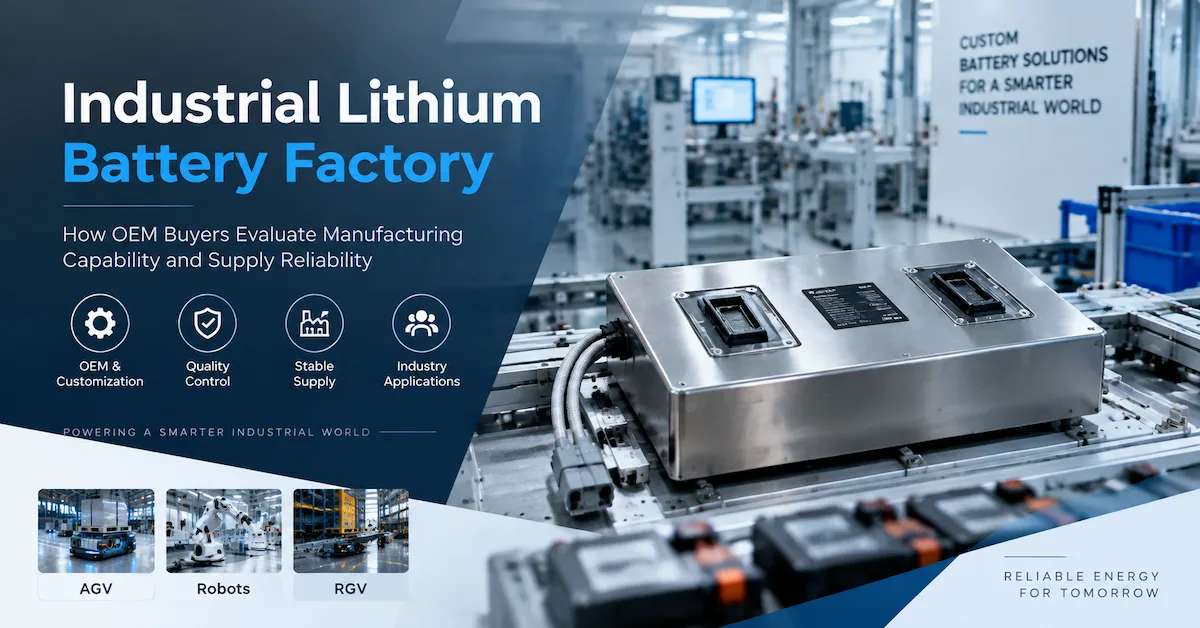
An industrial lithium battery factory is not only a place where battery packs are assembled. For OEM buyers, the factory must be able to transform equipment requirements into a controlled battery solution and maintain consistency from prototype development to repeated production.
Industrial lithium batteries are often integrated into complex equipment systems, including AGVs, RGVs, robots, automated machines, vehicles, and professional devices. The battery must work together with chargers, controllers, mechanical structures, communication systems, and operating environments.
A reliable factory evaluation should therefore consider:
- Engineering capability
- Battery design support
- BMS integration
- Manufacturing process control
- Quality management
- Prototype validation
- Production consistency
- Long-term supply capability
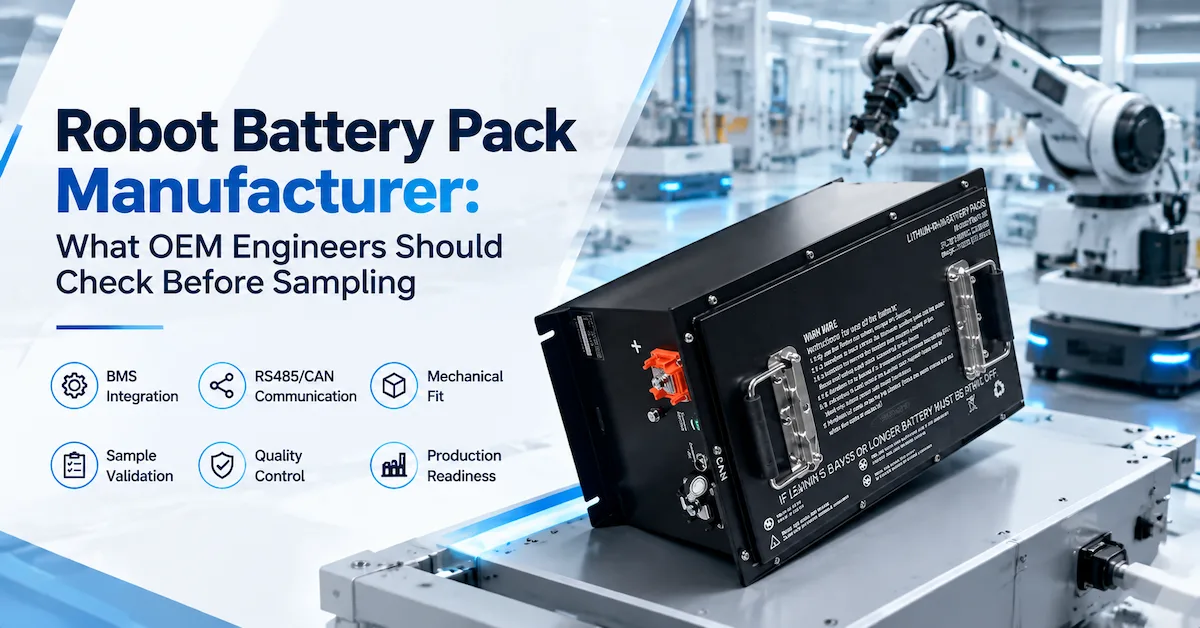
Dailymag provides industrial lithium battery solutions for different applications through its battery product portfolio, including AGV lithium batteries, RGV lithium batteries, and robot lithium batteries.
For OEM buyers, the key question is not only whether a factory can produce batteries, but whether it can produce the correct battery configuration repeatedly.
What Should OEM Buyers Look for in an Industrial Lithium Battery Factory?
Different buyers evaluate factories from different perspectives.
An equipment manufacturer may focus on technical integration.
A purchasing team may focus on supply stability and cost control.
A quality department may focus on production records and inspection processes.
A project manager may focus on development timeline and communication efficiency.
A complete factory evaluation should include several areas.
| Evaluation Area | Buyer Questions |
|---|---|
| Engineering | Can the factory understand application requirements? |
| Design | Can the battery configuration be customized? |
| Manufacturing | Are production processes controlled? |
| Quality | Are inspection requirements clearly defined? |
| Testing | Are samples and finished products validated? |
| Supply | Can the factory support repeat orders? |
| Changes | Are product revisions controlled? |
A factory with production equipment but limited engineering support may not be suitable for complex OEM projects.
How Does an Industrial Lithium Battery Factory Support OEM Development?
OEM battery projects usually begin with understanding the customer's equipment.
The factory needs to evaluate:
- Required voltage
- Energy demand
- Current requirements
- Charging method
- Installation space
- Communication needs
- Operating environment
Requirement Analysis
Before production begins, buyers and manufacturers should confirm the battery application.
Important questions include:
- What equipment uses the battery?
- How long does the equipment operate?
- What are the peak power requirements?
- How is the battery charged?
- Does the equipment require communication with the BMS?
A clear requirement stage reduces design changes later.
Battery Solution Development
Based on the application requirements, the factory may evaluate:
- Battery configuration
- Mechanical structure
- Connector selection
- Cable design
- BMS requirements
- Protection functions
Buyers requiring application-specific solutions can review Dailymag's custom battery services.
How to Evaluate Battery Factory Manufacturing Capability?
A professional industrial lithium battery factory should have a controlled process from incoming materials to finished products.
Component Management
A battery pack may include:
- Battery cells
- BMS
- Connectors
- Cables
- Protection components
- Housing
- Labels
- Packaging materials
The factory should understand which components affect product performance and maintain control over important specifications.
Assembly Process Control
Manufacturing consistency depends on:
- Assembly instructions
- Production procedures
- Operator training
- Inspection points
- Product identification
A battery that passes prototype testing must still be reproducible during mass production.
Production Traceability
Traceability helps answer questions after delivery.
For example:
- Which production batch was supplied?
- Which specification revision was used?
- Which components were included?
- Which inspection records apply?
This information becomes valuable when supporting repeat orders or service investigations.
Why Factory Quality Control Matters for Industrial Battery Buyers
Quality control should not only be described as “strict inspection.”
OEM buyers should understand what is checked and when.
A complete quality process may include:
Incoming Material Inspection
Before production, important materials may require verification.
Examples:
- Battery cells
- Electronic components
- Connectors
- Structural parts
Production Process Inspection
During assembly, the factory should control:
- Wiring
- Connection points
- Assembly procedures
- Component installation
- Product labeling
Finished Battery Testing
Before shipment, agreed checks may include:
- Electrical performance
- Protection functions
- Communication functions
- Appearance inspection
- Packaging confirmation
The exact inspection requirements should be defined according to the battery application and customer requirements.
How Does BMS Integration Affect Factory Selection?
For industrial equipment, BMS capability is often an important evaluation factor.
A battery management system can support:
- Safety protection
- Battery monitoring
- Charging control
- Temperature monitoring
- Communication with equipment
For applications requiring CAN or RS485 communication, buyers should confirm:
- Communication protocol
- Required battery information
- Fault reporting
- Data format
- Parameter configuration
A factory should not only install a BMS but also understand how the battery communicates with the equipment system.
This is especially important for AGV, robot, and automation applications.
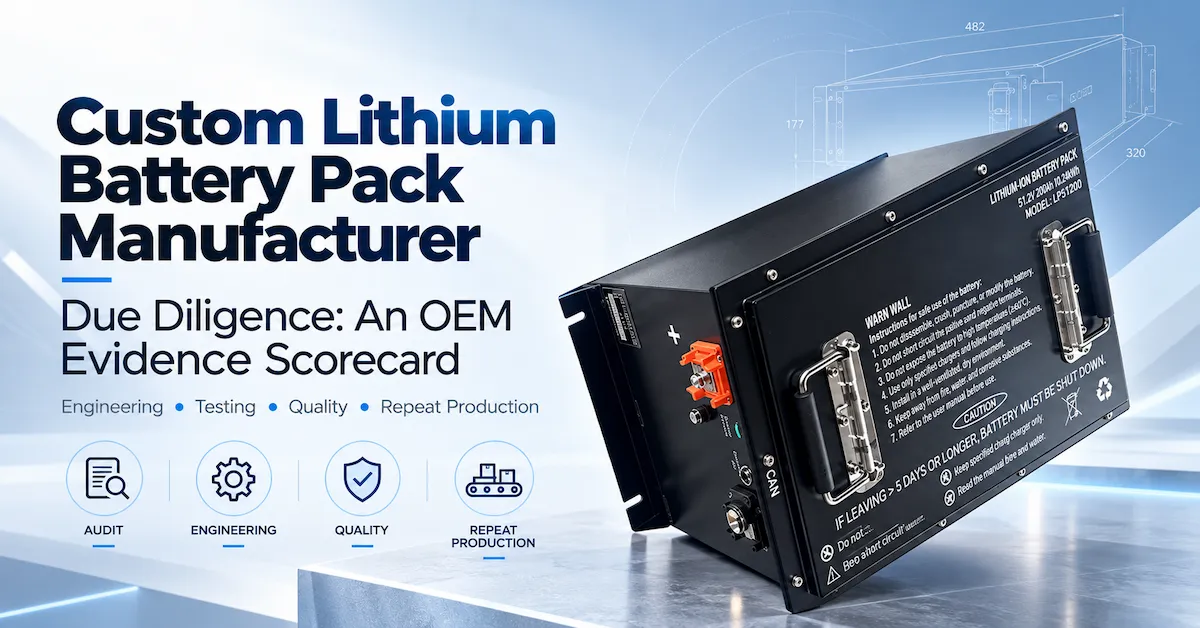
How Should Buyers Audit an Industrial Lithium Battery Factory?
A factory audit should focus on project-related capability rather than only factory appearance.
Engineering Review
Check:
- Technical communication process
- Specification management
- Design capability
- Problem-solving process
Production Review
Check:
- Assembly process
- Equipment condition
- Testing methods
- Quality checkpoints
Supply Review
Check:
- Production planning
- Material preparation
- Delivery management
- Repeat order support
A factory visit can provide useful information, but it should be combined with technical document review, sample testing, and production validation.
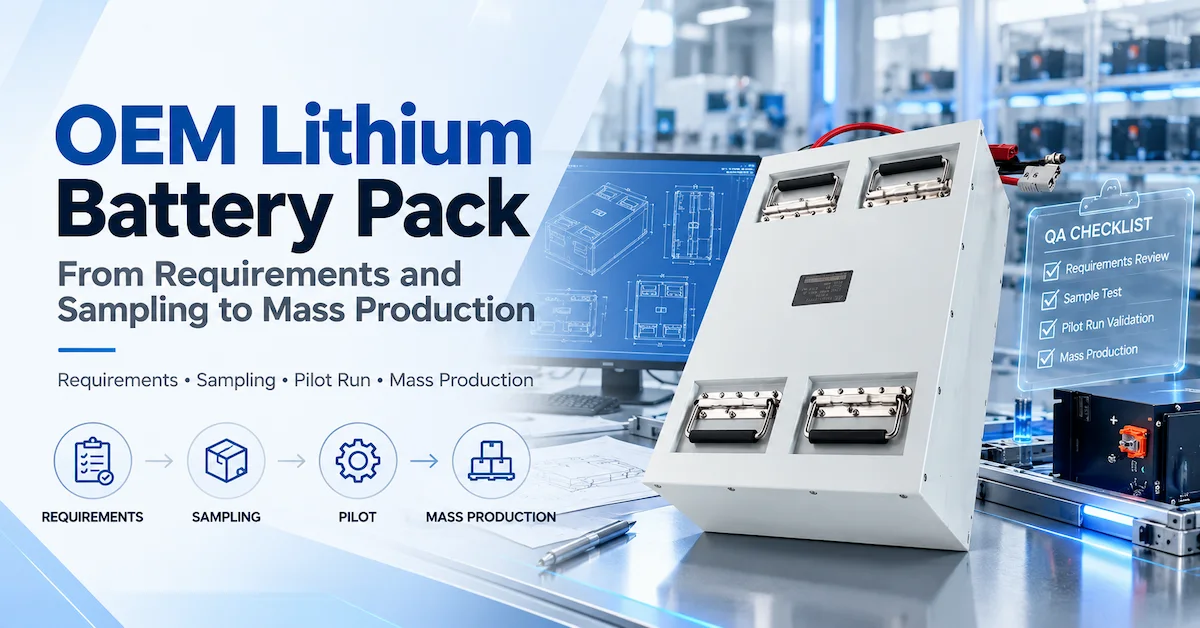
How Are Prototype, Pilot Production, and Mass Production Connected?
Industrial battery projects usually involve different approval stages.
| Stage | Purpose |
|---|---|
| Prototype | Confirm battery design |
| Pilot Production | Confirm manufacturing repeatability |
| Mass Production | Maintain consistent supply |
Prototype Stage
The buyer evaluates whether the battery works in the intended equipment.
Important validation items may include:
- Installation
- Charging
- Runtime
- Load performance
- Communication
Pilot Production Stage
The factory verifies whether production can reproduce the approved design.
This stage can identify:
- Process issues
- Documentation problems
- Assembly differences
- Testing gaps
Mass Production Stage
The factory maintains the approved configuration through repeated production batches.
Compare Dailymag Battery Applications for Industrial Equipment
Dailymag provides battery solutions for different equipment applications.
| Application | Buyer Focus |
|---|---|
| AGV Battery | Automation, runtime, charging and fleet consistency |
| RGV Battery | Installation, operating cycle and supply stability |
| Robot Battery | Compact design, communication and integration |
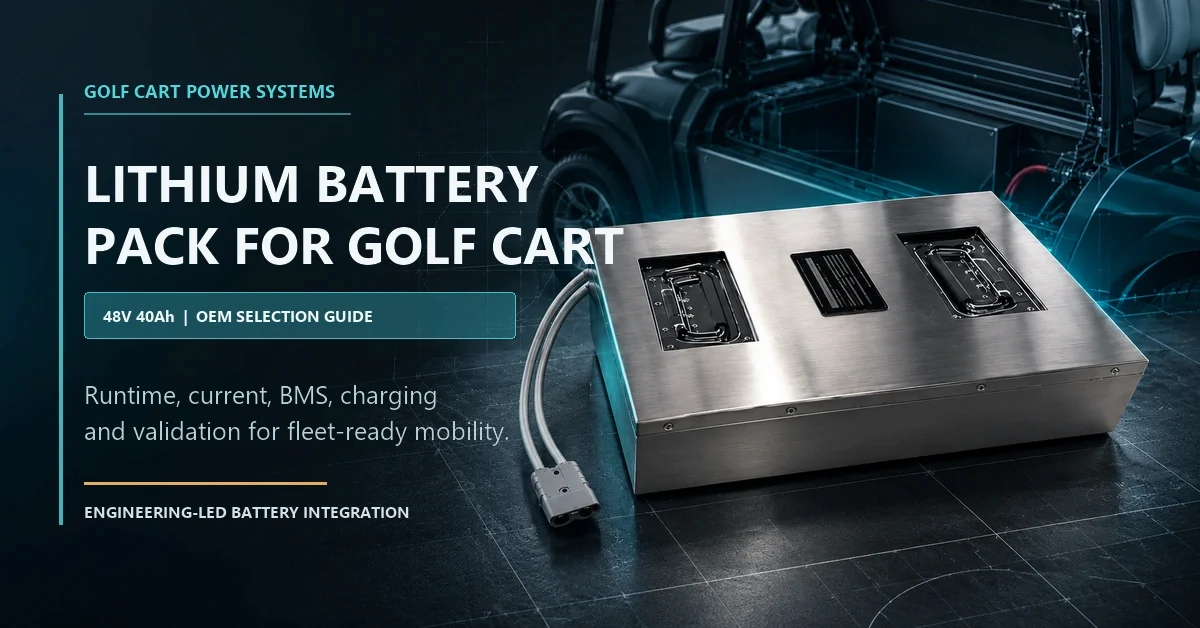
| Golf Cart Battery | Vehicle compatibility and charging |
Buyers can review the complete Dailymag products to identify the suitable application direction.
How Does an Industrial Lithium Battery Factory Support Long-Term Supply?
Selecting a factory is not only about the first order.
Long-term supply requires:
- Stable product specifications
- Controlled revisions
- Repeat production consistency
- Clear communication
- After-sales support
Change Management
During long-term cooperation, changes may happen because of:
- Component availability
- Manufacturing improvements
- Customer requirements
Important changes should be reviewed before entering production.
Examples:
- Connector changes
- BMS changes
- Cable changes
- Housing modifications
A controlled change process protects equipment compatibility.
How Should Buyers Compare Industrial Battery Factories?
The lowest price is not always the best option.
A complete comparison should consider:
| Factor | Evaluation Point |
|---|---|
| Engineering | Technical support capability |
| Manufacturing | Production consistency |
| Quality | Inspection and testing process |
| Customization | Ability to support requirements |
| Supply | Long-term production capability |
| Communication | Response and project management |
A suitable industrial lithium battery factory should reduce technical risks while supporting commercial goals.
What Information Should Buyers Provide Before Contacting a Battery Factory?
To receive an accurate proposal, buyers should prepare:
- Equipment application
- Voltage requirements
- Runtime target
- Current requirements
- Charger information
- Installation dimensions
- Connector requirements
- Communication requirements
- Operating environment
- Sample requirements
- Production quantity
- Delivery expectations
Buyers can review Dailymag's battery solutions and submit project details through Contact Us.
Frequently Asked Questions
What is an industrial lithium battery factory?
An industrial lithium battery factory produces battery packs designed for professional applications such as automation equipment, robots, vehicles, and industrial systems.
How do I choose an industrial lithium battery factory?
Evaluate engineering capability, manufacturing control, quality processes, customization ability, testing methods, and long-term supply support.
Can an industrial battery factory customize battery packs?
Customization depends on project requirements and factory capability. Common customization areas include dimensions, connectors, BMS requirements, and communication functions.
Why is BMS important for industrial batteries?
BMS manages protection, monitoring, charging behavior, and communication between the battery and equipment.
Should buyers visit a battery factory before ordering?
A factory visit can provide useful information, but technical review, sample validation, and production evaluation are also important.
What should be checked during a battery factory audit?
Review engineering capability, production process, quality control, testing, traceability, and supply management.
How does a factory ensure battery consistency?
Through controlled specifications, production procedures, inspection processes, traceability, and change management.
What industries use industrial lithium batteries?
Common applications include AGV, RGV, robotics, automation equipment, vehicles, and professional electronic systems.
What documents should buyers request from a battery factory?
Depending on the project, buyers may need specifications, test records, product information, inspection documents, and shipment-related documents.
How can I start a project with Dailymag?
Review the Dailymag battery products, prepare your application requirements, and contact Dailymag through Contact Us.
Conclusion
Choosing an industrial lithium battery factory requires evaluating more than production equipment and pricing. OEM buyers should consider engineering capability, manufacturing control, quality management, BMS integration, customization support, sample validation, and long-term supply reliability.
A reliable factory partner helps transform equipment requirements into a controlled battery solution and ensures future production remains consistent with the approved design. Dailymag provides industrial lithium battery solutions through its product portfolio and custom battery services. Buyers developing new equipment or upgrading existing systems can contact Dailymag through Contact Us with application details, technical requirements, and production plans.