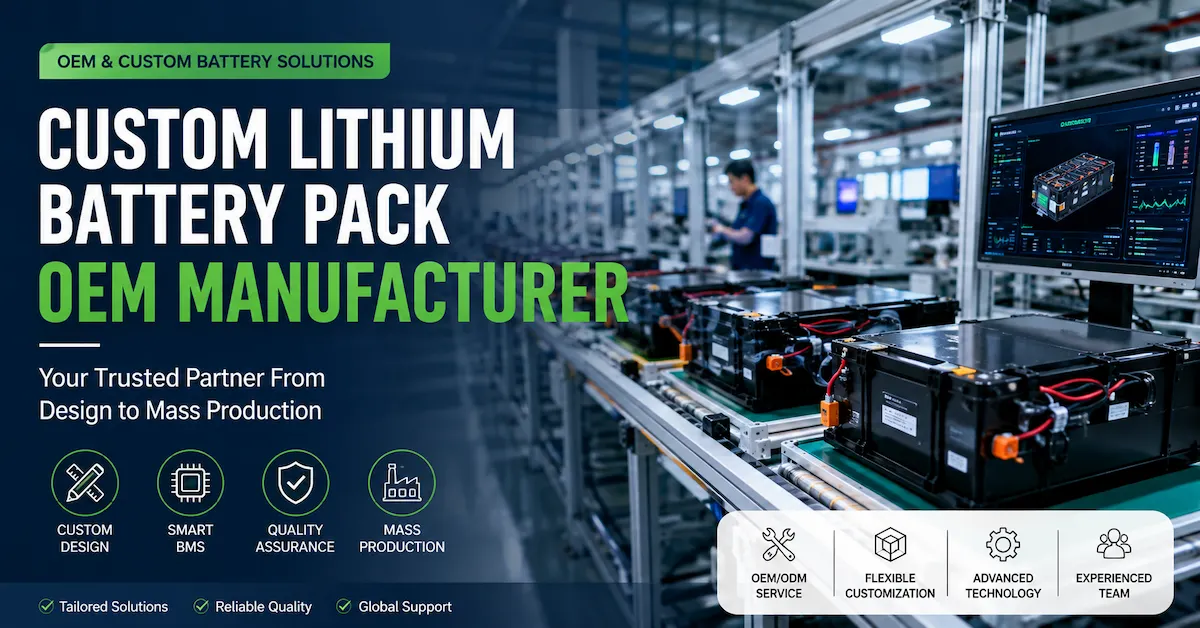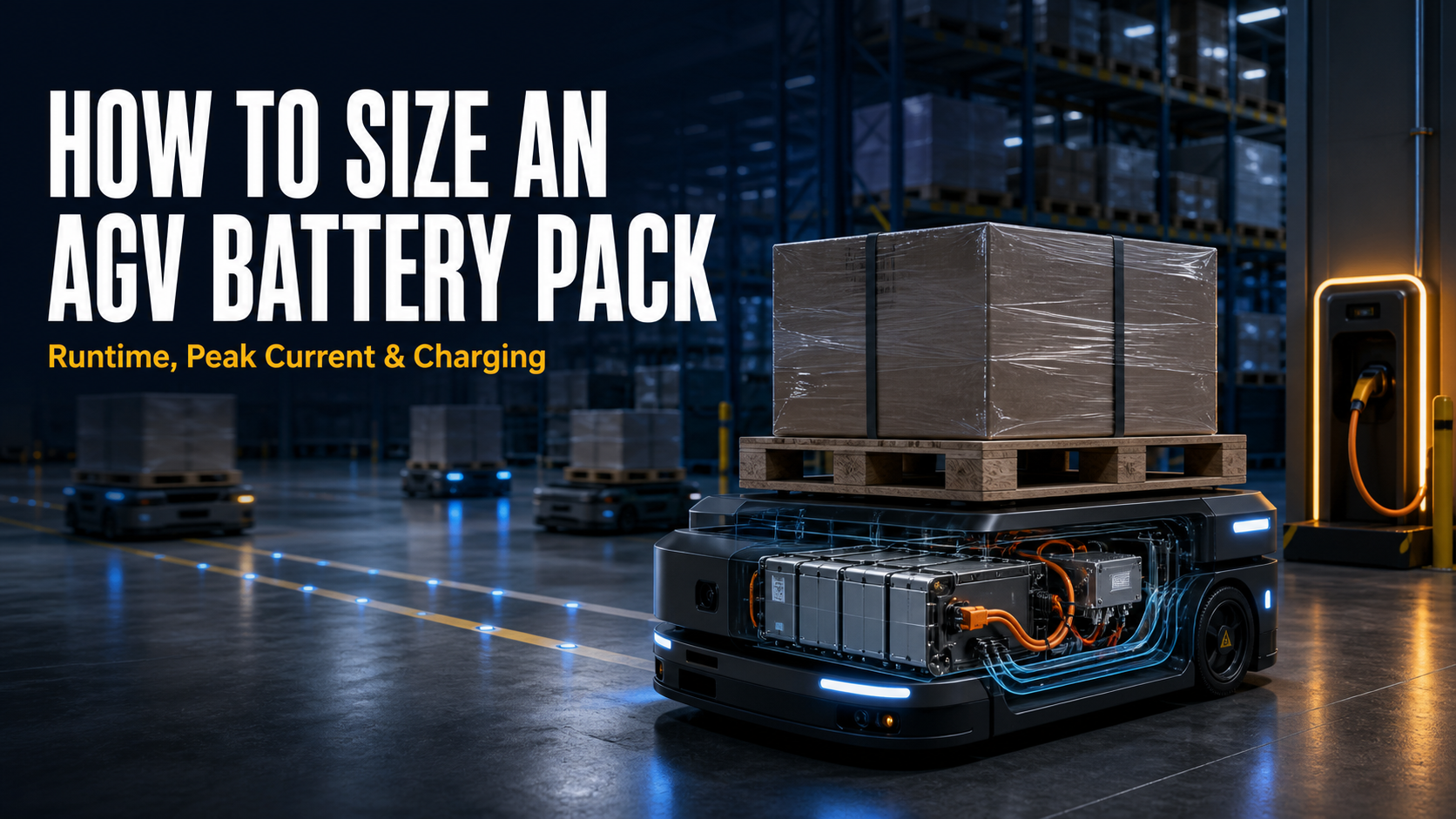


Why Choosing the Right OEM Lithium Battery Factory Matters
For companies developing battery-powered products, selecting an OEM lithium battery factory is a long-term business decision rather than a simple purchasing decision.
A battery is not an isolated component.
It directly affects:
- Equipment performance
- Product reliability
- Customer experience
- Maintenance cost
- After-sales risk
- Production continuity
Many companies initially focus on battery price. However, the lowest quotation does not always represent the lowest total cost.
A factory with weak engineering support may create problems later:
- Prototype delays
- Battery compatibility issues
- Communication failures
- Unstable production quality
- Unexpected component changes
A reliable OEM lithium battery factory should support the complete process:
Requirement analysis → battery design → prototype → testing → mass production → long-term supply
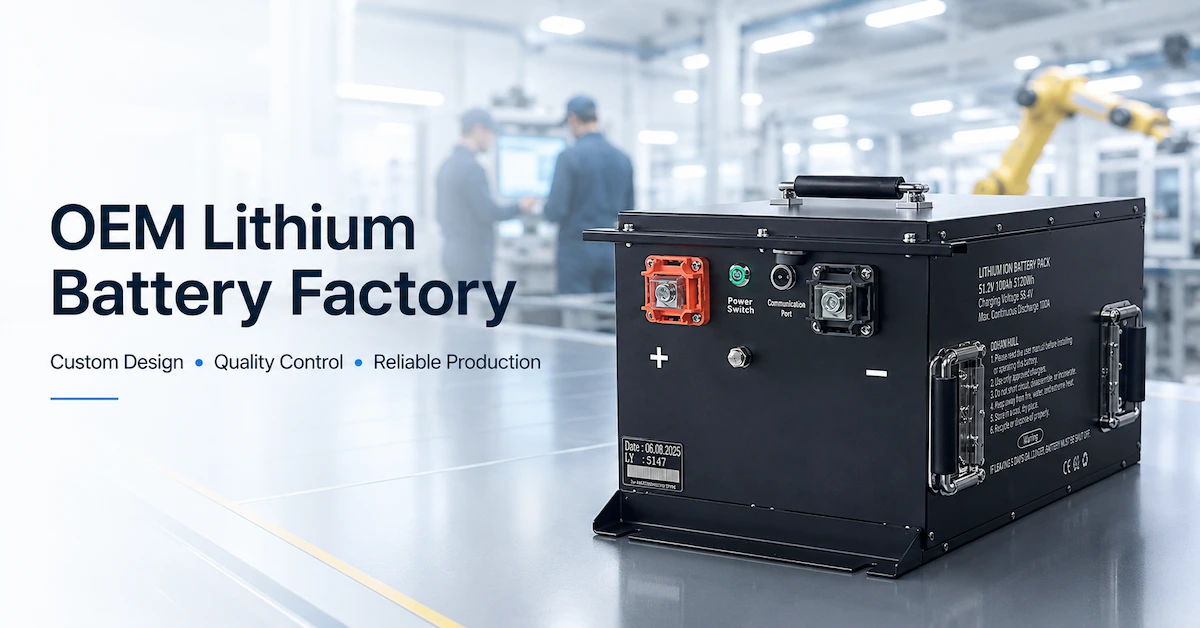
Who Should Work With an OEM Lithium Battery Factory?
This type of supplier is mainly suitable for B2B customers with product development or repeat purchasing needs.
Typical customers include:
- Industrial equipment manufacturers
- AGV and AMR companies
- Robotics manufacturers
- Automation solution providers
- Medical equipment companies
- Telecom equipment manufacturers
- Battery distributors
- Private-label brands
- Engineering companies
These customers usually need more than an existing battery model.
They may require:
- Custom dimensions
- Different voltage configurations
- Specific connectors
- Communication functions
- OEM branding
- Stable production capacity
What Makes an OEM Lithium Battery Factory Different?
A battery factory and a battery trading company may both provide lithium batteries, but their capabilities are different.
A true OEM factory normally provides:
| Capability | OEM Factory Value |
|---|---|
| Battery design | Develop solutions based on application |
| Engineering support | Solve integration problems |
| Prototype production | Validate before mass production |
| Manufacturing | Control production consistency |
| Quality testing | Verify battery performance |
| Customization | Adapt electrical and mechanical design |
| OEM service | Support customer branding |
For industrial customers, manufacturing capability is often more important than product catalog size.
How to Evaluate an OEM Lithium Battery Factory
1. Check Engineering and R&D Capability
A professional factory should not only assemble battery cells.
It should understand:
- Application requirements
- Load characteristics
- Battery architecture
- BMS design
- Thermal management
- Mechanical integration
Before quoting, engineers should ask questions about:
- Equipment type
- Working cycle
- Current demand
- Installation space
- Charging conditions
- Communication requirements
A supplier that asks detailed questions usually has better project experience.
2. Review Manufacturing Capability
Mass production requires more than having assembly workers.
Important manufacturing factors include:
- Production lines
- Assembly process
- Testing equipment
- Production capacity
- Quality management
- Traceability system
For OEM projects, consistency matters.
The 100th battery delivered should perform like the first approved production sample.
3. Understand Battery Customization Ability
Different industries require different battery solutions.
Customization may include:
Electrical Customization
- Voltage
- Capacity
- Continuous current
- Peak discharge current
- Charging parameters
Structural Customization
- Battery enclosure
- Dimensions
- Mounting design
- Connector position
- Cable layout
Intelligent Functions
- BMS programming
- CAN communication
- RS485 communication
- Battery monitoring
A capable OEM factory should turn these requirements into a manufacturable design.
OEM Lithium Battery Manufacturing Process
Step 1: Requirement Analysis
The factory reviews:
- Application scenario
- Equipment requirements
- Battery specifications
- Environmental conditions
- Quantity forecast
This stage defines the battery direction.
Step 2: Battery Solution Design
Engineers determine:
- Cell configuration
- Battery structure
- BMS solution
- Protection requirements
- Communication method
The goal is to balance:
- Performance
- Safety
- Cost
- Production feasibility
Step 3: Prototype Development
Before production, samples are developed for validation.
Testing may include:
| Test Item | Purpose |
|---|---|
| Voltage test | Confirm electrical compatibility |
| Capacity test | Verify energy output |
| Discharge test | Check load performance |
| Charging test | Confirm charger compatibility |
| BMS test | Verify protection functions |
| Communication test | Check CAN/RS485 |
| Mechanical test | Confirm installation |
Step 4: Mass Production
After approval, production focuses on:
- Manufacturing consistency
- Quality inspection
- Delivery management
- Batch control
Quality Control Inside an OEM Battery Factory
Battery quality depends on every production stage.
A professional factory should control:
Incoming Material Inspection
Including:
- Battery cells
- BMS components
- Connectors
- Cables
- Housing materials
Assembly Control
Important processes include:
- Cell arrangement
- Welding
- Wiring
- Insulation
- Structural assembly
Final Performance Testing
Production batteries should be checked for:
- Voltage
- Capacity
- Charging performance
- Protection functions
- Communication
- Safety performance
Quality control is especially important for industrial customers because battery failure can stop an entire equipment system.
Why BMS Capability Matters for OEM Battery Projects
The BMS is one of the most important parts of a custom lithium battery pack.
It manages:
- Overcharge protection
- Over-discharge protection
- Overcurrent protection
- Temperature monitoring
- Cell balancing
- Battery status information
For intelligent equipment, BMS communication is equally important.
OEM customers may require:
- CAN
- RS485
- UART
- Customized communication protocols
A battery that physically fits but cannot communicate correctly may not be usable.
OEM Lithium Battery Factory vs Standard Battery Supplier
| Factor | Standard Supplier | OEM Lithium Battery Factory |
|---|---|---|
| Product | Fixed models | Customized solutions |
| Engineering | Limited | Available |
| Design | Existing products | Application-based |
| Prototype | Limited | Supported |
| BMS | Standard | Customizable |
| Branding | Limited | OEM support |
| Production | Trading-focused | Manufacturing-focused |
For companies developing their own products, factory-level cooperation usually provides better long-term value.
Applications Requiring OEM Lithium Battery Manufacturing
Industrial Automation
Applications include:
- AGV
- AMR
- Automated equipment
- Smart manufacturing systems
Requirements:
- Stable power output
- Long operating time
- Communication capability
Robotics
Robotic applications often require:
- Compact battery design
- High reliability
- Accurate battery monitoring
- Long cycle life
Commercial Equipment
Examples:
- Cleaning machines
- Inspection equipment
- Portable industrial devices
OEM batteries allow better product integration.
Energy and Monitoring Systems
These applications require:
- Stable operation
- Long service life
- Reliable backup power
How to Reduce Risk When Selecting an OEM Lithium Battery Factory
Before starting cooperation, buyers should confirm:
Technical Capability
Ask:
- Can you customize battery structure?
- Can you develop BMS functions?
- Can you support prototype testing?
Production Capability
Ask:
- What is your monthly production capacity?
- How are batches controlled?
- How do you manage production changes?
Quality Capability
Ask:
- What tests are performed before shipment?
- How are materials inspected?
- Is product traceability available?
Supply Capability
Ask:
- Can you support repeat orders?
- How do you manage component supply?
- What is your delivery process?
Why Dailymag Works as an OEM Lithium Battery Factory Partner
Dailymag Energy provides customized lithium battery pack solutions for industrial and professional applications.
The company supports:
- Battery design
- Prototype development
- Production management
- Quality control
- Customized packaging
- Logistics support
Applications include:
- Industrial robots
- Intelligent equipment
- Monitoring systems
- Professional electronic devices
- Low-temperature equipment
Dailymag's battery solutions include customized voltage, capacity, structure, communication and application matching according to customer requirements.
Products:
https://www.edailymag.com/products
Services:
https://www.edailymag.com/services
About:
https://www.edailymag.com/about-us
FAQ
What is an OEM lithium battery factory?
An OEM lithium battery factory manufactures customized lithium battery packs according to customer equipment requirements, including design, production, testing and OEM support.
What information should I provide when contacting an OEM battery factory?
Provide:
- Application
- Voltage
- Capacity
- Current requirement
- Dimensions
- Charger information
- Communication requirements
- Expected quantity
Can an OEM lithium battery factory customize battery dimensions?
Yes. OEM factories can customize battery structures, enclosure sizes, connectors and mounting methods according to equipment requirements.
What is the difference between OEM and ODM lithium battery manufacturing?
OEM means producing according to customer specifications. ODM usually involves deeper product design support where the manufacturer participates in solution development.
How long does OEM lithium battery development take?
The timeline depends on battery complexity, customization requirements, testing process and production quantity.
Can OEM battery factories provide private labeling?
Yes. Many OEM factories support branding, packaging and product identification customization.
How do I verify an OEM battery factory?
Check:
- Manufacturing capability
- Engineering team
- Quality system
- Testing process
- Production experience
- Customer support capability
Conclusion
Choosing the right OEM lithium battery factory helps companies build safer, more reliable and more competitive products.
The best manufacturing partner should provide more than battery assembly.
It should support:
- Engineering design
- Customization
- Prototype validation
- Quality control
- Stable production
- Long-term cooperation
For OEM buyers, the goal is not simply to purchase lithium batteries.
The goal is to build a reliable power solution that performs consistently throughout the product lifecycle.
Dailymag Energy helps businesses develop customized lithium battery solutions from initial requirements to production delivery, supporting industrial and professional applications with flexible OEM manufacturing capabilities.