

Lithium Ion Battery Pack Selection for OEM Projects: Practical Decisions That Reduce Cost and Risk
In OEM projects, battery problems almost never start with chemistry. They start with integration. A lithium ion battery pack may meet voltage and capacity requirements but still fail to align with enclosure space, thermal limits, communication protocols, or service expectations. These mismatches often surface only after hardware is frozen, when corrections are slow and expensive.
This article focuses on product-level decisions—parameters, structures, and configurations—that materially reduce cost and risk in real OEM deployments.
Define Electrical Parameters That Matter Beyond Nominal Capacity
OEM buyers often overemphasize capacity while underestimating other electrical parameters that directly affect system stability.
When evaluating a lithium ion battery pack, priority should be given to:
-
Nominal voltage and operating window
Typical OEM systems rely on stable platforms such as 48V (43–54V) or 51.2V (44.8–57.6V). A narrow, well-defined voltage window simplifies inverter and controller matching. -
Continuous vs peak discharge current
Many packs advertise high peak current, but OEM systems are limited by continuous discharge ratings. For example, a 100Ah pack rated at 1C continuous behaves very differently from one limited to 0.5C under sustained load. -
Cycle life under realistic depth of discharge (DoD)
A rated 6000 cycles at 80% DoD often drops to ~3500–4000 cycles at 90% DoD. These differences materially affect replacement planning and lifecycle cost.
Electrical stability over time, not headline numbers, is what protects OEM systems from premature degradation.
Structural and Mechanical Design: Where Hidden Risk Often Lives
Mechanical design is one of the most underestimated aspects of battery selection.
Key structural elements that directly influence reliability include:
-
Cell arrangement and spacing
Adequate spacing improves thermal uniformity and reduces localized aging, especially in high-current applications. -
Enclosure material and thickness
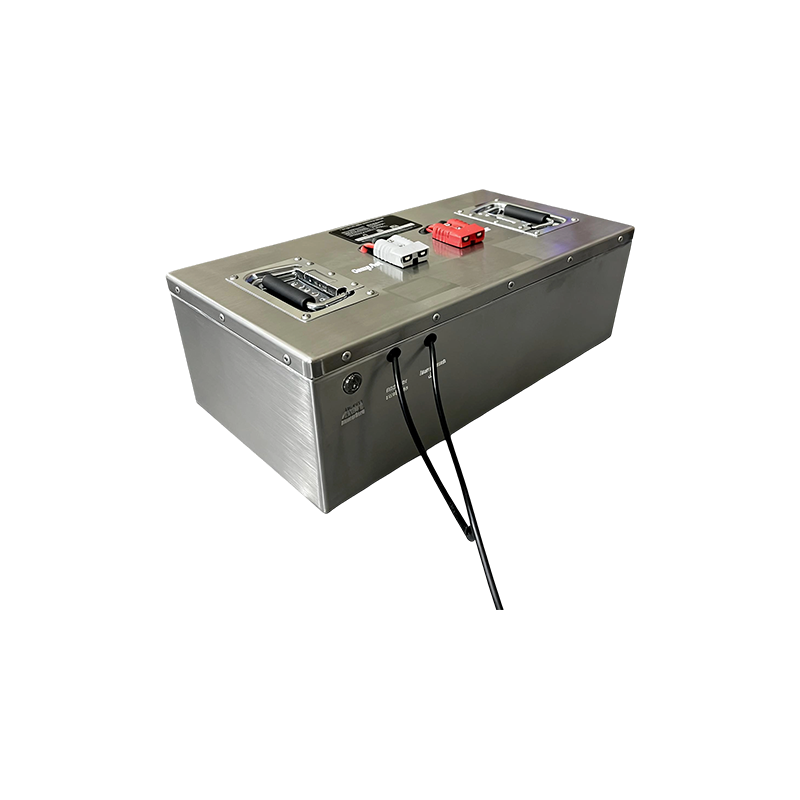
Steel enclosures offer vibration resistance but add weight; aluminum reduces mass but requires careful reinforcement. Thickness typically ranges from 1.2–2.0 mm depending on application. -
Mounting interface and load paths
Improper load transfer can introduce long-term mechanical stress on cells and busbars, accelerating failure.
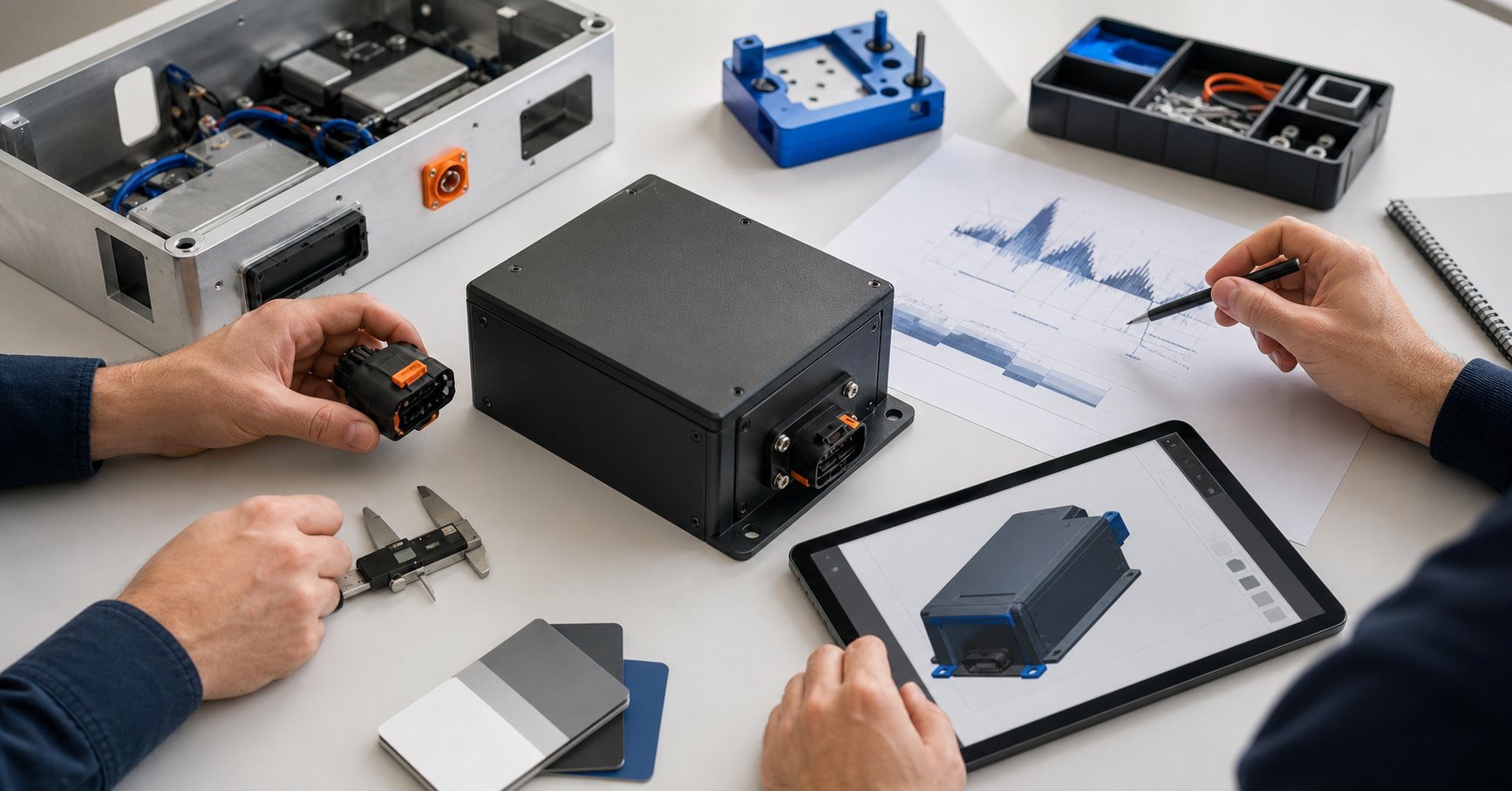
A well-designed lithium ion battery pack balances compactness with serviceability, allowing access to connectors, fuses, and communication ports without full disassembly.
BMS Functions That Actually Matter in OEM Integration
Beyond basic protection, the BMS determines how well a battery pack behaves inside a system.
OEM-relevant BMS functions include:
-
SOC and SOH accuracy under partial load
Inaccurate SOC estimation leads to false alarms or inefficient energy use. -
Communication protocols
CAN, RS485, or Modbus compatibility must match system controllers. Protocol mismatches are a common cause of commissioning delays. -
Protection logic thresholds
Over-voltage, under-voltage, and temperature thresholds should align with system behavior, not generic defaults.
These factors often matter more than cell brand alone when assessing long-term system reliability.
Standard Platform vs Targeted Customization: What Changes Cost and Lead Time
OEM projects rarely benefit from full customization. The most cost-effective approach is usually a standard platform with limited, high-impact modifications.
| Aspect | Standard Platform | Targeted Customization |
|---|---|---|
| Typical MOQ | Low to moderate | Moderate |
| Sample lead time | 2–4 weeks | 4–8 weeks |
| Validation scope | Limited | Focused |
| Cost predictability | High | Medium |
Customizing enclosure dimensions, connectors, or communication logic adds engineering value, while changes to cell chemistry or internal topology significantly increase validation effort and risk.
MOQ, Lead Time, and Data Buyers Should Ask For
Procurement decisions should be informed by concrete data rather than assumptions.
OEM buyers should request:
-
MOQ thresholds by configuration, not just “standard vs custom”
-
Sample and mass-production lead time breakdown (cells, assembly, testing)
-
Factory test scope, including insulation resistance, functional cycling, and communication verification
Transparent answers here often correlate strongly with smoother project execution.
Typical Lithium Ion Battery Pack Configurations in OEM Use
While applications vary, several configurations dominate OEM deployments.
| Application | Nominal Voltage | Capacity Range | Design Focus |
|---|---|---|---|
| Industrial equipment | 48V | 40–200Ah | Stability, vibration resistance |
| Energy systems | 51.2V | ~100Ah | Efficiency, communication |
| Mobile OEM platforms | Custom | System-defined | Weight, form factor |
Selecting a familiar configuration reduces integration effort and speeds up validation.
Common OEM Questions About Battery Pack Selection
Q1: How do I compare two battery packs with similar specifications?
Look beyond capacity and voltage. Compare continuous current ratings, cycle life at realistic DoD, enclosure design, and BMS communication behavior.
Q2: What parameters most affect long-term cost?
Cycle life under actual operating conditions, serviceability of internal components, and BMS stability have a larger impact than initial unit price.
Q3: How can OEM teams reduce integration risk early?
By validating mechanical fit, electrical interfaces, and communication protocols before finalizing enclosure and controller design.
Moving From Specification to Reliable Deployment
Selecting a lithium ion battery pack for OEM projects is not about choosing the most advanced cell or the lowest quoted price. It is about aligning electrical parameters, mechanical structure, and control logic with the realities of your system.
OEM teams seeking a deeper understanding of system-oriented battery configurations and product options can start with an overview at https://www.edailymag.com/. For projects requiring detailed parameter review, customization scope discussion, or lead-time planning, technical support is available through https://www.edailymag.com/contact-us to evaluate options based on real deployment conditions.