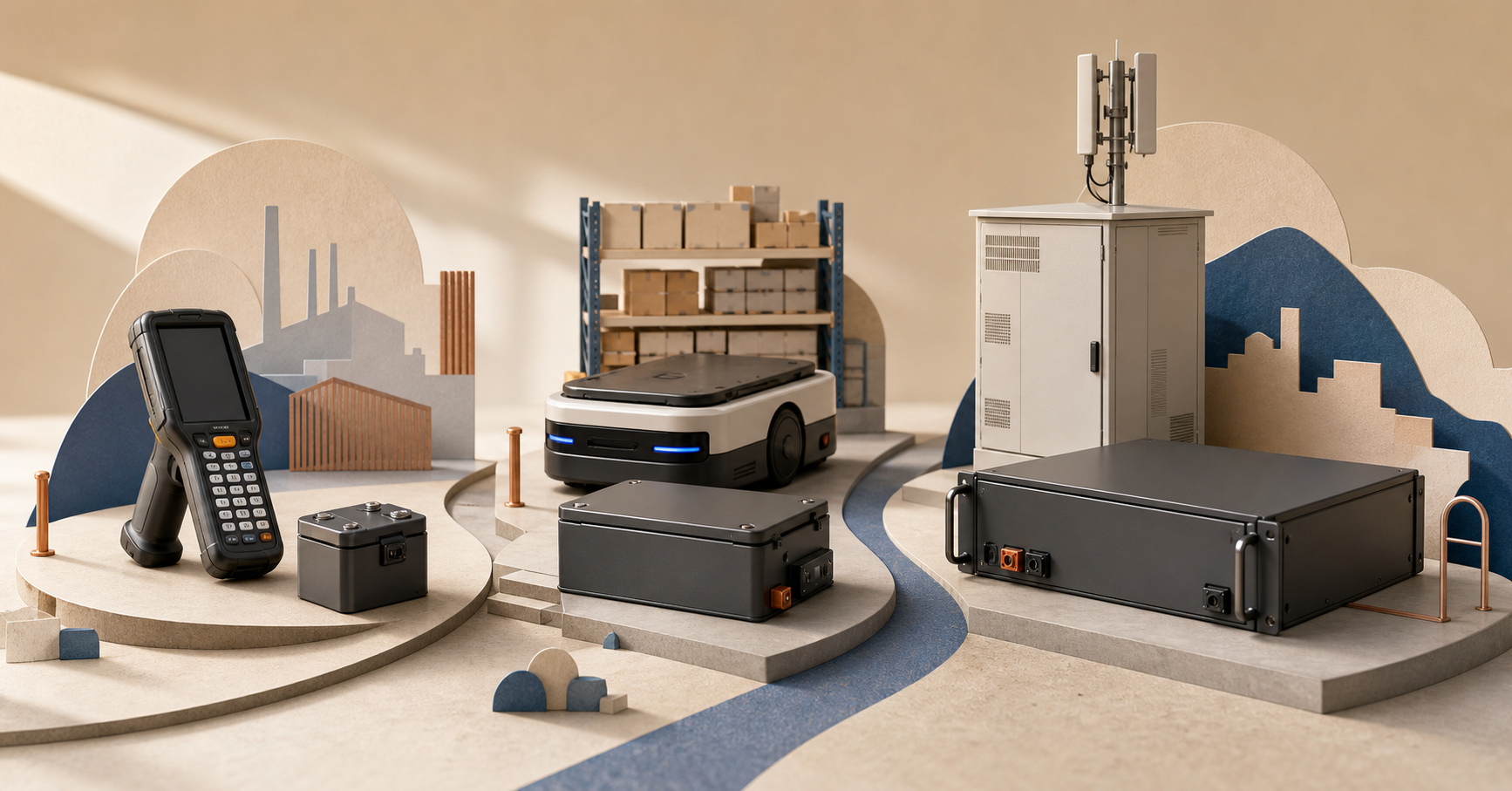


In industrial environments, equipment rarely operates under ideal conditions.
Forklifts carry uneven loads. AGVs accelerate and stop repeatedly. Warehouse transport systems operate across long shifts with limited charging windows. Under these conditions, battery systems are expected to deliver stable power continuously—not just during short test cycles.
This is why the role of a motive power battery manufacturer goes far beyond supplying energy storage. The battery becomes part of the operational infrastructure itself.
At eDailyMag, motive power battery systems are engineered around real industrial movement patterns. Instead of focusing only on nominal capacity, we prioritize discharge stability, cycle durability, thermal control, and system integration to ensure equipment performs consistently across demanding workloads.
Lithium Chemistry and Structural Design for Motive Power Systems
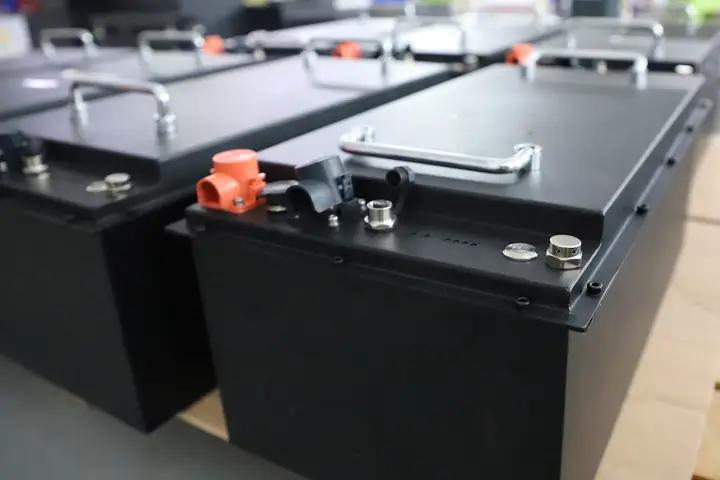
Most modern motive power applications are transitioning toward LiFePO4 (Lithium Iron Phosphate) battery systems because they provide strong lifecycle stability and lower maintenance requirements.
Key characteristics include:
- cycle life of 3000–6000 cycles
- stable nominal voltage of 3.2V per cell
- high discharge efficiency (>95%)
- excellent thermal stability under repeated load cycles
Typical battery architectures include:
- 24V / 36V / 48V / 80V systems depending on equipment type
- high-current parallel configurations for sustained discharge
- copper busbars for low-resistance conductivity
- reinforced pack housing for vibration and impact protection
Industry research across industrial mobility and warehouse automation shows that lithium battery systems are increasingly preferred because of their stable discharge behavior, long operational lifecycle, and lower maintenance requirements compared with traditional lead-acid systems.
However, the chemistry alone is not enough. Long-term reliability depends on how the battery system is engineered.
Engineering Battery Systems for High-Duty Industrial Operation
A professional motive power battery manufacturer designs battery systems based on actual operational behavior.
At eDailyMag, engineering development focuses on:
- Continuous discharge performance
Supporting long operation cycles without unstable voltage drop. - High-current response capability
Maintaining stable output during acceleration and heavy lifting. - Thermal management optimization
Controlling heat accumulation during repeated charge-discharge cycles. - Opportunity charging compatibility
Supporting short charging intervals during operational breaks. - BMS integration and communication
Real-time monitoring of voltage, temperature, and system health.
This approach ensures that battery systems support productivity rather than limiting it.
Case Insight: Improving Runtime Consistency in Warehouse Transport Systems
A logistics customer operating electric transport vehicles experienced inconsistent runtime across multiple shifts.
The existing battery systems showed:
- noticeable voltage drop during heavy acceleration
- reduced operational time after repeated fast charging
- increased downtime due to battery replacement cycles
Our engineering team redesigned the system using:
- matched LiFePO4 cells with lower internal resistance
- optimized busbar layout for balanced current distribution
- advanced BMS settings for high-frequency operation
After implementation:
- runtime consistency improved significantly
- charging frequency was reduced
- operational downtime decreased across the fleet
This improvement directly increased warehouse efficiency during peak operation periods.
Performance Comparison: Traditional Lead-Acid vs Lithium Motive Power Batteries
| Parameter | Lead-Acid Battery | Lithium Motive Power Battery |
|---|---|---|
| Cycle Life | 500–1000 cycles | 3000–6000 cycles |
| Charging Time | 6–8 hours | 1–3 hours |
| Discharge Efficiency | 70–80% | 90–96% |
| Voltage Stability | Drops under load | Stable output |
| Maintenance Requirement | High | Low |
| Weight | Heavy | 30–50% lighter |
| Operational Flexibility | Limited | High |
These differences directly influence productivity, maintenance cost, and long-term equipment performance.
Safety Design and Compliance for Industrial Mobility Systems
Motive power batteries operate in demanding industrial environments where safety is critical.
Reliable battery systems include:
- overcharge and over-discharge protection
- short-circuit and overcurrent cutoff
- multi-point temperature monitoring
- active balancing systems for pack consistency
Industrial lithium battery systems must meet strict transportation, electrical safety, and operational compliance requirements to ensure stable deployment across global markets and industrial environments.
Common certifications include:
- UN38.3 for transportation
- CE certification
- MSDS documentation
These standards ensure both safe operation and compliance with global logistics requirements.
Application Scenarios for Motive Power Battery Systems
Motive power battery systems are widely used in:
- electric forklifts
- AGV and RGV logistics systems
- warehouse transport equipment
- electric pallet trucks
- airport and industrial utility vehicles
Each application requires different discharge behavior, voltage ranges, and runtime expectations—making customized battery design essential.
FAQs
Why are lithium batteries replacing lead-acid in motive power applications?
Because lithium systems provide longer lifecycle performance, faster charging, and lower maintenance requirements.
What voltage systems are commonly used in motive power equipment?
24V, 36V, 48V, and 80V systems are the most common depending on application type.
Can motive power battery packs be customized?
Yes. Voltage, capacity, BMS communication, and housing structure can all be tailored for OEM projects.
Reliable Battery Systems for Industrial Mobility Applications
Industrial mobility depends on stable, continuous power. A professional motive power battery manufacturer ensures that battery systems perform consistently across demanding operational cycles.
At eDailyMag, we provide lithium battery solutions engineered for industrial transport, automation, and mobility applications—focusing on long cycle life, stable discharge behavior, and flexible OEM support.
Explore our battery solutions here:
https://www.edailymag.com/
Contact our engineering team for customized motive power battery development:
https://www.edailymag.com/contact-us
Because in industrial operations, stable power is what keeps productivity moving.