

What buyers really mean when they search for a lithium battery pack
A lithium battery pack is rarely just a battery. For most buyers, it is the part that decides whether a cordless tool keeps working through the last hour of a shift or gets set aside for charging too early. That is why sourcing teams, product engineers, and maintenance managers tend to ask the same practical questions: how much runtime does it deliver, how rugged is the housing, and will it fit the platform without trouble?
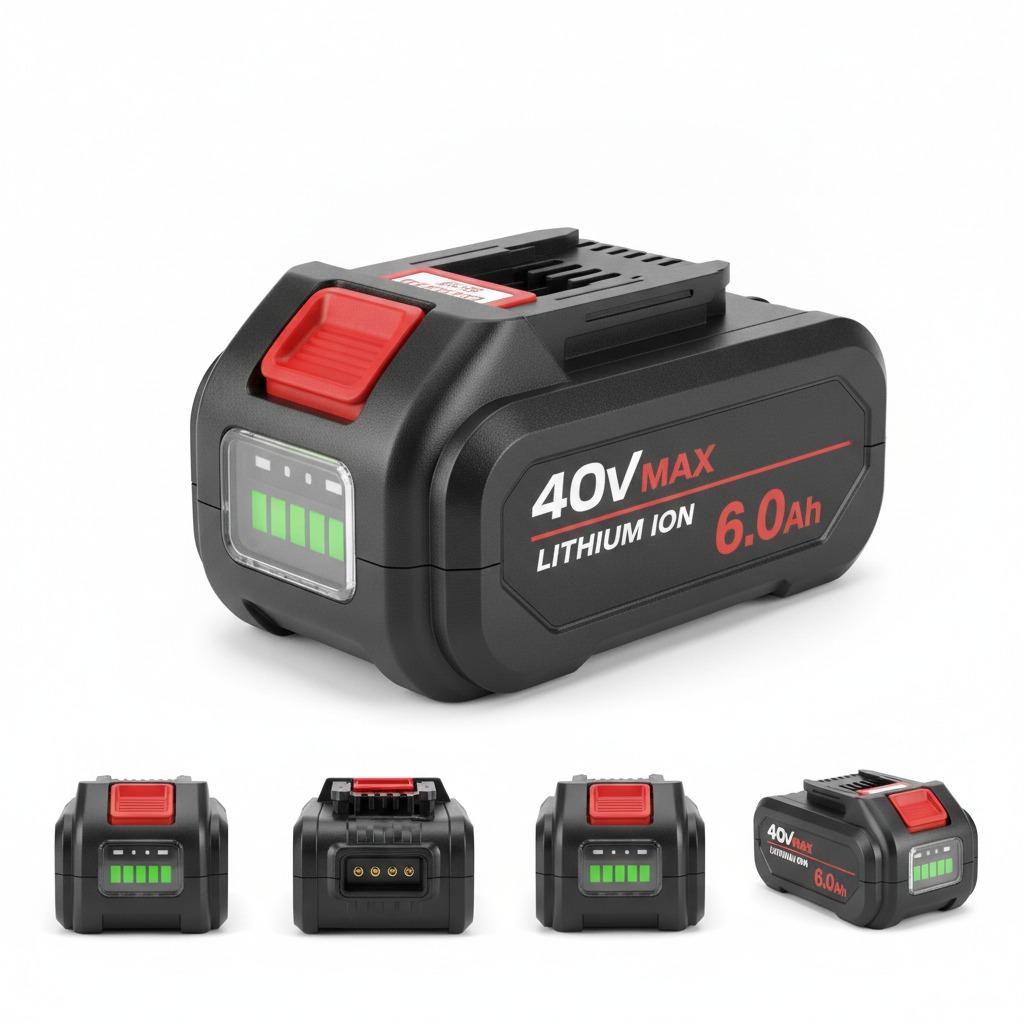
The product here is a rechargeable lithium-ion battery pack marked 40V MAX and 6.0Ah, with a visible charge indicator and a molded housing built for handheld equipment. That points to the kind of battery used on cordless power tools or outdoor equipment where portability matters and interruptions are expensive. It also suggests a familiar manufacturing path: an injection-molded outer case, internal cell assembly, and a terminal interface at the docking end. The exact internal layout is not visible, so it is better to treat it as a platform battery rather than guess at the cell format.
Why the details on the label matter more than the marketing phrase
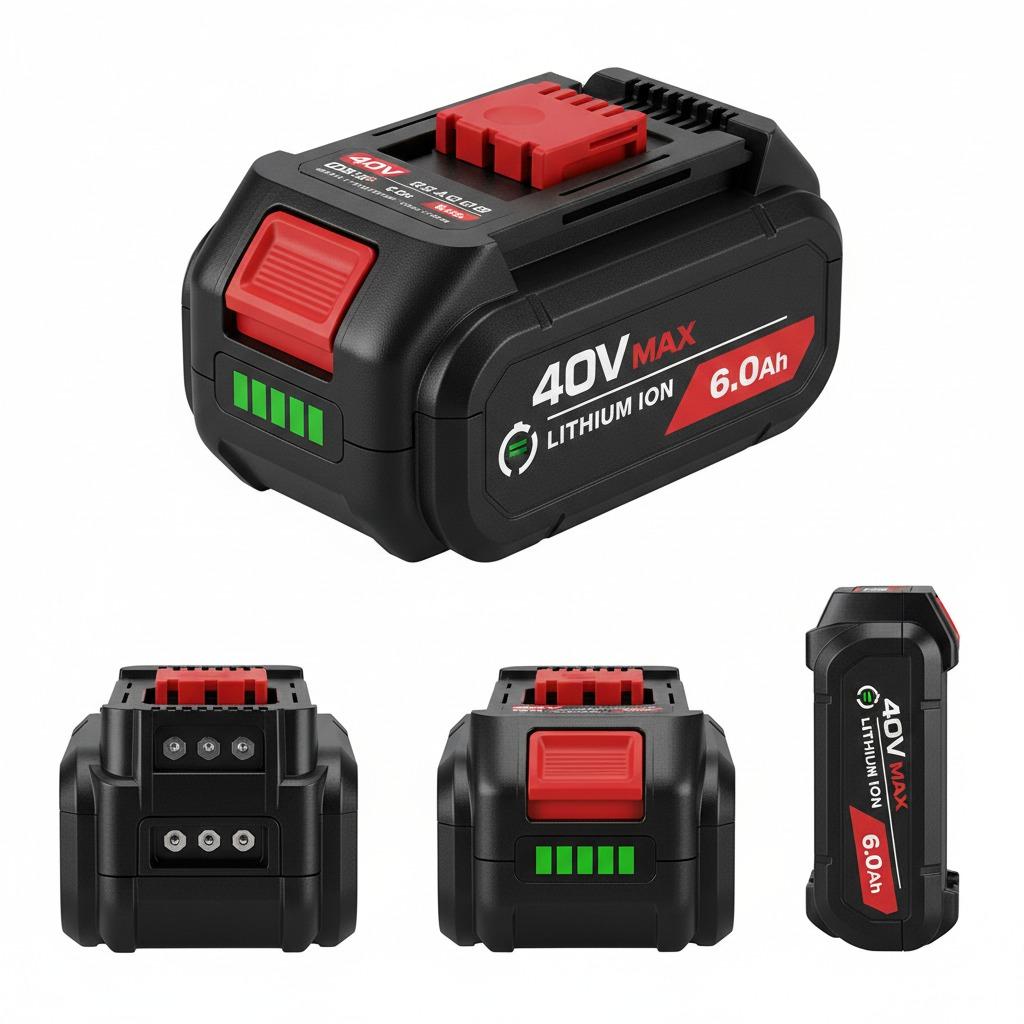
Buyers often start with the chemistry because “lithium ion” has become shorthand for modern rechargeable power. But in practice, the more useful information is the combination of voltage and capacity. Here, 40V MAX and 6.0Ah tell you far more about fit and runtime than a generic battery name ever could. A higher-capacity pack can reduce swap frequency, which matters in field service, landscaping, and maintenance jobs where the nearest charger may be out of reach.
There is also a visible four-LED charge indicator, which sounds minor until you work around crews. A quick state-of-charge check can save a technician from grabbing a nearly empty pack before heading to a remote jobsite. Small feature, real consequence.
Quick reference: what to check before you buy
Voltage compatibility
A 40V MAX pack must match the tool platform. That sounds obvious, but mismatched batteries are still one of the easiest procurement mistakes to make, especially when multiple cordless systems are in service.
Capacity and runtime expectation
The 6.0Ah rating indicates a pack aimed at extended use. In buyer terms, it usually means fewer changes during a shift, though actual runtime will still vary with load, ambient temperature, and tool type.
Housing and handling
The black molded plastic case with red latch features and beveled corners suggests a design meant for routine insertion, removal, and transport. For industrial use, that exterior matters almost as much as the cells inside because it affects drop resistance, grip, and connector alignment.
Connector interface
The recessed terminal end is a standard but important detail. Contact layout must match the charger and tool base precisely. In purchasing, this is where an otherwise “close enough” battery becomes useless.
Custom lithium battery or off-the-shelf pack?
For many buyers, the real decision is not simply whether to buy a battery, but whether to specify a custom lithium battery or stay with a standard replacement pack. If you are supporting an existing tool ecosystem, a compatible off-the-shelf unit is often the practical answer. If you are designing a new device, packaging a battery around your mechanical envelope, current draw, and safety controls may justify a custom route.
A industrial lithium battery typically needs more than basic power delivery. It may need stronger mechanical retention, clearer indication, tighter connector discipline, and a housing that survives repeated handling. The visible design here already leans in that direction: compact, rectangular, latch-based, and built for frequent swaps.
A note on low-temperature performance
Some buyers specifically look for an low temperature lithium battery because field work does not stop when the weather turns. That requirement is worth flagging early, but it should not be assumed from a product photo or label alone. Temperature performance depends on cell selection, pack design, and protection strategy. If cold-weather use is critical, ask for documented operating limits rather than relying on general chemistry claims.
Common sourcing mistakes
One common mistake is assuming all 40V packs are interchangeable. Another is treating capacity as the only metric that matters. A high Ah rating is useful, but only if the physical fit, terminal pattern, and charger compatibility line up. Buyers also sometimes overlook the difference between a replacement pack and a platform-specific pack built for one family of tools. That distinction can save a lot of returns.
There is also a basic but overlooked caution: visible features do not confirm internal protections, exact cycle life, or certification status. Unless those details are supplied by the seller or manufacturer, they should be verified separately before the pack goes into a critical application.
Practical advice for engineers and procurement teams
If you are comparing battery options, build the decision around use case first. Ask how often the pack will be swapped, what the ambient conditions look like, whether the pack will be carried in a truck or a tool cart, and whether the user needs a quick state-of-charge check. Then confirm voltage, connector geometry, and capacity. That order matters more than brochure language.
For replacement sourcing, keep a sample pack on hand and verify physical dimensions, latch feel, and insertion force before placing a larger order. In battery buying, small mechanical mismatches are often the first sign that a “compatible” product is not really compatible.
What to request next from a supplier
Before committing to purchase, ask for the compatibility list, charging requirements, safety documentation, and any available temperature or protection data. If you need a lithium battery pack for a specific tool platform, request those details in writing. It is a simple step, but it helps avoid field failures and returns that are difficult to trace later.
If you are evaluating packs for a new program, start with the visible requirements here—40V MAX, 6.0Ah, lithium-ion chemistry, indicator status, and latch-style housing—then move to the harder questions about protection, testing, and lifecycle. That is usually where the real purchasing decision gets made.