

What a 40V lithium battery pack is really buying you
A ithium battery pack for cordless equipment is less about the number on the label and more about how long a tool stays useful between charges. For anyone comparing replacement power sources for tools, blowers, trimmers, or other portable equipment, the key question is simple: will this battery keep the job moving without adding downtime? In the 40V class, the answer often depends on capacity, the quality of the enclosure, the connector interface, and whether the pack is meant to slide cleanly into existing equipment without fuss.
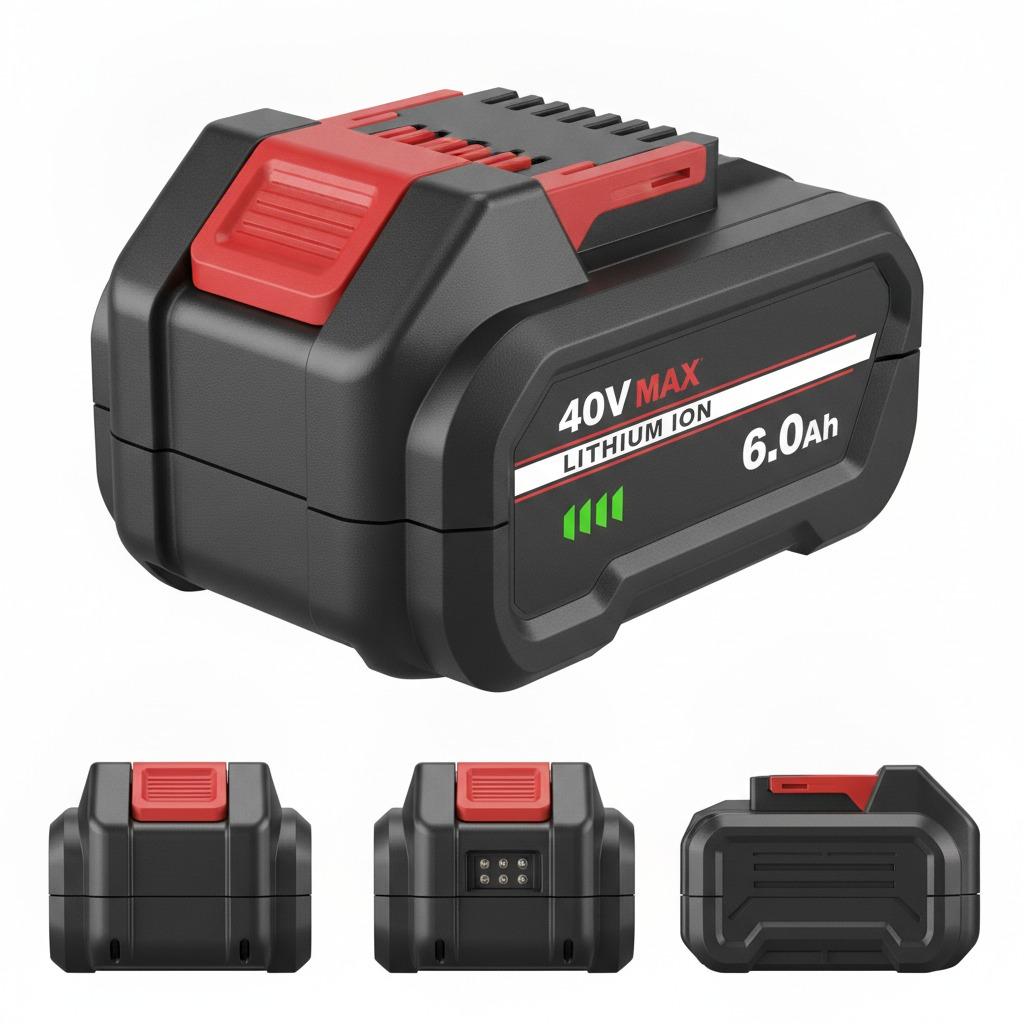
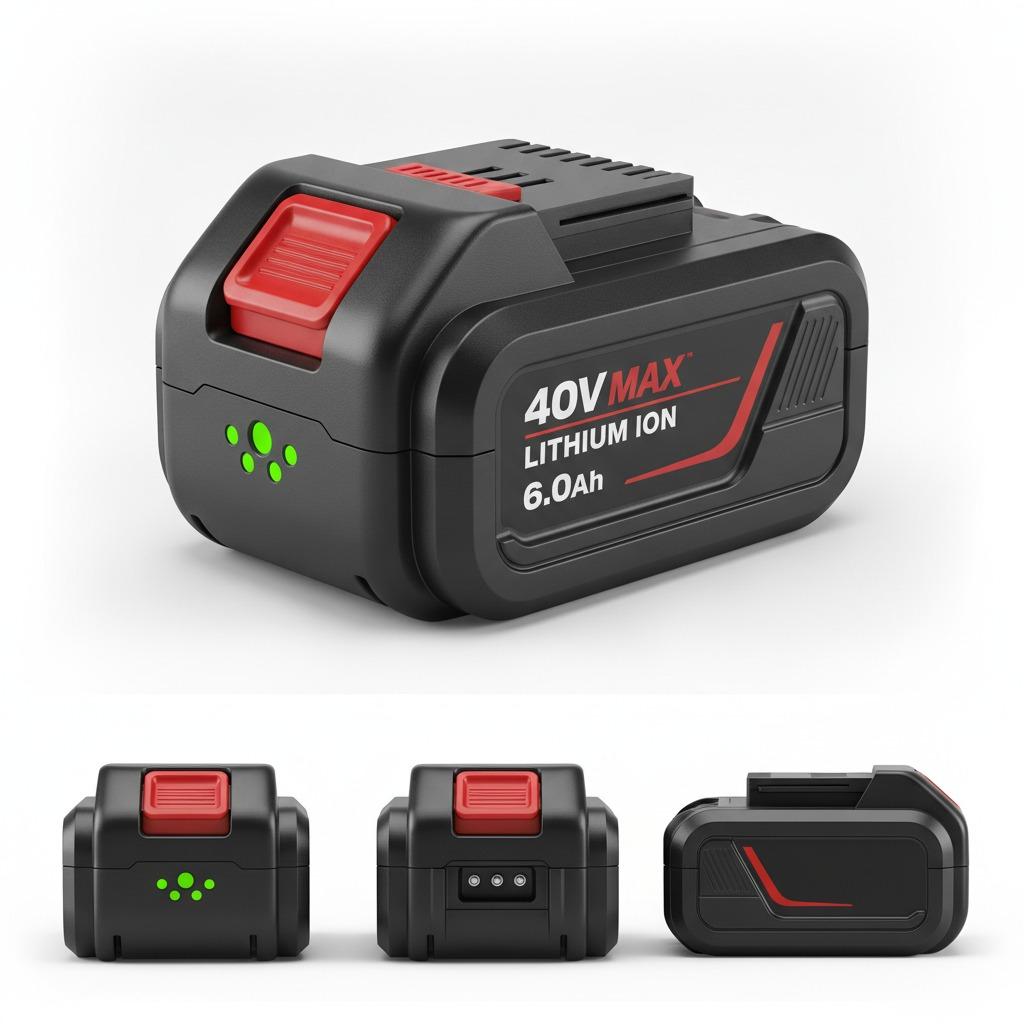
The pack described here is a rechargeable lithium-ion battery cartridge marked 40V MAX and 6.0Ah, with a five-bar LED charge indicator and a red release latch. That combination tells a buyer a few practical things right away: it is designed for portable DC power, it is meant to be removable, and it is built around a form factor that supports quick swaps in the field. For contractors and maintenance teams, that can matter more than a long list of abstract specifications.
Quick takeaways for buyers
If you are selecting a replacement or spare battery, the decision usually comes down to three issues: compatibility, runtime, and durability of the housing and connector.
A 40V MAX lithium-ion pack is typically chosen for cordless tools that need more punch than smaller platform batteries can deliver. The 6.0Ah rating suggests a relatively large capacity for this style of battery pack, although actual runtime will still depend on the tool, load, temperature, and how hard the equipment is being pushed. That last part gets overlooked often. A battery that looks generous on paper can feel very ordinary when it is feeding a high-draw tool in cold weather.
What the visible design details suggest
This battery pack uses a black molded plastic enclosure with a matte or satin finish, rounded corners, and a two-piece housing seam. That is standard enough in modern power tool battery production, but it still matters. Injection-molded housings are a practical choice because they protect the internal cell assembly and electronics while keeping the cartridge shape consistent for the slide-in interface.
The red top connector interface and latch mechanism point to a removable pack intended for repeated insertion and removal. The side label panel and the LED fuel-gauge style display are small features, but they are the sort of features buyers notice in daily use. A quick glance at the charge level saves time. So does a latch that releases cleanly instead of hanging up after the battery has been in a dirty jobsite environment for a few weeks.
Where this kind of pack fits in the market
A product like this sits between consumer convenience and industrial practicality. It is not just a generic power cell. It is a battery module meant to integrate with compatible cordless tools or equipment. That makes it relevant for:
- replacement batteries for existing cordless platforms
- spare packs for crews that cannot stop to recharge mid-task
- backup power for outdoor equipment and maintenance tools
- users who want a mobile battery rather than a corded setup
For sourcing teams, the big issue is whether the pack is an exact replacement, an OEM-style equivalent, or an aftermarket option. That cannot be assumed from the visible data alone. And it should not be guessed at. Compatibility claims need confirmation against the tool platform, charger requirements, and physical fit.
Selection criteria that actually matter
Platform match first
A 40V battery is not interchangeable just because the voltage looks close. Connector geometry, latch position, charge communication, and pack dimensions all have to line up. A battery that almost fits is usually a battery that should not be bought.
Capacity versus weight and handling
A 6.0Ah pack offers more stored energy than smaller units, but larger packs can also add bulk. For handheld tools, that affects balance and user fatigue. For equipment that sits on the ground or mounts to a chassis, the trade-off is less painful.
Indicator and usability features
The visible five-LED charge indicator is not a luxury. In a busy shop or field setting, it helps crews decide whether to swap, recharge, or finish a task. Small detail, real value.
Practical cautions before you buy
Do not assume every lithium battery pack labeled 40V MAX will behave the same. Voltage labels can be marketing shorthand, and the actual compatibility story is usually defined by the tool ecosystem. Also, if you are sourcing for industrial use, ask for the missing data: cell configuration, safety documentation, charging requirements, and any available transport or handling information. The same advice applies if you are considering a custom lithium battery solution for a new tool platform rather than a direct replacement.
A second caution: do not overread the low temperature lithium battery angle unless the supplier has actually provided validated performance data. Cold-weather use is real, but it is not something you can infer just from a label.
Questions buyers usually ask
Is this good for contractors and homeowners alike?
Yes, at least in principle. The same battery format can serve a contractor who needs longer runtime and a homeowner who wants a spare ready on the shelf.
What should be checked before ordering?
Confirm fit, connector style, charger compatibility, and whether the tool platform accepts a 40V MAX removable cartridge of this shape.
Can this be used as a generic industrial lithium battery?
Only if the device and power requirements match. Industrial use demands more than voltage alone.
What to do next
If you are comparing battery options for a cordless tool fleet or evaluating a replacement pack, start with the physical interface and the charging ecosystem before you focus on the headline capacity. That is usually where bad purchases are avoided. Then verify whether the battery is a standard replacement, a custom lithium battery, or a platform-specific cartridge. A few minutes of checking saves a lot of returns, and in this category, returns are often more expensive than they look.