

Why industrial buyers look closely at an ithium battery pack
An ithium battery pack is often the part of the system nobody wants to think about until a machine stalls, a backup unit drops offline, or a mobile platform loses range halfway through a shift. For engineers and sourcing teams, the real question is not just whether the pack fits in the enclosure. It is whether the battery system can keep up with the load profile, survive the environment, and remain serviceable without creating extra risk for the rest of the equipment.
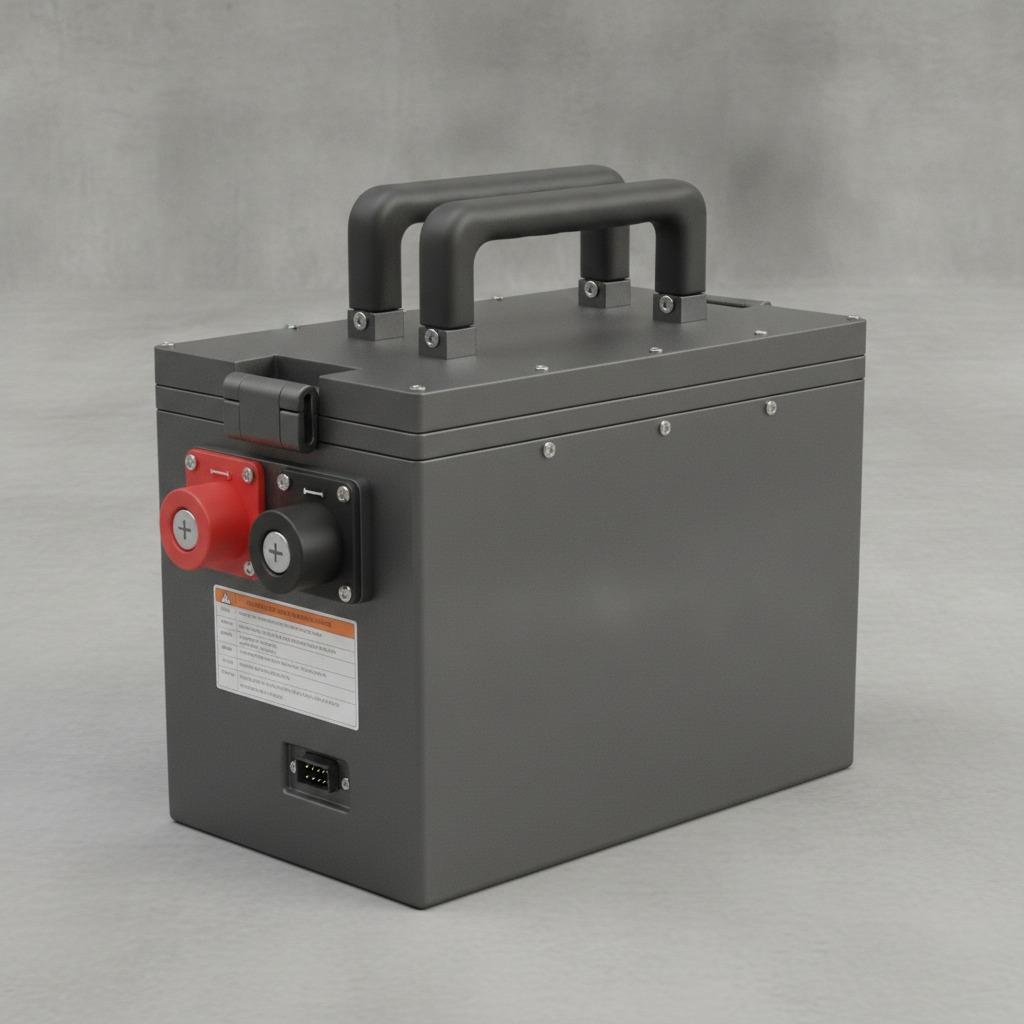
The rectangular industrial battery pack shown here fits the kind of use case many buyers know well: a rigid enclosure, top carry handles, and a lid secured with multiple fasteners. That combination usually signals a product intended for more than casual use. It is the sort of battery module you would expect in backup power, equipment mobility, or a rugged industrial device where handling and protection matter as much as energy storage.
What this style of battery pack tells you at a glance
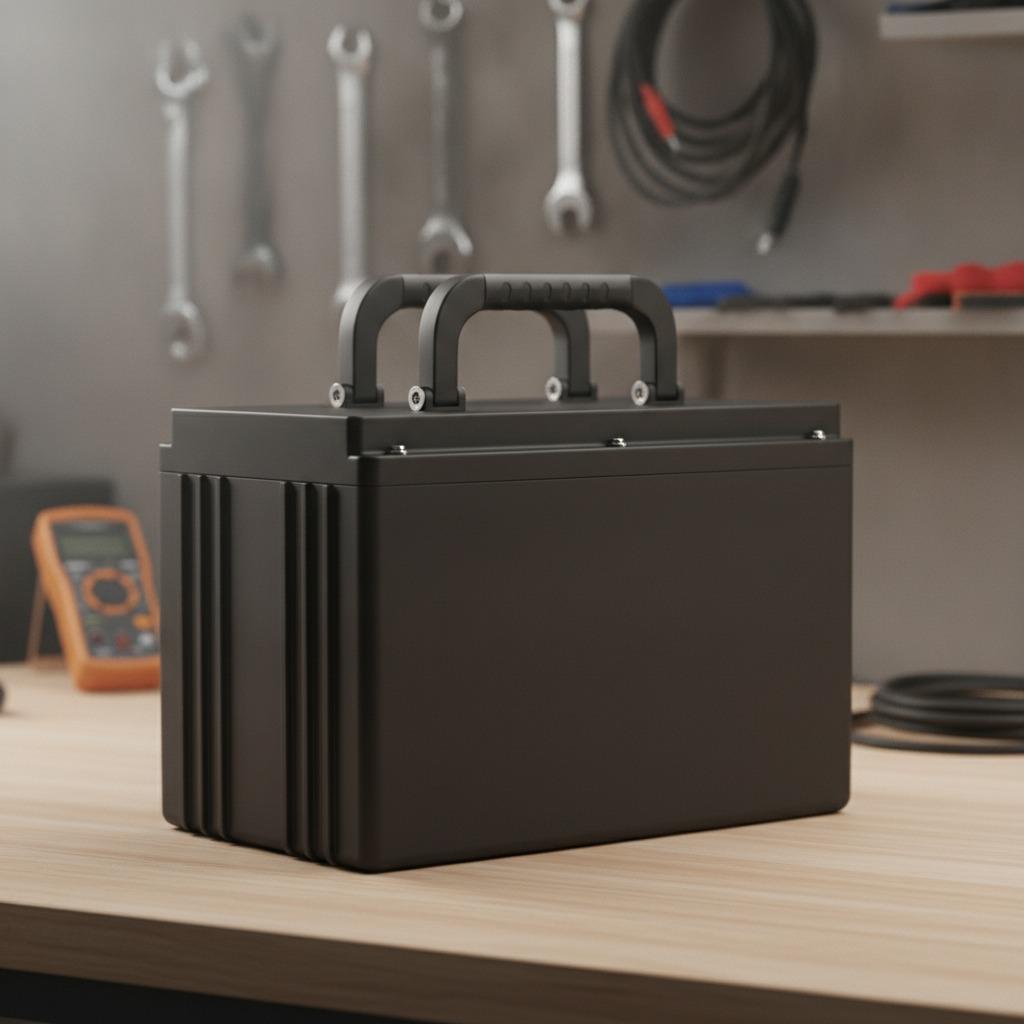
Even without confirmed voltage, chemistry, or capacity, the physical design gives several clues. A box-shaped enclosure with a flat lid suggests a sealed assembly built to protect internal cells and wiring. The handles are a practical touch, especially where technicians may need to move the pack during installation, maintenance, or replacement. The visible fasteners also matter: they imply the enclosure is intended to stay closed under vibration and handling, not just sit on a bench.
That matters because battery packs in industrial settings are rarely treated gently. A pack used in robotics, material handling, telecom backup, or marine equipment may face shock, dust, intermittent loading, and repeated connection cycles. Buyers should not read too much into a neat exterior, though. A clean enclosure is not a substitute for a battery specification sheet.
Where a custom lithium battery makes sense
A custom lithium battery is usually considered when standard modules do not fit the mechanical or electrical requirements of the application. In industrial purchasing, that can mean an awkward footprint, a need for integrated mounting points, unusual discharge behavior, or a desire to package the pack inside a hardened enclosure. Customization may also be driven by maintenance access. If a pack has to be lifted, swapped, or inspected often, handles and a durable case are not cosmetic features; they are part of the operating plan.
That said, buyers should be careful not to over-customize too early. A custom design can improve packaging and usability, but every added feature can create another item to qualify, document, and support. If the basic electrical requirements are still changing, it is usually smarter to lock down the system demands first.
Industrial lithium battery priorities that often get overlooked
Thermal behavior and the low-temperature question
In many projects, the biggest mistake is focusing only on nominal capacity and forgetting temperature. An industrial lithium battery may perform very differently in a cold warehouse, an outdoor telecom cabinet, or a vehicle parked overnight. Buyers asking for a low temperature lithium battery should be clear about the actual operating range, not just the storage range, and should confirm how performance changes when the pack is cold-started under load.
This is one of those areas where practical caution pays off. A pack that looks fine on a spec summary can behave very differently after a winter test or a long idle period.
Enclosure and serviceability
The visible enclosure on this pack is a reminder that industrial battery selection is not only about cells. Fastener access, handle placement, and enclosure durability all affect service time. If technicians need to remove the pack regularly, the physical design can save real labor. If it is buried deep inside a machine, every extra minute spent wrestling with the enclosure becomes an operating cost.
How buyers should compare options
When evaluating an ithium battery pack, sourcing teams should compare more than just capacity and price. Useful questions include: Does the pack match the mounting space? Can it be transported safely by one person or does it require two? Is the enclosure suitable for the handling environment? Does the design allow for inspection of labels, terminals, or service points? Those questions sound basic, but they are where many purchasing delays begin.
For a custom lithium battery program, the most efficient path is usually to define the mechanical envelope, duty cycle, environment, and safety expectations before asking for a quote. If the supplier does not know whether the pack will live in a stationary cabinet or a moving platform, the design conversation will wander.
Common mistakes in battery pack sourcing
One common mistake is assuming all industrial battery packs are interchangeable because they share a similar box format. They are not. Internal chemistry, battery management design, discharge limits, and temperature response can differ sharply. Another mistake is ignoring how the pack will be installed and serviced. A battery that is technically suitable may still be a poor choice if it cannot be handled safely in the field.
It is also worth warning against vague requests. “Need a lithium pack for equipment” is too broad. Better language includes the application, expected runtime, peak load, charging environment, and any physical constraints. That gives the supplier something actionable and reduces back-and-forth later.
Practical buyer takeaways
If you are evaluating a lithium battery pack for an industrial project, start with the operating environment, then the mechanical fit, then the electrical requirements. For a custom lithium battery, make sure the custom features solve a real problem rather than simply adding complexity. If low-temperature operation is part of the brief, say so early and ask how the pack behaves in cold conditions, not just what the label says.
The clean enclosed form shown here is a good reminder that industrial battery systems are built around use, not appearance. Handle placement, enclosure strength, and service access can matter just as much as energy storage itself.
Next step for sourcing teams
Before moving to RFQ or prototype review, gather the mechanical envelope, target application, load profile, environmental conditions, and handling requirements. That short list will tell you whether a standard module is enough or whether you need a custom lithium battery approach. It will also help you avoid the most expensive kind of redesign: the one discovered after the battery is already in the machine.