

What buyers really need to know about a lithium battery pack for cordless tools
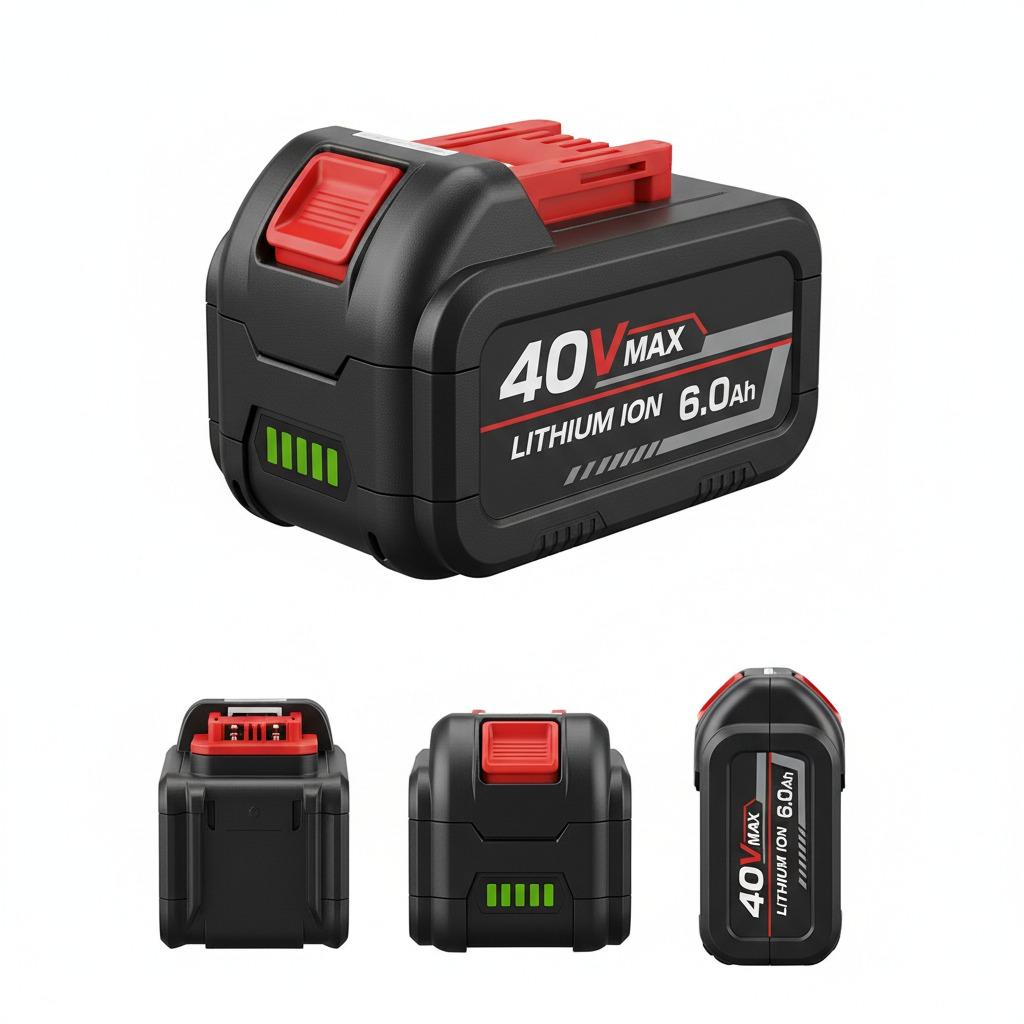
A lithium battery pack is one of those components that looks simple from the outside and still decides whether a cordless tool is useful on site or dead weight in the truck. For sourcing teams, maintenance managers, and product developers, the question is usually not whether the pack works in principle, but whether the pack style, voltage class, capacity, and physical interface fit the job. In this case, the visible clues point to a rechargeable lithium-ion power tool battery pack marked 40V MAX and 6.0Ah, with a slide-in rail design and a front charge indicator. That combination is common in cordless outdoor and workshop equipment, where runtime and quick swapping matter more than cosmetic details.
That matters because battery selection is rarely just about the number on the label. A higher voltage platform can support more demanding tools, while capacity affects how long the tool can stay in service between swaps. Buyers comparing a custom lithium battery against an off-the-shelf replacement should be thinking about platform compatibility, enclosure quality, and how the pack will be handled in real use, not just the headline amp-hour figure.
Quick read on the visible product features
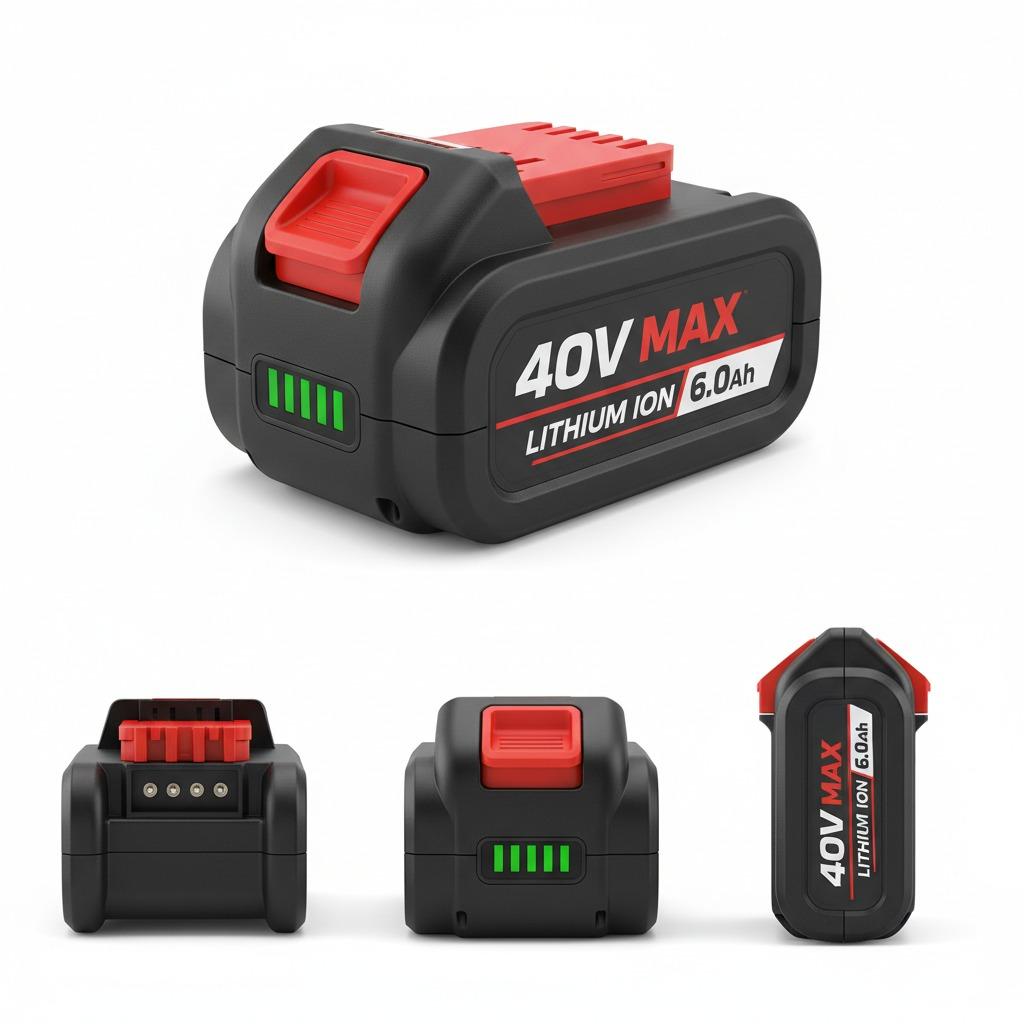
The pack shown here is a rectangular slide-in cartridge with a black molded housing, red release hardware, and a top contact interface. The side label shows 40V MAX, lithium-ion, and 6.0Ah. There is also a fuel-gauge style indicator with five green bars visible on the front. For anyone evaluating a replacement or spare, those are the facts that matter most at first glance.
What is not visible is just as important. The internal cell format, exact protection circuit design, safety certifications, weather resistance, and compatibility with specific tool brands are not provided here, so they should not be assumed. That is the kind of detail a buyer should verify before placing a volume order, especially if the pack will be used in an industrial lithium battery setting or sold as a private-label accessory.
Why 40V MAX and 6.0Ah are a useful combination
In cordless power equipment, voltage and capacity solve different problems. Voltage is tied to the power platform and the tool’s operating range. Capacity, expressed here as 6.0Ah, is about how much energy the pack can deliver before it needs charging. For users running yard tools, workshop tools, or other portable equipment, a larger capacity pack can reduce swap frequency and keep work moving. That is the practical appeal.
Of course, more capacity usually means a larger, heavier pack. That trade-off is easy to overlook when reading a spec sheet. In hand tools especially, the extra bulk can affect balance. Buyers should ask whether the runtime gain justifies the added weight for the operator’s daily routine.
Construction details that signal how the pack is built
The housing appears to be injection-molded plastic, which is standard for this product category. That does not tell you everything, but it does tell you the exterior is designed for repeat insertion, removal, and basic impact handling typical of cordless tool use. The slide-in rail and latch geometry are also important because they determine how securely the pack seats in the tool and how quickly an operator can change batteries.
For anyone sourcing an aftermarket or custom lithium battery, the enclosure and connector layout are not minor matters. A pack can have the right nominal voltage and still fail in practice if the terminal geometry, latch position, or overall profile is off by a few millimeters. In battery procurement, small fit issues become expensive very quickly.
Selection criteria for sourcing managers and product teams
Platform compatibility
Match the battery interface first. A 40V MAX slide battery still has to fit the tool rail, latch, and terminal arrangement. Do not rely on voltage alone.
Capacity versus handling
A 6.0Ah pack can be attractive for runtime, but compare it against user fatigue, tool balance, and expected swap frequency. The right choice depends on the application, not just the spec line.
Indicator and user feedback
The visible charge indicator is a practical feature. It helps operators decide when to recharge before a job is interrupted. That kind of simple feedback is often more valuable than fancy electronics no one checks.
Supply chain clarity
If you are considering a custom lithium battery or a replacement line, ask for the exact internal build specification, pack protection approach, and verification data available from the supplier. If those details are vague, treat the offer cautiously.
Common buyer mistakes
The most common mistake is treating all 40V packs as interchangeable. They are not. Physical fit, terminal layout, and communication behavior can vary across platforms. Another mistake is assuming that a visibly similar pack is automatically suitable as an industrial lithium battery replacement. For professional use, a battery has to survive repeated handling, storage, and charging cycles in the real environment of the customer, not just look right in a photo.
There is also a tendency to chase the highest capacity number without considering charging logistics. A larger pack only helps if the user has enough chargers, enough spare batteries, and a process for rotation. Otherwise the extra capacity becomes a scheduling problem instead of a productivity gain.
Practical advice for buyers
If you are sourcing this type of pack, start with fit, then verify performance claims, and only then discuss unit economics. Ask for pack drawings, connector details, and any available test data. If the battery is intended for a private-label or replacement program, confirm the labeling requirements and the channel you plan to sell into. For low temperature lithium battery applications, for example, you would need different validation than for ordinary workshop storage, and that cannot be guessed from the shell.
For engineers and product teams, the visible design here suggests a straightforward battery cartridge built for portability and quick exchange. That makes it useful, but also unforgiving: the pack has to be mechanically sound and electrically consistent every time it is installed.
FAQ
Is this battery pack brand-specific?
The brand and exact tool system are not identifiable from the provided information, so compatibility should be verified before purchase.
Can I assume runtime from 6.0Ah alone?
No. Runtime depends on the tool load, motor efficiency, temperature, and how the pack is used.
Is this suitable as a replacement battery?
It appears intended for that purpose, but only if the voltage class, connector geometry, and physical fit match the target tool platform.
Next step for sourcing
If you are evaluating a lithium battery pack for cordless equipment, use the visible specs as the starting point, not the conclusion. Confirm compatibility, request the missing technical details, and compare the pack against the needs of the actual application. That is the difference between buying a usable replacement and buying another shelf item.