

Why a lithium battery pack for 48V systems deserves careful buying attention
A lithium battery pack for a 48V application looks straightforward from the outside: a boxed power unit, a set of heavy cables, and a nameplate. In practice, it sits at the center of a much bigger decision. Engineers and sourcing managers are not just comparing housings; they are choosing how a system will start, hold up under load, and behave when the installation is expected to run for years rather than months.
That is especially true for industrial, telecom, backup, and off-grid power use. A poorly matched pack can create nuisance shutdowns, awkward maintenance calls, and avoidable wiring headaches. A well-matched one does the opposite: it gives stable 48V DC power, cleaner installation work, and fewer surprises in the field.
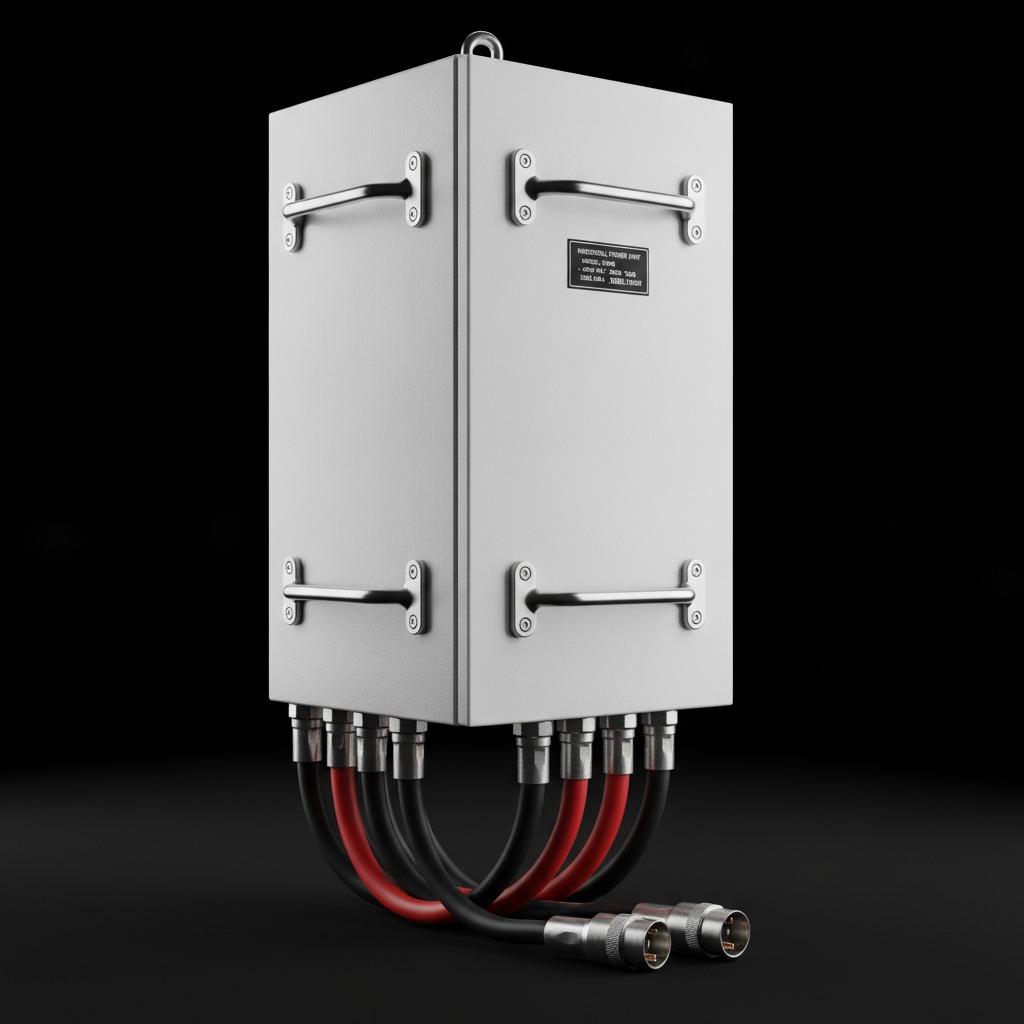
The visible unit here suggests a rectangular metal enclosure with recessed carry handles, front identification labeling, and bottom electrical connection points. Those details matter. They usually signal a product meant to be installed, moved, and serviced as a real piece of equipment rather than treated as a simple consumer battery.
What buyers should notice first
Before comparing specifications, start with the practical clues the pack gives you. The heavy-gauge red and black leads point to high-current output. The enclosure shape suggests a cabinet-style assembly, likely intended for mounting or integration into a broader DC system. The 48V indication is important because it places the pack into a common industrial voltage class used in backup systems, control cabinets, and energy storage.
That said, a buyer should not assume too much from appearance alone. A white powder-coated housing may protect the assembly and look neat in a rack or cabinet, but it does not tell you the battery chemistry, the internal protection design, or whether the pack is optimized for repeated cycling or standby duty. Those details still need to come from the supplier data package.
Where a custom lithium battery makes sense
A custom lithium battery is often the right route when the installation has unusual constraints: limited cabinet space, specific cable exit directions, nonstandard mounting, or a controller that expects a precise DC behavior. It is also the practical choice when the battery has to fit around existing power electronics instead of forcing the rest of the system to change.
For sourcing teams, customization is not only about dimensions. It can also involve connector choice, handle placement, enclosure layout, communication interfaces, and service access. In the field, those small decisions are the difference between a clean retrofit and a frustrating one.
Common applications
This type of industrial lithium battery is often considered for backup power, renewable energy storage, telecom racks, control cabinets, mobile power carts, and other DC supply systems. In each case, the design goal is similar: dependable power delivery with manageable installation and maintenance.
Selection criteria that matter more than marketing language
A lot of product pages focus on “long life” or “high performance,” but buyers need more grounded questions.
First, confirm the exact voltage architecture and how it integrates with your charger, inverter, or DC bus. Second, request the usable capacity data in the same format your team uses internally, whether that is Ah, Wh, or system runtime under load. Third, check the connector style and cable routing. A pack can look right on paper and still be awkward in the cabinet if the terminals are placed badly.
For an industrial lithium battery, thermal behavior also deserves attention. The related term low temperature lithium battery comes up often for a reason: cold-weather operation can change charging behavior and usable output. If the pack will live in a warehouse, roadside cabinet, or outdoor enclosure, ask specifically how it performs in the lowest expected ambient conditions. Do not assume all lithium packs behave the same in the cold.
Common mistakes buyers still make
One frequent mistake is treating all 48V battery packs as interchangeable. They are not. Mechanical fit, current delivery, battery management design, and service accessibility can vary widely.
Another mistake is skipping the enclosure discussion. The housing is not just cosmetic. It affects handling, protection of internal components, and how confidently technicians can install or replace the pack. A cabinet with visible carry handles suggests serviceability, but the real test is how the unit is moved and connected on site.
A third issue is underestimating the system-level implications. A custom lithium battery may solve one packaging problem while creating another if the charging profile, protection logic, or interface requirements are not aligned with the rest of the power system.
Buyer questions worth asking before ordering
Ask for the internal chemistry, capacity, charge/discharge limits, and any available documentation on protection features. Confirm the dimensions, total weight, connector orientation, and whether the enclosure supports the intended installation method. If low-temperature operation matters, get clear performance data rather than a vague reassurance.
It is also worth checking whether the supplier can support the pack as an assembled electrical unit, not merely as cells in a box. For industrial projects, that distinction matters more than people admit.
What to do next
If you are evaluating a lithium battery pack for a 48V project, start with system compatibility, not price alone. Match the enclosure style, cable layout, and operating conditions to the actual installation. If the application needs a custom lithium battery or a low temperature lithium battery variant, make those requirements explicit early. That saves time, and usually money, once the project reaches procurement and test-fit stage.
For sourcing teams, the next step is simple: collect the electrical specs, mechanical dimensions, and environmental expectations in one place before requesting quotes. That is the fastest way to separate a usable industrial battery from one that only looks suitable in a photo.