


What buyers really need to know about a lithium battery pack
A lithium battery pack is easy to describe and hard to spec correctly. On paper it is just a rechargeable energy source. In practice it is a compact assembly of cells, bus bars, insulation, control electronics, and mechanical support, all of which have to work together without excess heat, voltage imbalance, or vibration damage. That matters whether you are buying for an electric tool, an e-bike, a portable power device, or an industrial product that needs a dependable energy module.
The challenge is not simply finding a pack that fits the housing. Engineers and sourcing teams usually need to decide how much runtime they need, how the pack will be charged, what the operating environment looks like, and whether the battery module should be standard or customized. If the application includes cold storage, outdoor service, or intermittent high load, the difference between a generic pack and a properly designed one becomes obvious very quickly.
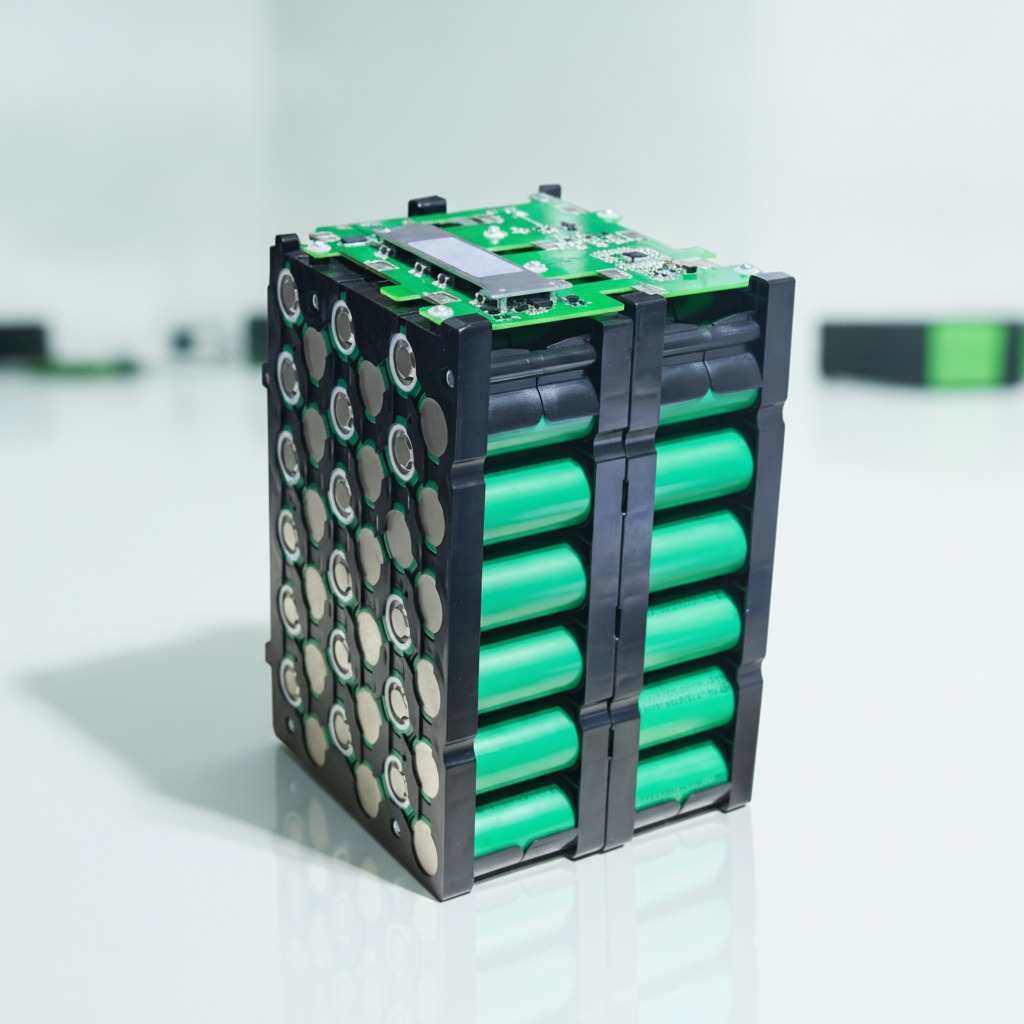
What is visible in a typical multi-cell pack
The pack described here looks like a dense rectangular assembly built from multiple cylindrical cells arranged in a tight matrix. That layout is common when space efficiency matters. A top-mounted control board suggests battery management functions, while the side frames or end caps provide structural support and help keep the cells aligned. Visible bus bars or welded tabs indicate a pack assembly process rather than loose cell stacking.
For buyers, those details matter because they hint at the pack’s design priorities. A compact cell matrix usually means the builder is trying to balance energy density with mechanical stability. A board on top usually means some level of protection, monitoring, or pack control is integrated. None of that tells you the exact chemistry or capacity, of course, but it does tell you this is not a simple off-the-shelf block of cells thrown into a case.
Quick comparison: standard pack vs custom lithium battery
Standard pack
A standard configuration is often faster to source and easier to replace. It can work well if the device footprint is fixed and the electrical requirements are already well understood. The downside is that the pack may force compromises on size, connection style, or thermal behavior.
Custom lithium battery
A custom lithium battery is usually the better route when the equipment has unusual dimensional limits, specific discharge demands, or environmental constraints. That can include compact industrial devices, mobile power systems, or equipment that must operate in a narrow temperature range. The buyer gets better fit and function, but only if the specification process is disciplined. Vague requirements almost always lead to rework.
Selection criteria that should stay on the checklist
When sourcing an industrial lithium battery pack, start with the load profile. Continuous draw and short burst demand are not the same thing, and pack construction should reflect that. Then look at enclosure space, connector requirements, charging method, and expected ambient temperature. If the pack must work outdoors or in cold storage, a low temperature lithium battery option may be worth discussing early rather than after testing fails.
Mechanical details deserve more attention than they usually get. Cell arrangement, internal spacing, insulation, and the quality of the weld or tab connection all influence reliability. A neat-looking pack can still have weak internal assembly. Buyers should ask how the pack is secured, how vibration is managed, and whether the control board is positioned to reduce stress from heat or handling.
Common mistakes buyers make
The most common mistake is buying by dimensions alone. A pack can fit the tray and still be wrong for the electrical load. Another frequent issue is assuming all lithium packs behave the same in cold conditions. They do not. If the application sees low temperatures, you need to ask direct questions about charging limits and discharge performance, not just nominal voltage.
Another practical warning: do not overlook serviceability. If the product will be used in a repair or upgrade context, replacement access and connector compatibility matter more than many teams expect. A pack that is easy to install but difficult to service can become a headache for the field team later.
When industrial buyers should ask for a module-level discussion
If the project involves OEM integration, prototyping, or a replacement battery pack for existing equipment, speak in module terms rather than cell terms. The better conversation is about pack geometry, electronics integration, protection behavior, and assembly method. That is where a manufacturer can help refine the solution instead of just quoting a generic item.
For industrial lithium battery programs, it is also sensible to ask how the pack is assembled, what kind of cell welding or interconnect method is used, and how the board interacts with the cells. Those are not decorative questions. They often determine whether the final unit is reliable under load or merely functional on a bench test.
Buyer FAQ
Is a custom pack always better?
Not always. If your application is stable and repetitive, a standard pack may be the safer commercial choice. Custom becomes valuable when fit, thermal behavior, or electrical performance is not being met.
What should I ask before ordering?
Ask about chemistry, voltage, capacity, protection features, connector type, operating temperature range, and whether the pack is intended for replacement, OEM integration, or prototype use.
Can I judge quality from appearance alone?
Only partially. Clean layout and organized cell placement are encouraging signs, but they do not replace electrical testing, safety review, or application matching.
What to do next
If you are comparing a lithium battery pack for a new design or a replacement job, build the discussion around the application first and the product second. That keeps the sourcing process from drifting into guesswork. Share the footprint, power demand, temperature range, and interface requirements, then ask for the pack architecture that best fits those constraints. It is a more useful way to buy, and usually a cheaper one over the life of the product.