

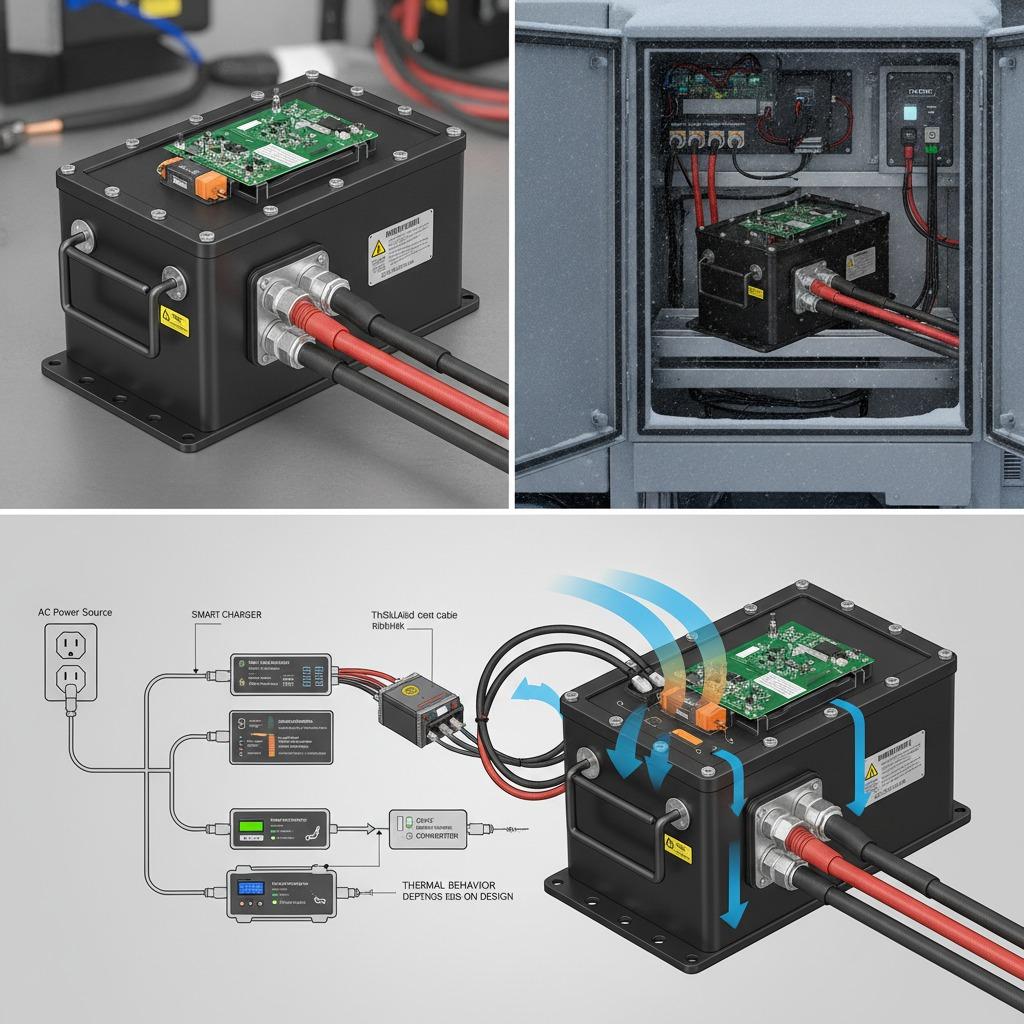
Why an enclosed lithium battery pack is usually chosen over a bare battery stack
An ithium battery pack is rarely bought for chemistry alone. Buyers are usually trying to solve a packaging problem, a wiring problem, or both. In industrial equipment, mobile power systems, and backup applications, a battery that arrives as a sealed enclosure with leads, handles, and accessory hardware can save a great deal of integration time. It also reduces the number of decisions a product team has to make at the point where deadlines are already uncomfortable.
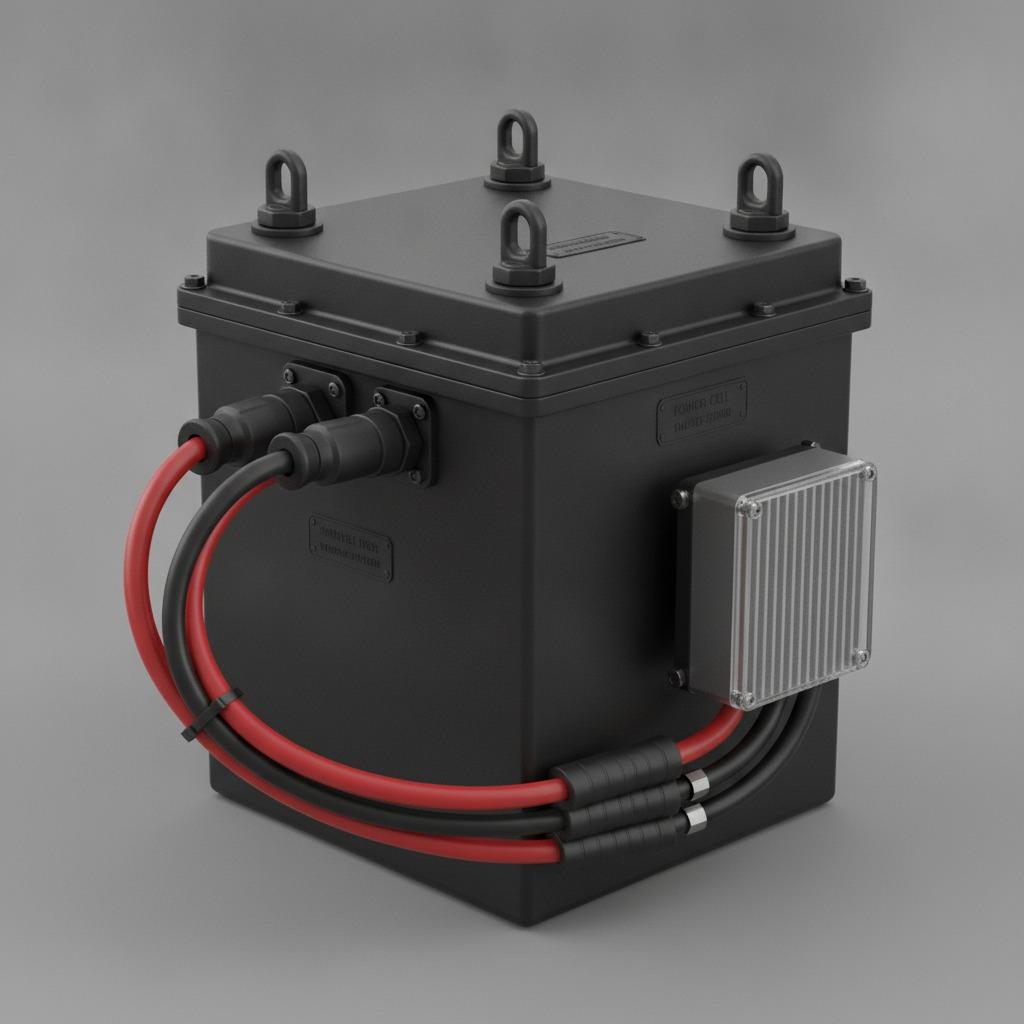
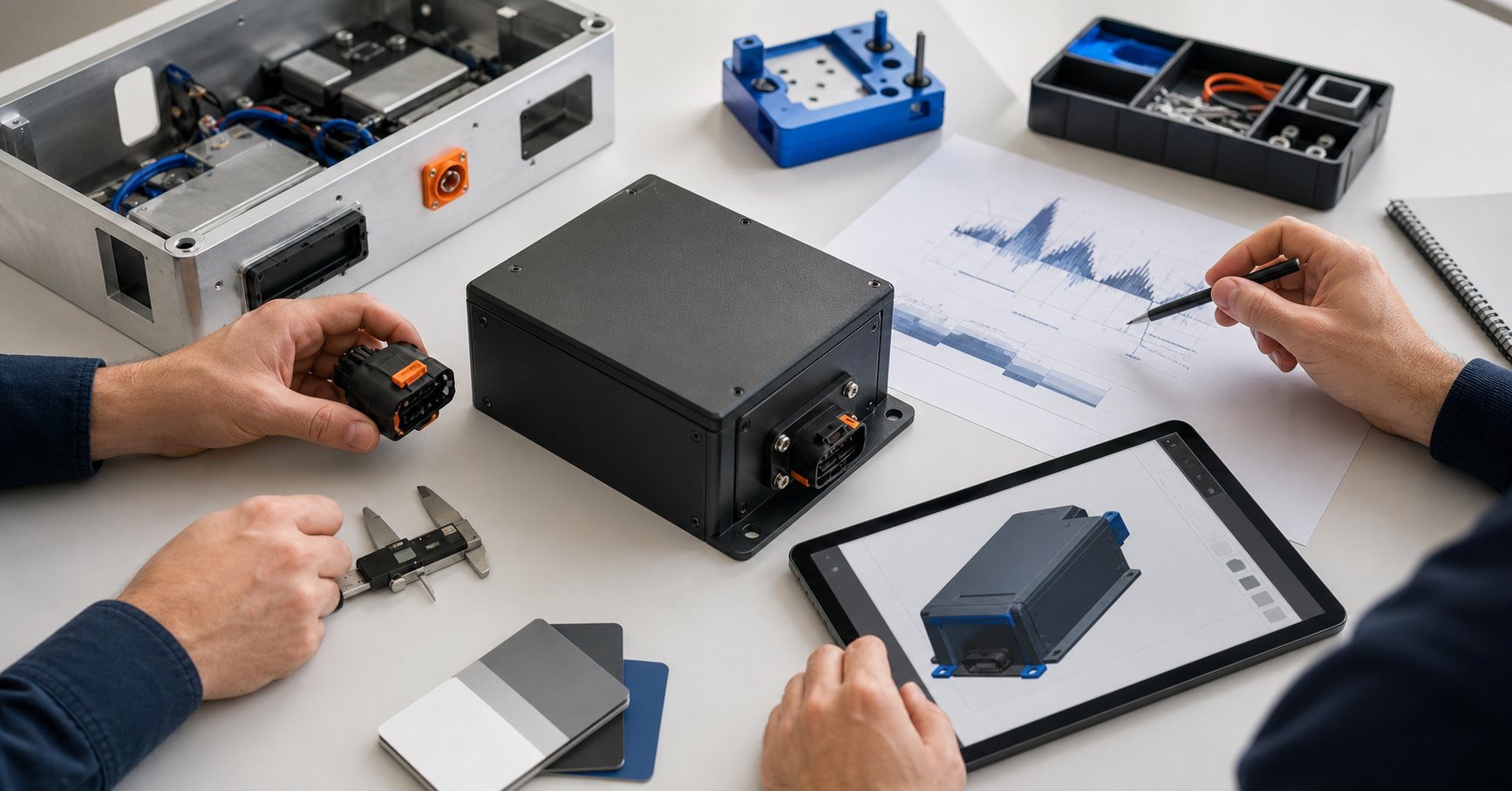
The product type shown here looks like an enclosed rechargeable battery pack or battery module assembly, with a matte black rectangular housing, bolted lid, heavy-gauge red and black power cables, and a small bundle of accessory components. That combination points to a system meant to be installed rather than improvised. In practical terms, the buyer is not just selecting stored energy. They are selecting how that energy will be packaged, connected, monitored, and maintained.
What this kind of battery pack is good for
The visible construction suggests a DC power source for portable or stationary equipment. That includes backup power, off-grid DC systems, test rigs, robotics, marine or vehicle auxiliary power, mobility equipment, and some industrial tools. The point is not that it fits only one market. The point is that these projects usually need a compact power unit with a defined enclosure and external wiring, not loose cells or an open-frame assembly.
From a sourcing perspective, that packaging matters. A sealed enclosure can protect internal components from casual handling damage, keep the install cleaner, and make mounting easier. The four top-mounted handles or lifting points are a small detail, but they are the sort of detail that matters when a maintenance team has to move a unit into a cabinet, a bay, or a vehicle compartment. Small things like that often decide whether a product is pleasant to live with or just technically functional.
Key features a buyer can actually verify from the assembly
It is important not to read more into the image than is there. We cannot confirm cell chemistry, nominal voltage, capacity, cycle life, or ingress protection from the photo alone. But several visible features are still useful for screening suppliers and comparing designs.
Enclosed format
The rigid black housing appears to be a sealed battery pack enclosure, likely intended for a more controlled industrial or mobile environment than a bare module would be. A bolted perimeter lid also suggests service access, though how serviceable it is in practice depends on the internal layout, which is not visible.
High-current output leads
Thick red and black cables indicate a system designed to carry meaningful current. That tells a sourcing manager something about the intended use case immediately, even if the exact rating is unknown. It also means cable routing, connector selection, and strain relief should be part of the review, not an afterthought.
Accessory bundle
The included small inline display or control module, coiled cables, and finned aluminum component suggest the pack may be part of a larger electrical system. It may need charging, monitoring, or power conversion support. A practical caution: do not assume the heatsinked module is a charger, BMS, or DC-DC converter without confirmation. In battery projects, assumptions are expensive.
How buyers should evaluate a custom lithium battery or industrial battery pack
If you are comparing a custom lithium battery against a standard catalog unit, the decision usually comes down to integration burden and risk. Catalog packs can be quicker to specify, but a custom or semi-custom assembly may fit better if your enclosure, connector, cable length, or mounting layout is unusual. The best option is the one that reduces rework later.
Ask suppliers for the information that actually affects the application: nominal voltage, usable capacity, peak and continuous current, charge interface, protection approach, operating temperature range, and maintenance access. If the supplier cannot explain how the pack is protected or monitored, that is a warning sign even if the housing looks robust.
Common mistakes in battery pack sourcing
One common mistake is treating the housing as proof of performance. A neat enclosure does not tell you anything about cell quality, thermal behavior, or protection logic. Another mistake is overlooking the accessory set. If the pack needs a specific charger, interface module, or cable set, that should be included in the purchasing discussion early, not discovered during installation.
Temperature is another area where projects drift into trouble. If the pack is intended for outdoor, vehicle, or unconditioned spaces, buyers should ask whether the design supports cold-weather operation. An ow temperature lithium battery application, for example, often needs more than just “lithium chemistry” on the spec sheet. It needs proper charging logic, realistic discharge expectations, and a supplier that understands the environment.
Quick buyer checklist before you request a quote
Before you send an RFQ, it helps to clarify four things: the load profile, the installation space, the charge method, and the service expectation. If the project needs a battery module that can be handled frequently, top-mounted lifting points may matter. If it must sit in a fixed cabinet, connector orientation and cable exit direction may matter more.
For teams evaluating an industrial lithium battery system, the real question is not “Does it store energy?” It is “Will it integrate cleanly, operate safely, and remain maintainable in our environment?” That is a better filter than shopping by appearance alone.
FAQ
Is this the same as a standard lithium battery?
Not necessarily. A battery pack is usually an assembled system, often with enclosure, wiring, and sometimes monitoring or power electronics. The cells inside are not visible here.
Can this be used for marine, RV, or backup power?
Potentially yes, but only if the voltage, current, thermal behavior, and protection scheme match the application. The enclosure style suggests those markets are plausible, but nothing visible confirms suitability.
What should I ask the supplier first?
Start with voltage, capacity, allowable current, protection method, operating temperature range, connector details, and whether the accessory electronics are charger-related, monitoring-related, or something else.
What to do next
If you are sourcing a lithium battery pack for an industrial or mobile system, use the enclosure, cables, and accessory layout as clues, not proof. They tell you the assembly is intended for real integration work. The next step is to request the missing electrical data and confirm how the pack will be charged, protected, and installed. That is usually where the difference between a workable build and a recurring support issue shows up.