

Golf carts are no longer limited to golf courses.
Today, they are widely used in resorts, industrial parks, airports, campuses, residential communities, and warehouse facilities. In many of these environments, vehicles operate continuously throughout the day, often with frequent starts, changing passenger loads, and repeated charging cycles.
Under these conditions, battery performance directly affects operational efficiency.
A weak battery system may still move the vehicle, but unstable voltage, reduced runtime, and overheating during continuous use quickly become operational problems.
This is why choosing a professional golf cart lithium battery manufacturer matters far more than simply comparing battery capacity.
At eDailyMag, we engineer lithium battery systems specifically for electric mobility applications, focusing on stable discharge behavior, extended runtime, efficient charging, and long-term reliability across real-world operating conditions.
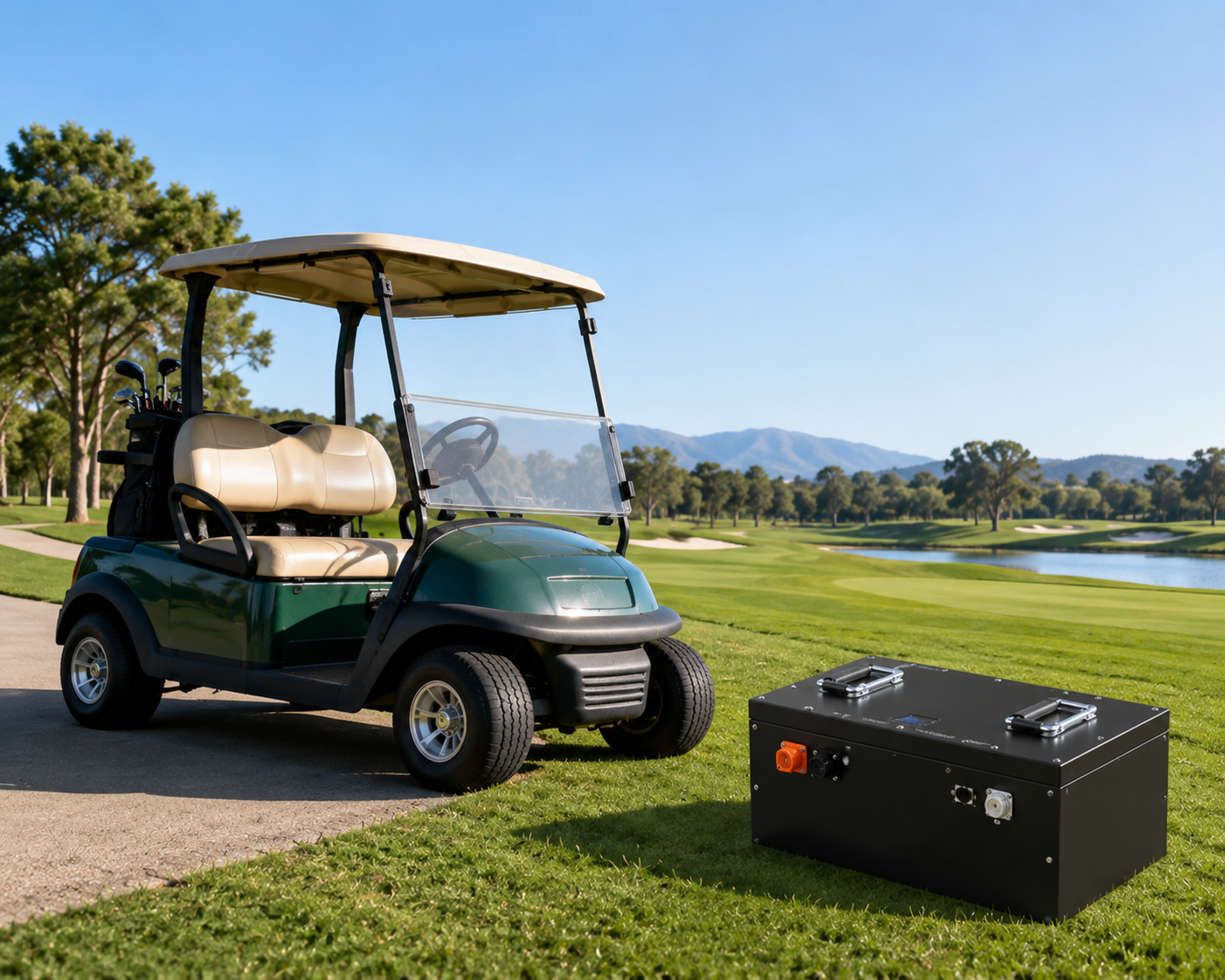
Why LiFePO4 Batteries Are Becoming the Standard for Golf Carts
Most modern electric golf carts are transitioning from lead-acid batteries to LiFePO4 (Lithium Iron Phosphate) systems.
The reason is simple: lithium systems provide more stable and efficient long-term operation.
Key advantages include:
- cycle life of 3000–6000 cycles
- stable voltage output during acceleration
- charging efficiency above 95%
- significantly lower maintenance requirements
- reduced overall battery weight
Typical golf cart battery configurations include:
- 36V systems for lighter utility use
- 48V systems for higher torque and longer range
- capacity options from 60Ah to 200Ah depending on vehicle design
Compared with traditional lead-acid systems, lithium batteries maintain stronger voltage consistency during climbing, acceleration, and multi-passenger operation.
Industry research across electric mobility sectors continues showing strong adoption of lithium battery systems because of their long lifecycle efficiency and operational stability in repeated-use environments.
Engineering Battery Systems for Real Golf Cart Usage Conditions
A professional golf cart lithium battery manufacturer must design battery systems based on how vehicles actually operate—not simply laboratory testing conditions.
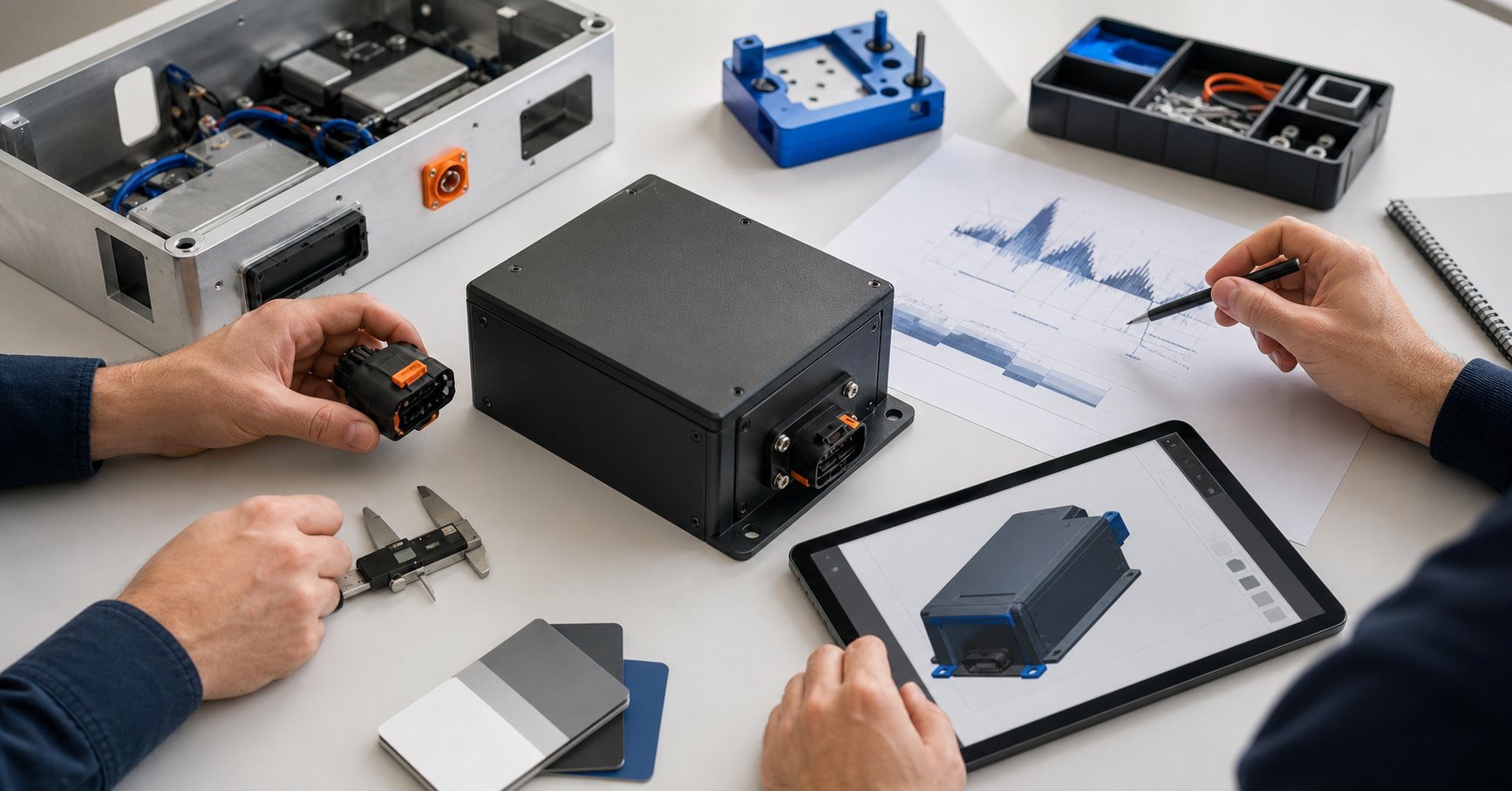
At eDailyMag, our engineering approach focuses on:
- Stable high-current discharge
Supporting acceleration and uphill driving without excessive voltage drop. - Thermal management under continuous operation
Preventing heat accumulation during long driving periods. - Fast charging compatibility
Reducing downtime between usage cycles. - BMS communication and protection
Monitoring temperature, current, and voltage in real time. - Structural vibration resistance
Protecting the battery system during rough terrain operation.
These details directly influence vehicle reliability and user experience over time.
Case Insight: Improving Fleet Runtime for Resort Transportation
A resort operator managing a fleet of electric golf carts faced increasing maintenance costs and inconsistent vehicle runtime.
The original lead-acid systems required:
- frequent charging interruptions
- regular maintenance
- battery replacement within short operating periods
After switching to a customized lithium battery system developed by our engineering team, the fleet achieved:
- significantly longer runtime per charge
- reduced charging frequency
- improved acceleration consistency
- lower maintenance requirements across the fleet
Engineering improvements included:
- optimized 48V LiFePO4 configuration
- advanced BMS control
- lower internal resistance cell matching
The result was not only improved vehicle performance, but also reduced operational cost.
Performance Comparison: Lead-Acid vs Lithium Golf Cart Battery Systems
| Parameter | Lead-Acid Battery | Lithium Golf Cart Battery |
|---|---|---|
| Cycle Life | 500–1000 cycles | 3000–6000 cycles |
| Charging Time | 6–8 hours | 2–4 hours |
| Weight | Heavy | 30–50% lighter |
| Voltage Stability | Drops during use | Stable output |
| Maintenance | Frequent | Minimal |
| Energy Efficiency | 70–80% | 90–96% |
| Runtime Consistency | Moderate | High |
These differences directly affect operational uptime, charging logistics, and long-term ownership cost.
Safety Design and Compliance for Electric Vehicle Battery Systems
Golf cart battery systems must operate safely across outdoor and high-frequency usage conditions.
Reliable lithium battery systems include:
- overcharge and over-discharge protection
- overcurrent and short-circuit protection
- temperature monitoring systems
- active balancing functions for cell consistency
Industrial and mobility battery systems must also meet transportation and electrical safety compliance requirements for global deployment.
Common certifications include:
- UN38.3
- CE certification
- MSDS documentation
These certifications support safe transport and reliable deployment in international markets.
Application Scenarios for Golf Cart Lithium Battery Systems
Lithium battery systems designed by a professional golf cart lithium battery manufacturer are widely used in:
- golf course transportation
- resort and hotel shuttle fleets
- industrial parks and factories
- airport and campus vehicles
- utility and maintenance vehicles
Each application requires different combinations of voltage, capacity, and runtime behavior—making customized battery engineering essential.
FAQs
Why are lithium batteries better for golf carts?
Because they provide longer cycle life, faster charging, lower weight, and more stable voltage output.
What voltage systems are most common for golf carts?
36V and 48V systems are the most widely used configurations.
Can lithium golf cart batteries be customized for OEM projects?
Yes. Voltage, capacity, connectors, BMS systems, and housing structures can all be customized.
Reliable Battery Systems for Modern Electric Mobility
As electric mobility applications continue expanding, stable battery performance becomes increasingly important for operational efficiency and user experience.
A professional golf cart lithium battery manufacturer ensures that battery systems deliver consistent runtime, efficient charging, and long-term reliability under real operating conditions.
At eDailyMag, we provide customized lithium battery solutions engineered for electric mobility, industrial transport, and OEM vehicle platforms.
Explore our battery solutions here:
https://www.edailymag.com/
Contact our engineering team for customized golf cart battery development:
https://www.edailymag.com/contact-us
Because in electric mobility, reliable power defines the driving experience.