

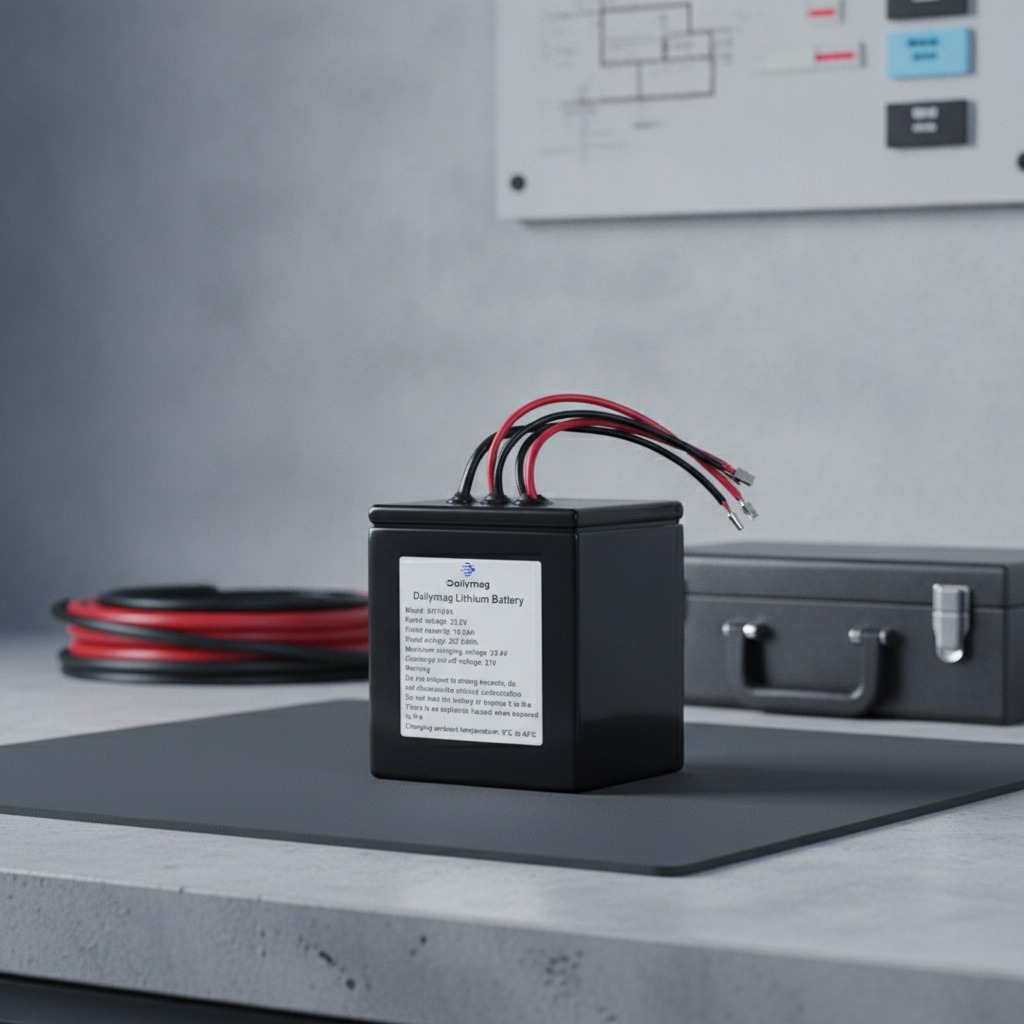
Why battery packs lithium matter in industrial equipment and portable power
When engineers compare battery packs lithium options, the real question is rarely just “how much energy does it hold?” It is whether the pack can deliver usable power, survive the duty cycle, and fit the electrical and mechanical constraints of the product. That is true for a parallel lithium battery pack inside OEM machinery, and it is just as true for a portable power station used in the field. The same basic expectation applies: stable DC energy, sensible packaging, and enough control electronics to keep the system safe enough for real use.
Buyers often get pulled toward headline numbers. But in manufacturing, the decision usually comes down to a narrower set of practical issues: current delivery, cell matching, enclosure design, protection strategy, serviceability, and how the pack behaves under repeated charge and discharge. A pack that looks impressive in a rendering can still be a poor fit if the wiring, thermal path, or control board is not suited to the application.
Two common product directions: modular battery packs and portable power stations
Not every lithium-based power product serves the same purpose. The parallel pack shown in industrial form is built around cell groups arranged to increase capacity and current capability while keeping the nominal voltage aligned with the chosen cell configuration. In practice, that makes it useful for OEM equipment, robotics, backup subsystems, and mobile power units where compact DC storage matters more than consumer styling.
The portable power station follows a different logic. It is a boxed, transportable energy unit with AC outlets, USB ports, DC outputs, a display, and integrated handles. That design is aimed at field work, drone charging, outdoor photography, and emergency backup power. The internal battery chemistry is not visible, so it should not be assumed, but the product architecture clearly prioritizes plug-and-play convenience.
Quick comparison
Industrial battery packs tend to emphasize integration, electrical compatibility, and internal assembly quality. Portable power stations emphasize user access, multi-port output, and mobility. One is usually embedded into a machine or system; the other is carried to the load.
What to look for in a Li-ion battery pack or lithium polymer battery pack
Whether you are sourcing a Li-ion battery pack for equipment or considering a lithium polymer battery pack for a compact device, the buyer’s checklist is more or less the same at the start. Ask how the pack is assembled, how cells are matched, what protective electronics are included, and how the enclosure supports insulation and service access. If the supplier cannot explain those basics clearly, that is a warning sign.
The visible industrial pack suggests a conventional assembly approach: cylindrical cells in rows, heavy-gauge red and black wiring, a green control board mounted on the side, and a black metal frame or bracket structure. That kind of build can be appropriate for OEM integration, but only if the pack is designed around the actual load profile. Scalable power sounds attractive, yet scale only helps if the wiring path, connector choice, and pack protection are all sized correctly.
Selection criteria that matter more than marketing language
Buyers should focus on a few concrete criteria. First, electrical fit: nominal voltage, expected current draw, and peak load behavior. Second, mechanical fit: enclosure space, mounting points, vibration exposure, and connector placement. Third, operating behavior: recharge strategy, state-of-charge monitoring, and how the pack responds to heat or imbalance.
For portable power stations, add another layer. The front panel layout matters because users need to read status quickly and connect devices without confusion. The image shows an LCD display, battery indicators, an AC outlet, and multiple USB-style ports, which is the right direction for field use. Cooling vents also matter more than many buyers expect. A compact enclosure with too little airflow can become a limitation long before the battery itself reaches its theoretical limit.
Common mistakes buyers make
One common mistake is treating every lithium pack as interchangeable. It is not. A product designed for a drone, for example, has different discharge behavior and packaging needs than a module inside industrial equipment. Another mistake is assuming that a visible “98% SOC” graphic or similar artwork proves performance. It does not; it is promotional imagery, not a test report.
It is also easy to overlook service and integration details. Can the pack be replaced without dismantling half the machine? Are the terminals protected? Is there a clear interface for the control board? Small questions like these often decide whether a battery pack is production-friendly or merely presentable in a demo.
How to evaluate a lithium battery pack supplier
When you speak with a lithium battery pack supplier, push beyond the catalog page. Ask what cell format is used, how matching is performed, what protection and monitoring functions are built in, and whether the assembly process is intended for repeatable OEM production. You do not need every proprietary detail on the first call, but you do need enough clarity to judge whether the supplier can support your application over time.
For industrial buyers, it helps to request drawings, interface details, and a realistic discussion of thermal and electrical boundaries. For portable products, ask about output configuration, charging inputs, display behavior, and what accessories are included versus shown only for illustration. A cautious buyer saves time by separating what is visible from what is actually specified.
Practical takeaway
If you are evaluating battery packs lithium for an OEM system or a portable energy product, start with the load, the enclosure, and the user workflow. The chemistry matters, of course, but the quality of the pack is usually revealed by how well it is assembled and how honestly it is specified.
Before moving forward, make a short list of requirements: voltage, current, physical limits, safety expectations, and service conditions. Then ask the supplier to map their design to those requirements. That is the fastest way to separate a workable pack from a hopeful one.
FAQ
Are all battery packs lithium suitable for the same use?
No. A battery pack for industrial equipment, a portable power station, and a compact device pack can have very different structures, protection needs, and output behavior.
Is a higher-capacity pack always better?
Not necessarily. Capacity only helps if the pack fits the system voltage, current, space, and thermal limits.
What is the safest way to compare suppliers?
Compare assembly quality, protection design, documentation, and whether the supplier can explain the pack’s intended operating envelope without vague claims.
Next step
If you are sourcing a battery pack for OEM integration or field power use, start by defining the electrical load and the physical constraints. Then ask for a design that matches those conditions instead of relying on a generic model. That single step will save more engineering time than a polished brochure ever will.