

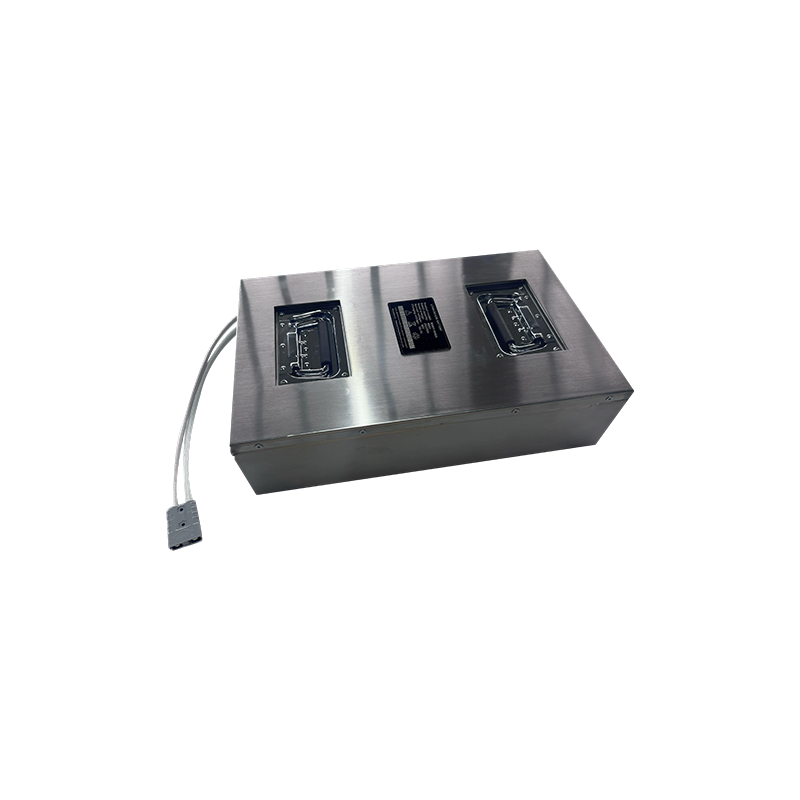
OEM Lithium Battery Pack: From Standard Modules to Fully Integrated Power Systems
In many product development cycles, battery selection starts late—and often too simply.
Engineers finalize the device, define voltage requirements, calculate approximate capacity, and then begin searching for a battery pack that “fits.” At first glance, multiple standard options appear suitable.
But once the product enters continuous operation—long runtime cycles, dynamic loads, varying environments—the limitations of generic battery packs become clear. Output stability, thermal behavior, and integration details begin to influence the entire system performance.
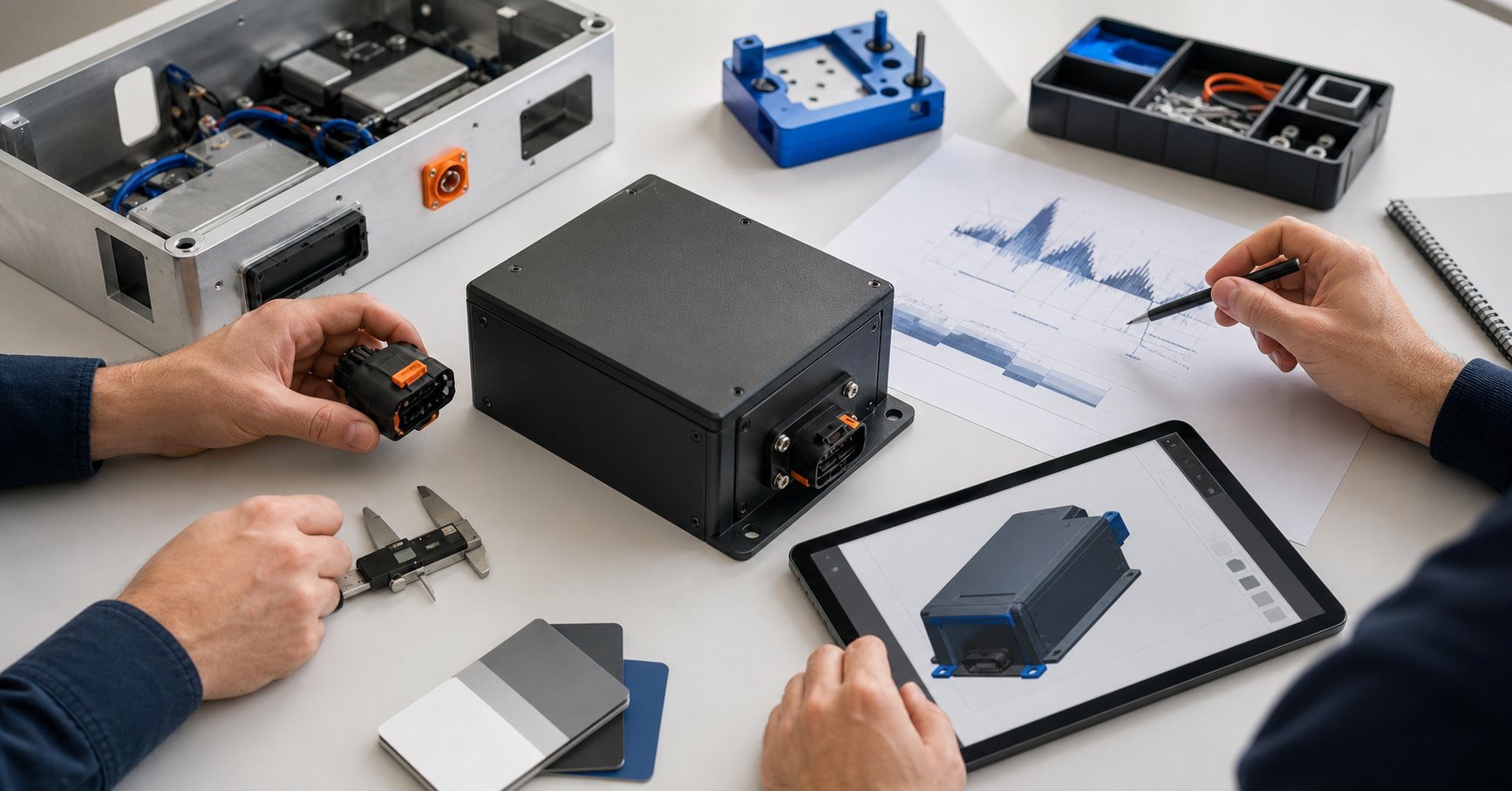
At eDailyMag, OEM lithium battery packs are not treated as interchangeable components. We approach them as integrated subsystems, engineered alongside the product itself to ensure stable operation, predictable lifecycle, and scalable production.
Cell Chemistry and Structural Design: Building the Core of an OEM Battery Pack
Before integration, the internal structure of an OEM lithium battery pack must be clearly defined. This includes both material selection and electrical architecture.
Typical design elements include:
- Cell chemistry selection (NMC, LiFePO4, or hybrid configurations)
- Series-parallel arrangement (e.g., 3S2P, 4S4P, 8S2P depending on voltage/current needs)
- Current path design using nickel strips or copper busbars
- Thermal spacing and insulation layers to manage internal heat
For many industrial applications, LiFePO4 is preferred due to:
- cycle life of 2000–4000 cycles
- stable discharge curve around 3.2V per cell
- higher thermal stability compared to conventional lithium-ion
Industry data from the International Energy Agency highlights the increasing adoption of lithium battery systems in industrial and energy applications due to improved lifecycle and safety characteristics.
https://www.iea.org/reports/global-ev-outlook
However, selecting the right cells is only the first step. The real performance comes from how the pack is engineered.
Engineering the Battery Around the Device, Not the Other Way Around
An effective OEM lithium battery pack is designed based on how the device actually operates—not just its nominal specifications.
At eDailyMag, the engineering process typically involves:
- Real load profiling
Measuring peak current, transient spikes, and continuous draw. - Voltage range alignment
Ensuring the battery operates within the device’s optimal working window. - BMS customization
Setting protection thresholds based on actual usage patterns. - Thermal layout optimization
Structuring internal airflow and heat dissipation paths. - Connector and housing integration
Matching the battery to the device’s mechanical design.
This system-level approach ensures that the battery contributes to performance stability rather than becoming a limiting factor.
Case Insight: Enhancing Output Stability in Portable Equipment
A client developing handheld industrial tools required a compact battery pack capable of delivering stable output under intermittent high-load conditions.
Their initial design used a standard lithium battery pack. While it met voltage and capacity requirements, the device showed noticeable performance fluctuation during peak operation.
Our engineering team redesigned the battery pack with:
- increased parallel cell configuration to improve current capability
- optimized internal resistance through improved cell matching
- tailored BMS settings for fast response under load changes
After implementation, the device achieved:
- more stable voltage output
- improved runtime consistency
- enhanced user experience during continuous operation
This illustrates how OEM battery design directly influences device-level performance.
Performance Comparison: Standard Battery vs OEM Lithium Battery Pack
| Parameter | Standard Battery Pack | OEM Lithium Battery Pack |
|---|---|---|
| Cell matching accuracy | ±5–10% | ≤±2% |
| Voltage stability | Moderate | High |
| Cycle life | 500–1000 cycles | 1500–4000 cycles |
| Thermal performance | Basic | Engineered |
| Discharge efficiency | 85–90% | 92–96% |
| Integration compatibility | Limited | Fully customized |
These differences translate into better product reliability, lower maintenance costs, and stronger market performance.
Safety Engineering and Certification for OEM Applications
For OEM products, battery safety is not only a technical requirement—it is a compliance necessity.
A professionally designed lithium battery pack includes:
- overcharge and over-discharge protection
- short-circuit and overcurrent protection
- temperature monitoring and control systems
- balanced charging circuits
The International Electrotechnical Commission defines safety standards widely adopted across global markets.
https://www.iec.ch
Typical certifications for OEM battery packs include:
- UN38.3 for transport safety
- CE / FCC compliance
- MSDS documentation
These certifications ensure that battery systems can be safely integrated and distributed worldwide.
Application Scenarios: Supporting Different Equipment Types
OEM lithium battery packs are designed to support a wide range of equipment, each with specific operational demands.
Common applications include:
- industrial automation equipment requiring continuous stable power
- portable tools with high discharge peaks
- outdoor devices exposed to temperature variation
- energy storage systems requiring long lifecycle performance
- communication equipment requiring reliable backup power
In each case, the battery must be optimized for both electrical performance and environmental conditions.
Frequently Asked Questions
What makes an OEM lithium battery pack different from a standard battery?
An OEM battery pack is engineered specifically for a device, ensuring better integration, performance, and reliability.
How long does OEM battery development take?
Typically 2–4 weeks depending on complexity and testing requirements.
Can OEM battery packs be upgraded later?
Yes, designs can be modified to improve capacity, output, or compatibility in future product versions.
Integrated Battery Engineering for Reliable OEM Products
In modern equipment design, power systems must be stable, efficient, and adaptable. A well-designed OEM lithium battery pack ensures that devices perform consistently across different conditions and usage cycles.
At eDailyMag, we provide customized battery solutions based on real engineering requirements—combining material selection, system integration, and controlled manufacturing processes.
To explore our OEM battery solutions and capabilities, visit our homepage:
https://www.edailymag.com/
If you are developing a new product or optimizing an existing system, our team can help design a battery solution tailored to your exact needs:
https://www.edailymag.com/contact-us
Because in OEM applications, the difference is not just in the battery—it is in how well it is engineered to fit the system.