

What buyers usually mean by a low temperature lithium battery
A low temperature lithium battery is not just a battery that happens to live in a cold warehouse. Buyers usually mean a pack that can keep working, and preferably charging safely, when ambient temperatures drop below the comfort zone of standard lithium systems. That matters for anyone designing equipment that has to start outdoors, sit in transport trailers, or operate in winter conditions. The wrong cell choice can mean voltage sag, reduced usable capacity, slow charging, or a pack that simply refuses to perform when the job starts.
For engineers and sourcing teams, the real question is less “Can it run in the cold?” and more “How much performance is lost, what protection is built in, and what tradeoffs are acceptable in my application?” That is where pack architecture, cell format, and control electronics start to matter.
Why cold performance changes the buying decision
Cold temperatures slow the electrochemical reactions inside lithium cells. In practical terms, internal resistance rises, available capacity falls, and charging becomes more delicate. In some systems, the battery management logic will limit charge or discharge current to protect the cells. That is a sensible safeguard, but it can also surprise buyers who expected full output from a standard industrial lithium battery in January.
This is why cold-weather projects often move from a generic battery battery pack specification to a more deliberate custom lithium battery conversation. The pack may need different cell chemistry, a different enclosure strategy, or added electronics for monitoring and protection. If the battery is part of mobility equipment, robotics, or backup power, the cold-side behavior can be as important as nominal capacity.
What a compact multi-cell module tells you about pack design
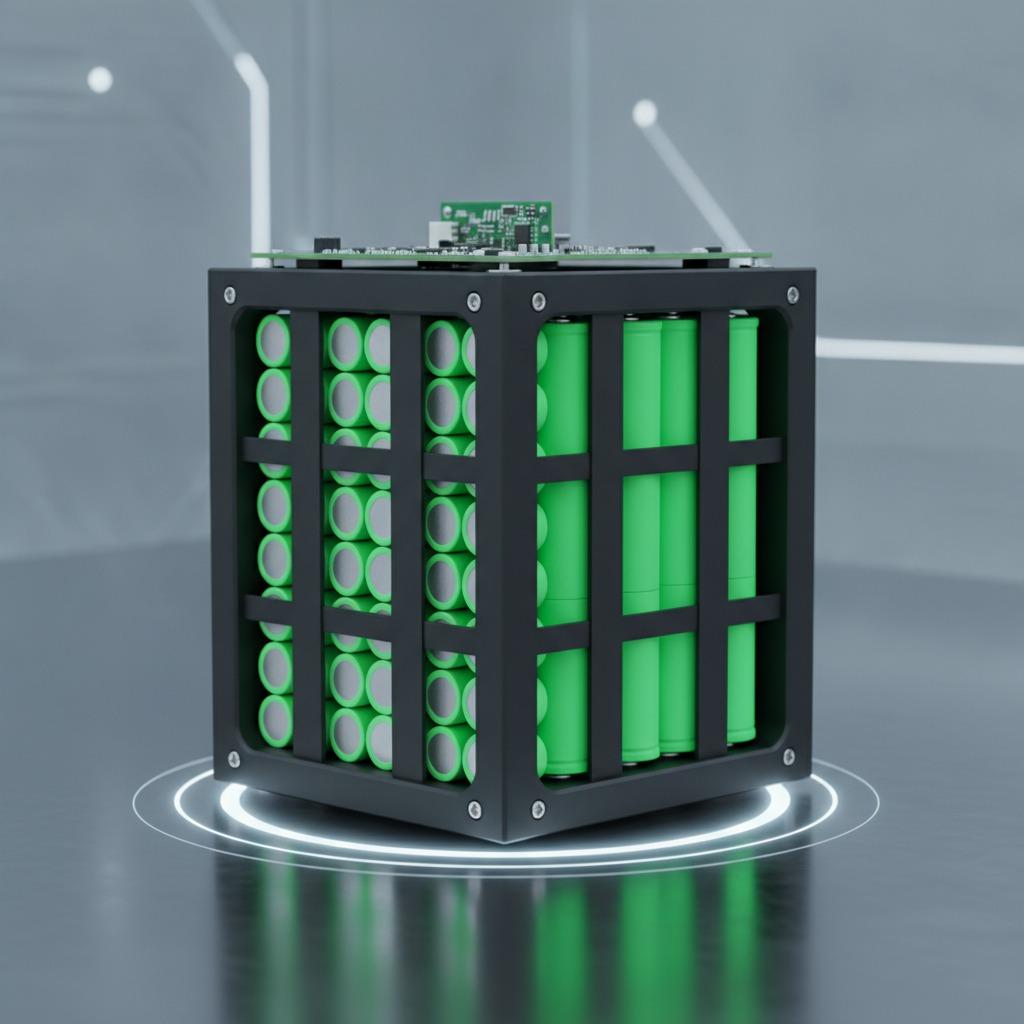
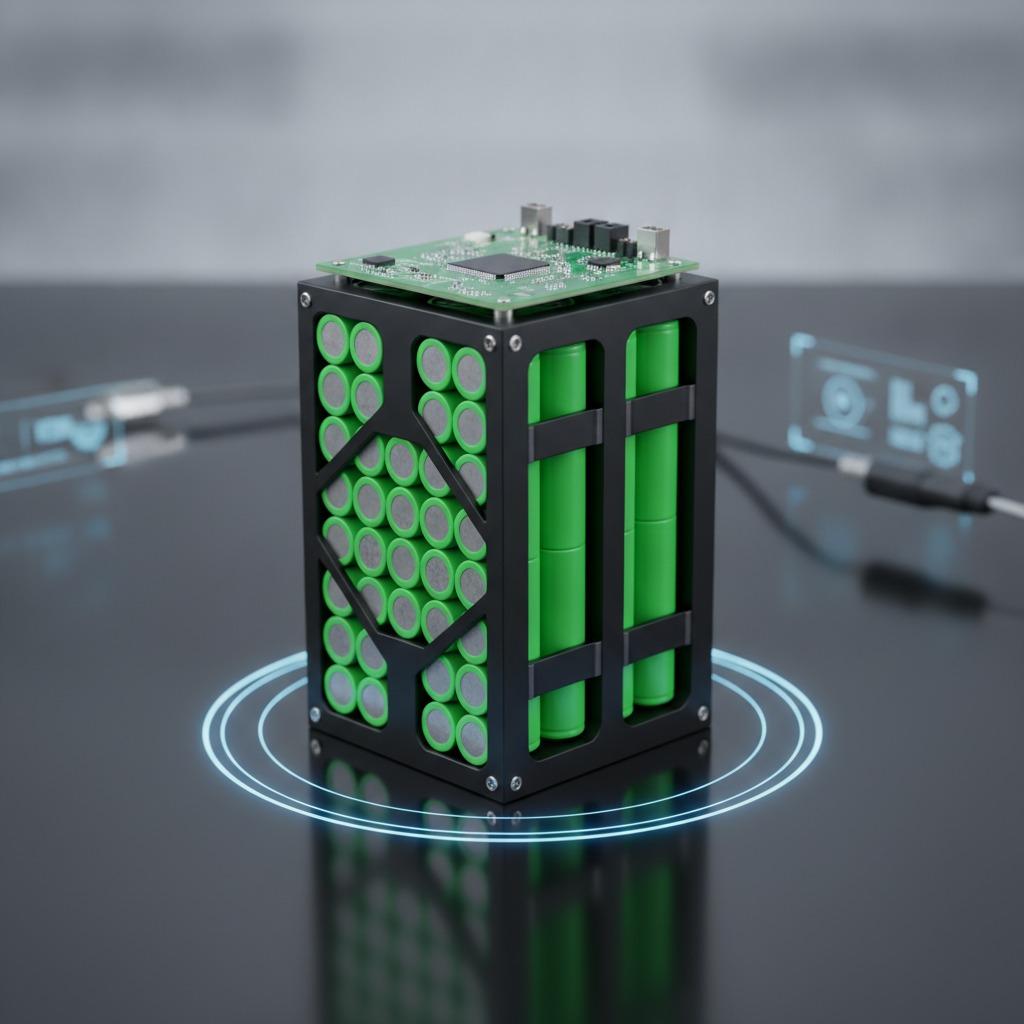
The battery module shown here is a rectangular assembly built from many cylindrical cells in a tight grid, with a black structural frame and a green top-mounted PCB. That layout suggests a serious emphasis on compactness and mechanical retention. In real production work, this kind of geometry is often chosen when the designer needs high energy density in a repeatable block that can be integrated into a larger system.
The visible control board is also worth noting. While the exact functions are not confirmed, a board in that position usually points to battery monitoring, protection, or control tasks. Buyers should not assume more than they can verify. A neat enclosure and a visible PCB do not automatically mean advanced low-temperature protection. Sometimes the cold-weather capability comes from chemistry choice; sometimes it comes from the system around the pack.
Common ways low-temperature packs differ from standard packs
Cell selection
Not every lithium chemistry behaves the same in the cold. Some chemistries are more forgiving at low temperatures, while others are preferred for stability or energy density. Since the exact chemistry is not visible here, it is better to treat this as a design variable rather than an assumption.
Pack electronics
A true industrial lithium battery for cold service usually needs more than a basic protection circuit. Teams may ask for temperature sensing, charge control, discharge limits, and clear communication with the host equipment. If those details are missing from the discussion, that is a warning sign, not a minor omission.
Mechanical construction
The pack’s dense cell arrangement and rigid frame point to an assembly method meant to keep cells aligned and protected. That matters in cold environments because vibration, contraction, and connector stress all become more problematic when the pack is cycling through temperature swings.
Selection criteria that matter more than the brochure
When comparing options, buyers should start with operating temperature range, then ask how performance changes at the edges of that range. A vendor can quote nominal capacity all day long, but if the pack will be used outdoors, the usable numbers at low temperature are what matter.
Next, check whether the pack is a finished product or a custom battery pack assembly intended for integration. An OEM may need a module like this one, while another project may need a fully enclosed, field-ready unit. The difference is not cosmetic. It affects wiring, cooling, service access, and certification work downstream.
Finally, look at the application itself. Portable power systems tolerate some performance loss differently than robotics or industrial equipment. A robot that must start on command in a cold plant yard has less forgiveness than a storage pack sitting on standby.
Buyer cautions that save time later
One common mistake is asking for “low temperature” performance without defining the actual duty cycle. Another is assuming charging behavior will match discharge behavior. They are not the same problem. A pack may deliver energy in the cold but still require controlled charging above a certain threshold.
It is also easy to overlook the system side. Even a well-built module can underperform if the enclosure, wiring, or host device creates a thermal bottleneck. In other words, the pack is only part of the answer.
Questions to ask before specifying a pack
What temperature range must the battery support in storage, discharge, and charging? Is the pack intended as a lithium battery pack inside a larger enclosure, or as a standalone unit? Does the application need a custom lithium battery layout for size reasons, or can a standard format work? And if the pack will live in the field, how will the design handle condensation, vibration, and service access?
Those questions sound basic, but they are where projects are won or lost.
Practical next step for sourcing teams
If you are evaluating a low temperature lithium battery for an OEM build or industrial retrofit, start by defining the cold-side operating window and the acceptable loss in output. Then ask the supplier to map that requirement to cell chemistry, pack electronics, and mechanical design. A compact module like the one described here can be a good starting point, but only if its internal architecture matches the real environment.
For buyers, the best next step is a short technical conversation, not a generic quote request. That usually gets you to the right battery module faster, and with fewer surprises once the weather turns.