

Industrial B2B lead generation strategies are only useful if they match how buyers actually source
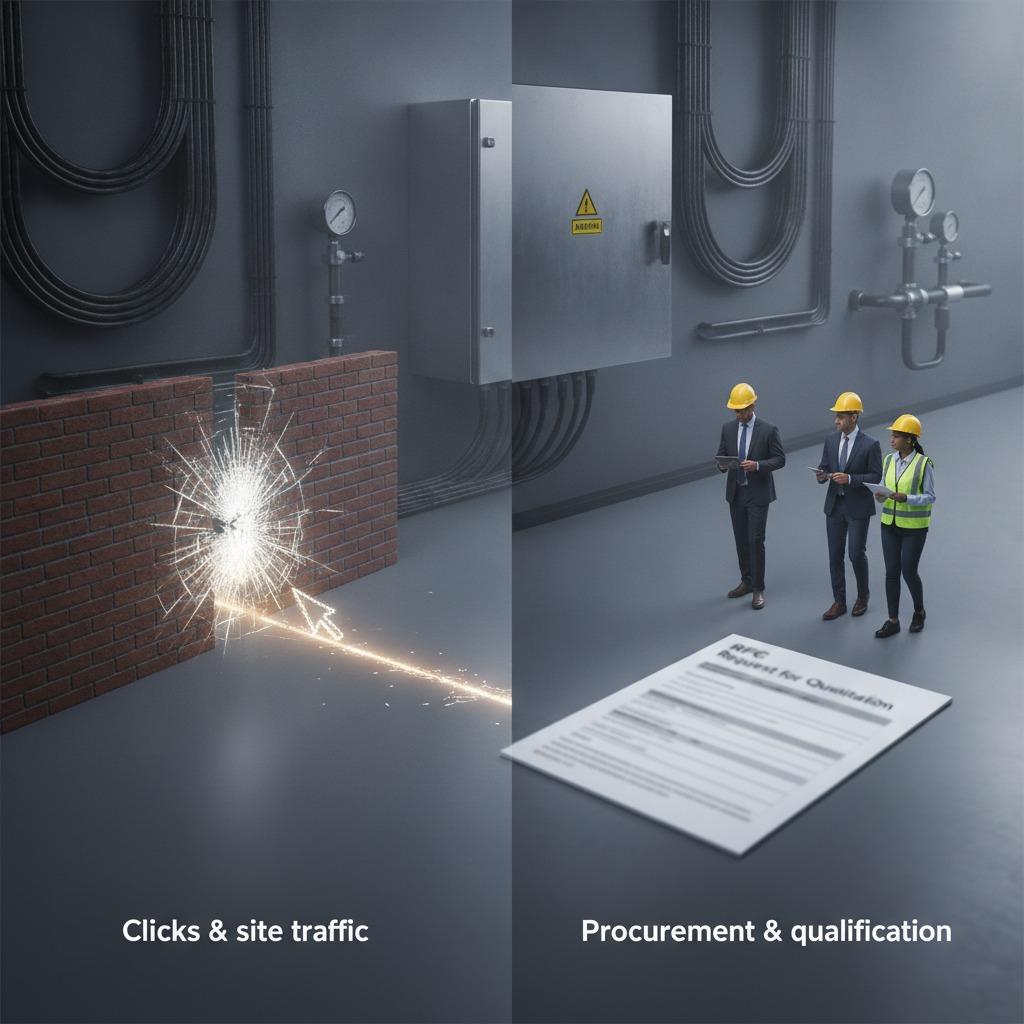
Industrial B2B lead generation strategies tend to fail for one simple reason: they are often built around clicks, not procurement behavior. Engineers, sourcing managers, and product teams do not usually move from first touch to quote request in one smooth line. They compare suppliers, check whether a manufacturer looks credible, and look for signs that the offering fits a real production or equipment need. If your market includes things like an industrial electrical power module or battery pack assembly inside a larger machine compartment, that buying process becomes even more cautious. A buyer is not just purchasing a part; they are weighing safety, integration risk, and long-term support.

That matters because industrial demand is rarely casual. A warehouse vehicle, electric utility cart, floor-cleaning machine, or other battery-powered industrial machine can stop working if the power unit is wrong, poorly documented, or difficult to service. So the right lead generation approach is less about attracting everyone and more about attracting the right technical audience, then giving them enough confidence to take the next step.
What industrial buyers want before they make contact
In this sector, a lead is usually earned by clarity. Buyers want to know what a product is, where it fits, and whether the supplier looks capable of repeatable production. A sealed metal enclosure, heavy-gauge power cables, warning labels, and secure mounting all communicate something, even before a data sheet appears. Those details suggest robust assembly and a design that expects real industrial use. They do not prove performance, of course, but they do help frame the conversation.
For marketing and sales teams, the lesson is straightforward: publish enough technical context to reduce friction. If you are using free enterprise market whitepapers, make sure they are not generic trend pieces. A useful whitepaper should help a buyer compare battery pack assembly, enclosure fabrication, cable routing, and service access. It should answer the questions procurement teams ask quietly: Can this be integrated into our machine? Is the supply chain stable? What do we need to verify before RFQ?
A practical reference for channel choices
Not every channel works equally well in industrial markets. The best mix usually combines technical content, direct supplier pages, and a few carefully chosen industry publications. Magazines for procurement managers can still matter because they reach the people who compare vendors and manage risk, not just the engineers who evaluate specs. But the content has to be specific. A general brand story will not outperform a clear article on power module assembly, electrical safety considerations, or how to source from reliable B2B manufacturers direct supply.
What tends to work
Supplier pages that show application context, downloadable technical summaries, and plain-language explanations of product architecture. Product photos help when they reveal useful construction details: metal housings, connectors, tray mounting, and cable management. Those visual cues are often the first proof that the supplier understands industrial packaging, not just electronics in the abstract.
What tends to waste time
Vague landing pages, overly broad audience targeting, and gated assets that hide basic information. If a buyer has to trade an email address just to learn whether a unit is meant for mobile equipment or stationary use, many will leave before sales ever sees them.
Selection criteria that turn attention into qualified leads
The strongest industrial B2B lead generation strategies usually filter for fit instead of volume. For this kind of equipment, useful qualification criteria include application type, integration complexity, expected operating environment, maintenance access, and whether the buyer is seeking an OEM partner or a replacement supply source. Those are practical questions. They also separate casual traffic from genuine project activity.
A small caution here: do not overstate what a product image can prove. If a battery pack or power module is shown inside a machine compartment, that tells you it is likely designed for a demanding application, but it does not reveal chemistry, voltage, capacity, or certification status. Buyers know that. They will notice if you pretend otherwise.
Common mistakes in industrial lead generation
The first mistake is treating all industrial buyers the same. An engineer wants integration detail; procurement wants supplier reliability and commercial structure; product teams want fit with a broader platform. The second mistake is hiding too much. The third is publishing so much content that none of it feels grounded in an actual product or process.
Another common issue is relying on broad traffic instead of building a path to sales-ready inquiry. In industrial markets, a smaller number of qualified leads is often more valuable than a large list of weak contacts. That is especially true when the product is a critical power component, where replacement risk and downtime costs are real.
Buyer advice for teams sourcing industrial power assemblies
If your team is evaluating suppliers, ask for application fit first, then technical documentation, then service expectations. Compare suppliers on how clearly they explain enclosure construction, cabling, mounting, and interface design. Look for evidence that they can support direct supply relationships and stable production, not just one-off transactions. And if the vendor claims broad capability, ask for the specifics that matter to your equipment type. Good suppliers answer cleanly. Weak ones drift into marketing language.
For marketers, that is the real opportunity: build content that helps a buyer do their job before the first sales call. When the article, whitepaper, or product page reflects how industrial sourcing actually works, lead quality improves naturally.
FAQ
Do industrial B2B leads need technical content?
Usually, yes. In complex manufacturing and equipment categories, technical content is often what separates curiosity from serious inquiry.
Are whitepapers still useful?
They are, if they are specific. A generic download has limited value, but a focused guide on product selection or supplier comparison can still perform well.
Should procurement audiences and engineering audiences get the same message?
Not really. They may visit the same site, but they care about different proof points. One page rarely satisfies both.
If you are refining your own industrial B2B lead generation strategies, start with the product reality on the shop floor or in the machine compartment, then build the content around that. That is usually where the good leads begin.