

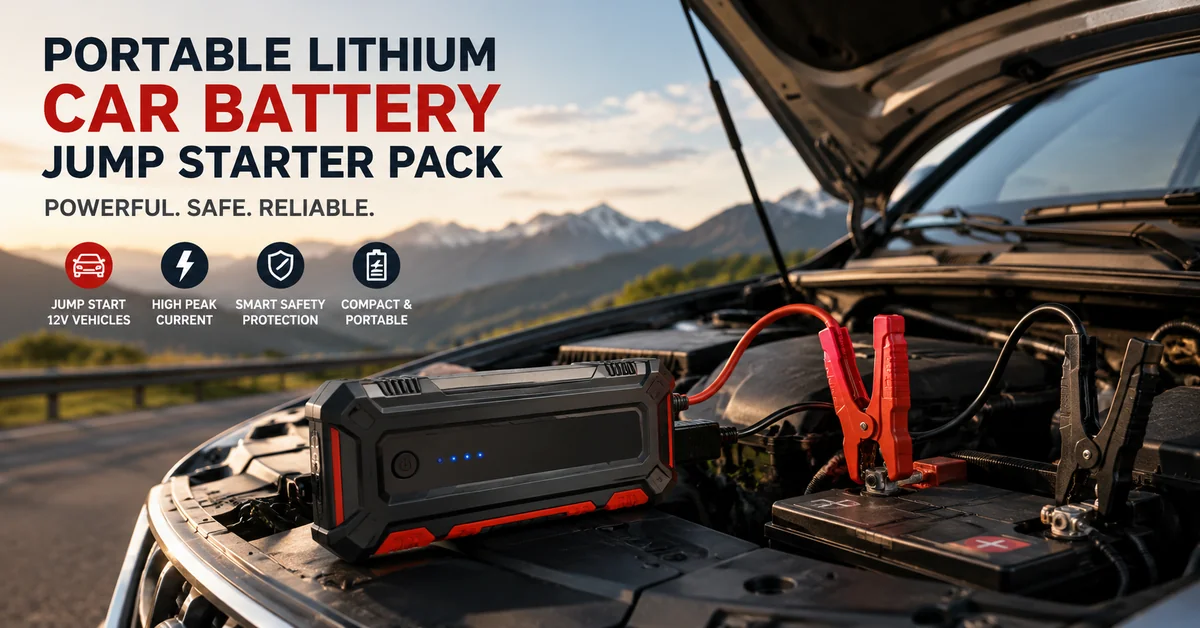
A portable lithium car battery jump starter pack is designed to provide emergency starting power when a vehicle battery is weak, discharged, or unable to crank the engine. For drivers, it is a practical roadside tool. For B2B buyers, auto accessory brands, distributors, repair shops, and OEM equipment companies, it is also a high-demand portable lithium battery product with strict requirements for safety, current output, reliability, and user experience.
Unlike a normal power bank, a car battery jump starter pack must deliver high current in a short time. It must also protect users and vehicles from reverse polarity, short circuit, overcurrent, overheating, over-discharge, and poor clamp contact. This makes battery design, BMS protection, cable quality, connector strength, and testing especially important.
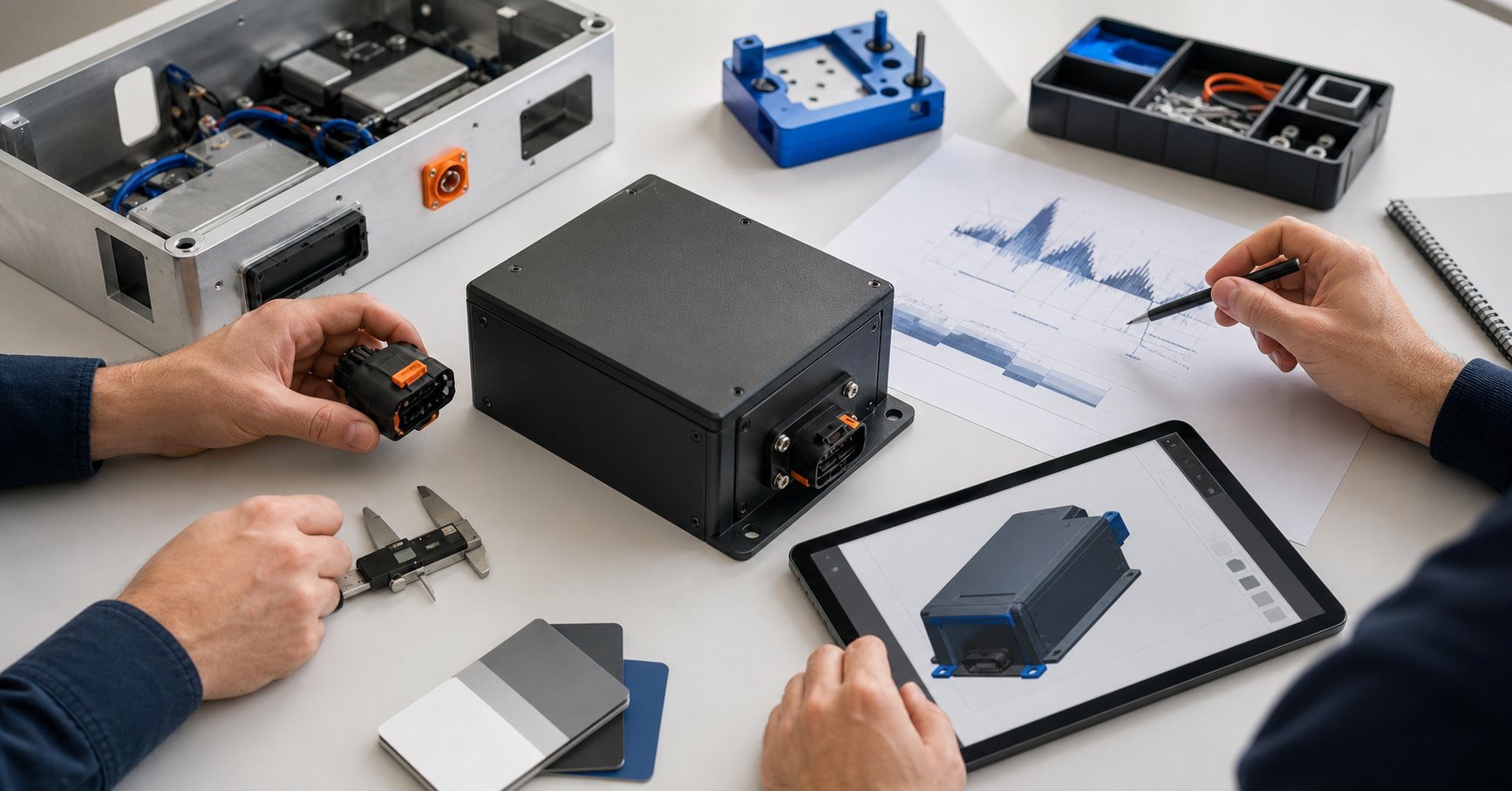
eDailyMag focuses on customized lithium battery pack solutions for portable power, industrial equipment, field devices, and OEM applications. Buyers can review related lithium battery pack options on the Products page and learn more about design, sampling, quality management, packaging, and logistics support through the Services page.
Quick Answer: What Is a Portable Lithium Car Battery Jump Starter Pack?
A portable lithium car battery jump starter pack is a rechargeable lithium battery device that helps start a vehicle by delivering temporary high current to the vehicle’s 12V battery system. It is commonly used for cars, SUVs, motorcycles, small trucks, vans, boats, and emergency roadside kits.
For OEM buyers, the most important specifications are not only capacity. A reliable jump starter pack should be evaluated by:
- Peak current
- Starting current
- Battery voltage
- Lithium battery chemistry
- BMS protection
- Smart clamp safety
- Cable thickness
- Low-temperature performance
- Recharge cycle life
- USB / DC output options
- Housing durability
- Quality testing before shipment
A portable jump starter pack should be designed as an automotive emergency power product, not just as a large lithium power bank.
Who Needs This Product?
The keyword “portable lithium car battery jump starter pack” usually has strong commercial intent. Searchers are often looking for a product to buy, source, customize, distribute, or add to an automotive accessory catalog.
Typical buyer groups include:
| Buyer Type | Main Need |
|---|---|
| Auto accessory distributors | Reliable jump starter products for retail or wholesale |
| Automotive brands | Private-label emergency power products |
| Repair shops | Tools for battery failure and vehicle service |
| Roadside assistance suppliers | Portable emergency starting equipment |
| E-commerce sellers | Compact, high-demand car emergency products |
| Fleet operators | Backup starting tools for multiple vehicles |
| Outdoor and RV suppliers | Emergency power for travel vehicles |
| OEM buyers | Custom battery pack design and branding support |
For these buyers, product safety and consistency matter as much as appearance and price.
Common Applications
1. Emergency Car Starting
The main use is starting a vehicle when the battery cannot provide enough cranking power. This can happen after long parking, cold weather, battery aging, lights left on, or electrical drain.
A jump starter pack allows the user to start the vehicle without waiting for another car or roadside support.
2. Auto Repair and Maintenance
Repair shops use lithium jump starter packs when testing, moving, or starting vehicles with weak batteries. A compact portable unit is easier to use than a large traditional booster.
3. Outdoor Travel and RV Use
Drivers traveling in remote areas often carry a jump starter pack as emergency backup. Some models also provide USB output, LED light, or DC output for small electronics.
4. Fleet and Commercial Vehicles
Fleet operators may use jump starter packs for service vehicles, delivery vans, maintenance teams, and small commercial vehicles. For this group, durability and cycle life are important.
5. OEM Automotive Accessory Projects
Brands may want a custom lithium jump starter pack with specific peak current, housing, display, logo, package, clamp design, USB-C output, or bundled car emergency kit.
Key Specifications Buyers Should Check
Before sourcing or customizing a portable lithium car battery jump starter pack, buyers should confirm these technical details.
| Specification | Why It Matters |
| Battery voltage | Must match the target vehicle system, usually 12V |
| Peak current | Supports short high-current starting demand |
| Starting current | More relevant for real cranking performance |
| Battery capacity | Affects backup energy and extra device charging |
| Battery chemistry | Influences safety, weight, cycle life, and discharge ability |
| BMS protection | Protects the pack during charging and discharging |
| Smart clamp protection | Helps prevent reverse polarity, short circuit, and wrong connection |
| Cable gauge | Must support high current safely |
| Operating temperature | Important for cold-weather starting |
| Charging input | Affects recharge convenience |
| USB / DC output | Adds power bank function for phones and small devices |
| Housing material | Affects drop resistance, heat resistance, and outdoor use |
| Packaging | Important for retail, wholesale, and logistics |
For B2B buyers, these specifications should be confirmed before sample development, quotation, and mass production.
Peak Current vs Starting Current: What Buyers Should Know
Many jump starter products promote peak current, but buyers should not rely on peak current alone.
Peak Current
Peak current is the maximum short-term current the pack may deliver under specific conditions. It is often used for marketing, but it does not always reflect real-world starting performance.
Starting Current
Starting current is more practical because it relates to the actual current available during the cranking process.
Why This Matters
If the jump starter pack has a high advertised peak current but weak cells, poor cables, or unstable protection design, it may fail to start the vehicle under real conditions.
B2B buyers should ask suppliers for load testing, cranking simulation, temperature testing, and real application verification.
Lithium Jump Starter Pack vs Traditional Lead-Acid Booster
| Item | Lithium Jump Starter Pack | Lead-Acid Booster |
| Weight | Lighter and easier to carry | Heavy |
| Size | Compact | Large |
| Recharge speed | Usually faster | Slower |
| Maintenance | Lower | Higher |
| Portability | Strong | Limited |
| Extra functions | USB, LED, display, emergency use | Usually basic |
| Cold-weather performance | Depends on design | Can be stable but heavy |
| OEM design flexibility | High | Lower |
Lithium jump starter packs are popular because they are compact, portable, and easier to store in a vehicle. However, they require professional safety design because high-current lithium discharge must be controlled properly.
What Makes a Reliable Portable Lithium Car Battery Jump Starter Pack?
1. Strong Battery Cell Selection
High-current discharge depends on the cell quality and configuration. Cells must be selected according to the real starting current target, not only capacity.
2. Proper BMS Protection
The BMS should protect the lithium pack from overcharge, over-discharge, overcurrent, short circuit, and temperature issues. For automotive emergency products, protection logic must be stable and fast.
3. Smart Clamp Design
Smart clamps help reduce user error. Important protections may include:
- Reverse polarity warning
- Short-circuit protection
- Overcurrent protection
- Over-temperature protection
- Poor connection warning
- Safe start control
4. High-Current Cable and Connector
Thin or low-quality cables can heat up during jump starting. Cables, terminals, and connectors must be rated for the intended current.
5. Durable Housing
The housing should handle vehicle storage, outdoor use, movement, and occasional impact. A good enclosure improves product safety and customer experience.
6. Clear User Interface
Battery indicator, warning lights, start button, USB ports, and charging input should be easy to understand. A confusing interface can increase misuse risk.
OEM Customization Options
For brands, distributors, and automotive accessory companies, a portable lithium car battery jump starter pack can be customized in many ways.
Common OEM options include:
- Peak current level
- Battery capacity
- Battery chemistry
- Housing shape
- Product color
- Logo printing
- Display or LED indicator
- Smart clamp design
- USB-A / USB-C output
- DC output
- LED flashlight
- EVA case or tool bag
- Retail packaging
- User manual
- Private-label carton
- Accessory bundle
eDailyMag’s service support can help buyers evaluate design requirements, sampling, packaging, quality control, and logistics before mass production.
Safety Risks Buyers Should Avoid
Risk 1: Overstated Peak Current
Some products advertise high current numbers without enough real testing support. Buyers should check whether the product can start the target vehicle type under realistic conditions.
Risk 2: Weak Clamps
Poor clamp contact can cause unstable starting, heat, sparks, or user complaints. Clamp material, spring force, cable connection, and insulation should be reviewed.
Risk 3: Insufficient BMS Protection
A jump starter pack handles high-current discharge. Weak protection design can create product failure or safety risk.
Risk 4: Poor Low-Temperature Performance
Many vehicle starting problems happen in cold weather. Buyers should check whether the jump starter pack can operate in the intended temperature range.
Risk 5: Ignoring Shipping Requirements
Lithium battery products need proper packaging, labeling, and logistics planning. This is especially important for international wholesale orders.
Risk 6: No Real Vehicle Testing
A product that passes simple voltage testing may still fail in real jump-start conditions. Load simulation and vehicle starting tests are important before bulk orders.
Quality Control Checklist
| QC Stage | Key Checks |
| Cell inspection | Voltage, capacity, internal resistance, appearance |
| Cell matching | Consistency for stable discharge |
| BMS testing | Protection functions and current handling |
| Clamp testing | Polarity, contact strength, insulation, warning function |
| Cable inspection | Gauge, heat resistance, connection stability |
| Charging test | Input stability, full charge behavior, charging protection |
| Discharge test | Starting current, peak current, voltage drop |
| Temperature test | Heating under high-current discharge |
| Housing inspection | Shell strength, button, ports, display, sealing |
| Final inspection | Accessories, labels, manual, packaging, shipment check |
A strong quality control process helps reduce returns, safety complaints, and brand risk.
How to Choose a Supplier
When choosing a portable lithium car battery jump starter pack supplier, buyers should not compare only unit price.
A reliable supplier should provide:
- Clear technical specifications
- Realistic current rating
- Battery pack design support
- BMS safety design
- Smart clamp options
- Sample testing
- OEM packaging support
- Quality control records
- Stable production communication
- After-sales support
The About Us page introduces eDailyMag’s focus on lithium battery solutions, product development, and quality management. Buyers can also visit the eDailyMag blog for more lithium battery pack guides and application articles.
How eDailyMag Supports Custom Jump Starter Battery Projects
eDailyMag supports custom lithium battery pack projects for portable power, automotive accessories, professional devices, industrial equipment, and OEM applications.
For a portable lithium car battery jump starter pack project, eDailyMag can help evaluate:
- Battery voltage
- Capacity requirement
- High-current discharge design
- BMS protection
- Smart clamp matching
- Cable and connector design
- Housing structure
- Charging input
- USB output
- LED display or indicator
- Logo and packaging
- Sample testing
- Mass production quality control
Buyers can review standard lithium battery pack directions on the Products page and contact the team through the website for custom project discussion.
FAQ About Portable Lithium Car Battery Jump Starter Pack
1. What is a portable lithium car battery jump starter pack?
It is a rechargeable lithium battery device used to start a car when the vehicle battery is weak or discharged. It delivers short high-current output through clamps connected to the vehicle battery terminals.
2. Is peak current the most important specification?
Peak current is important, but it is not the only factor. Buyers should also check starting current, cell quality, cable design, clamp safety, BMS protection, and real load testing.
3. Can a jump starter pack charge phones?
Many lithium jump starter packs include USB output for phones and small electronics. However, the main design purpose is emergency vehicle starting, so safety and current output should come first.
Conclusion
A portable lithium car battery jump starter pack is a valuable emergency power product for drivers, repair shops, outdoor users, fleet teams, and automotive accessory brands. But for B2B buyers, product selection should go beyond appearance and advertised peak current.
The right jump starter pack should have suitable battery cells, stable high-current output, smart clamp protection, strong cables, reliable BMS, durable housing, clear user operation, and strict quality testing.
If you need a custom portable lithium car battery jump starter pack for automotive accessories, roadside emergency kits, private-label products, or OEM power projects, eDailyMag can help evaluate battery design, BMS protection, clamp matching, sample testing, packaging, and production requirements.