

In many industrial projects, battery sourcing starts with a simple comparison—capacity, voltage, and price.
But once the system enters continuous operation, a different set of requirements quickly becomes more important: stability under load, predictable cycle life, thermal control, and compatibility with the overall system.
This shift is exactly where B2B lithium battery solutions come into play.
At eDailyMag, we approach battery systems as engineered subsystems rather than interchangeable components. Instead of adapting equipment to a battery, we design battery solutions that align with real operating conditions—ensuring consistent performance across production cycles, environments, and scaling stages.
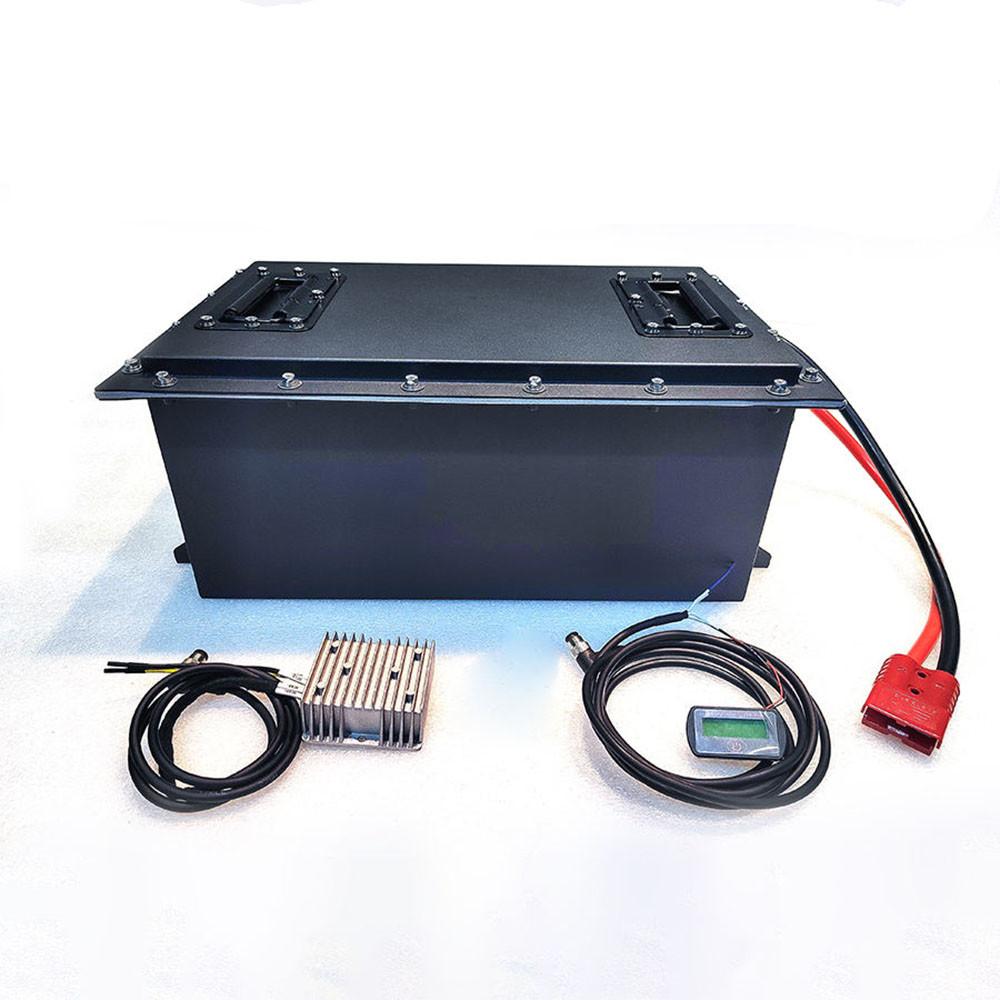
Battery Materials and Structural Design for Industrial Systems
The performance of a lithium battery system starts with its internal materials and structure.
For B2B applications, the most commonly used chemistries include:
- LiFePO4 (Lithium Iron Phosphate) for long cycle life and safety
- NMC (Nickel Manganese Cobalt) for higher energy density
- hybrid configurations depending on application needs
LiFePO4 systems are widely used due to:
- cycle life of 3000–6000 cycles
- stable nominal voltage of 3.2V per cell
- strong thermal stability for continuous operation
- high discharge efficiency under load
Typical pack architecture includes:
- optimized series-parallel configurations (e.g., 8S, 16S, 24S systems)
- copper busbars for low-resistance current paths
- integrated BMS for monitoring and protection
- thermal spacing for heat distribution
According to the International Energy Agency, industrial battery systems increasingly focus on durability and efficiency rather than purely maximizing energy density.
https://www.iea.org/reports/global-ev-outlook
Engineering Battery Systems Around Real Operational Demands
A reliable B2B lithium battery solution is defined by how well it matches real usage patterns.
At eDailyMag, system design typically includes:
- Load profile analysis
Measuring peak current, startup demand, and continuous operation load. - Voltage range optimization
Ensuring stable output within the equipment’s working range. - BMS customization
Setting protection thresholds based on actual application conditions. - Thermal management design
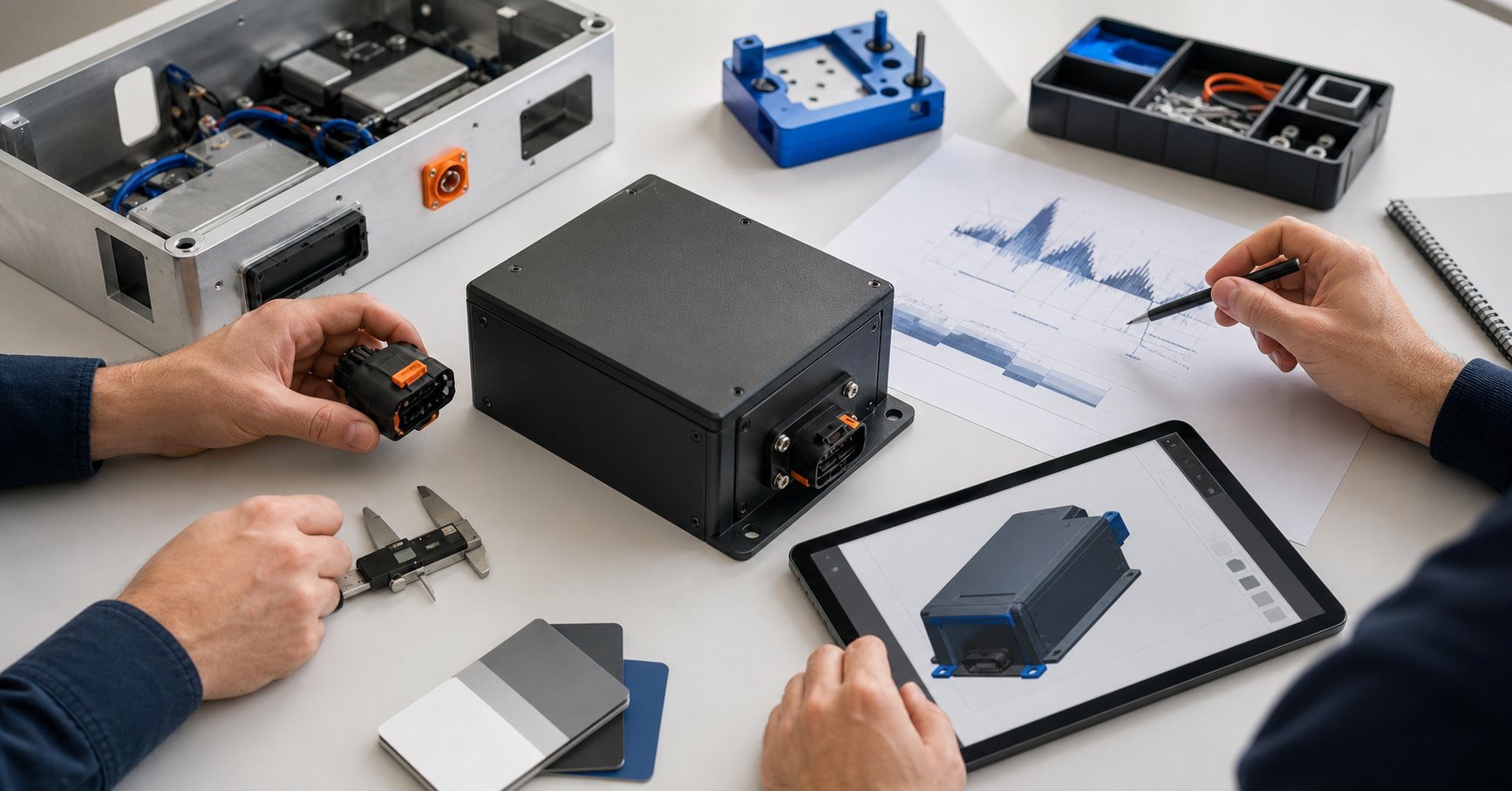
Preventing overheating during long operation cycles. - Mechanical integration
Matching battery dimensions, connectors, and mounting structures.
This process ensures that the battery system performs consistently, even in demanding environments.
Case Insight: Enhancing System Stability in Automated Equipment
A customer operating automated logistics equipment experienced inconsistent performance across different production batches.
While all systems used the same nominal battery specification, runtime and output stability varied significantly.
After evaluation, the issue was traced to inconsistent battery integration.
Our solution included:
- implementing precise cell matching (≤2% deviation)
- redesigning pack configuration for balanced discharge
- customizing BMS parameters for system-specific load patterns
After deployment:
- runtime consistency improved across all units
- system downtime decreased
- overall operational efficiency increased
This demonstrates how engineering-focused battery solutions directly improve system reliability.
Performance Comparison: Standard Battery vs B2B Engineered Solution
| Parameter | Standard Battery Pack | B2B Lithium Battery Solution |
|---|---|---|
| Cell Matching Accuracy | ±5–8% | ≤±2% |
| Cycle Life | 800–1500 cycles | 3000–6000 cycles |
| Voltage Drop Under Load | 8–15% | 3–5% |
| Continuous Current Output | Limited | Optimized for application |
| Thermal Performance | Basic | Engineered control |
| Integration Compatibility | General | Fully customized |
| Maintenance Frequency | Higher | Lower |
These differences influence not only technical performance but also long-term operational cost.
Safety Engineering and Global Compliance
For B2B applications, safety and compliance are critical.
A professional lithium battery solution includes:
- overcharge and over-discharge protection
- short-circuit and overcurrent cutoff
- multi-point temperature monitoring
- active cell balancing systems
The International Electrotechnical Commission provides global safety standards for battery systems.
https://www.iec.ch
Typical certifications include:
- UN38.3 for transport
- CE certification
- MSDS documentation
These ensure safe operation and compliance across global markets.
Application Scenarios for B2B Lithium Battery Solutions
Customized lithium battery systems are widely used in:
- industrial automation equipment
- AGV / RGV logistics systems
- robotics and intelligent devices
- electric vehicles and utility platforms
- energy storage and backup systems
Each application requires different combinations of voltage, capacity, and discharge behavior—making customization essential.
FAQs
What defines a B2B lithium battery solution?
It is a battery system designed specifically for industrial or OEM applications rather than general-purpose use.
Why is customization important in B2B battery systems?
Because different equipment requires different load profiles, environments, and performance characteristics.
Can battery systems be scaled for mass production?
Yes, engineered solutions are designed to maintain consistency across large production volumes.
Reliable Battery Systems for Scalable Industrial Applications
In industrial environments, battery systems must support long-term performance, consistent output, and scalable production.
A well-designed B2B lithium battery solution ensures that equipment operates reliably across different conditions and usage cycles.
At eDailyMag, we provide customized lithium battery solutions built on engineering precision and controlled manufacturing processes, supporting OEM and industrial applications worldwide.
Explore our battery solutions here:
https://www.edailymag.com/
Contact our team for customized battery system development:
https://www.edailymag.com/contact-us